Al-Tahir al-Mardi rejoins family as Khartoum returnees face ruins
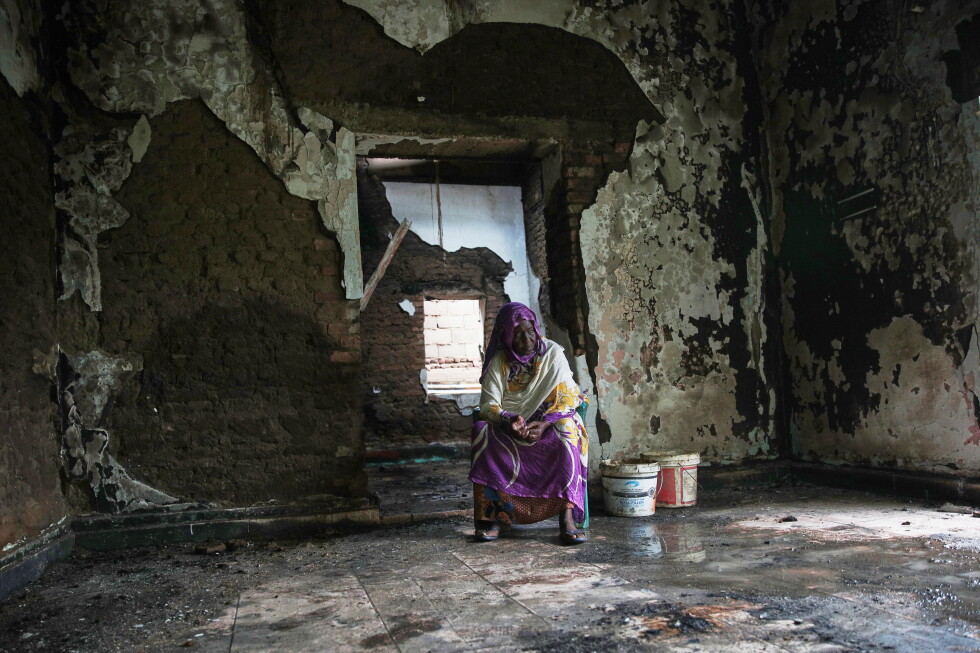
A lead video says Sudanese journalist Al-Tahir al-Mardi has reunited with his family in Khartoum after three years of separation caused by Sudan’s war. The personal reunion sits inside a wider, fragile return to the capital: the Sudanese army said it had retaken Khartoum from the Rapid Support Forces in 2025, while humanitarian sources say residents are going back to neighbourhoods where homes, power systems, hospitals and water services have been badly damaged. The European Commission describes Sudan as the world’s largest displacement crisis, with over 9 million people displaced inside the country and more than 4.4 million refugees in neighbouring states. The return to Khartoum is therefore not a clean post-war moment. It is a test of whether civilians can rebuild family life in a capital still shaped by insecurity, destroyed infrastructure, unexploded ordnance, disease risk and a conflict that continues elsewhere in Sudan.
For Belgian readers, this is mainly an international humanitarian and security story, not a local Belgian one. It matters to residents, voters, aid organisations, Sudanese communities in Belgium and EU-policy readers because the European Commission says the EU is funding emergency assistance, sanctions and humanitarian access work linked to Sudan. Brussels-based EU institutions are part of the response, while Belgian taxpayers and NGOs are indirectly tied to choices on aid, asylum, sanctions enforcement and diplomatic pressure.
Al-Tahir al-Mardi (Sudanese journalist identified in the lead video as working for Al Jazeera) is the individual whose family reunion anchors the story. Khartoum (Sudan’s capital at the confluence of the Blue and White Nile) became a main battlefield after fighting erupted in April 2023. Sudanese Armed Forces, or SAF (Sudan’s regular military led during the war by Abdel Fattah al-Burhan), has fought the Rapid Support Forces. Rapid Support Forces, or RSF (a paramilitary force led by Mohamed Hamdan Dagalo, widely known as Hemedti), grew out of Darfur militia structures and became a national power centre. Port Sudan (Red Sea city used by the army-aligned authorities as a wartime base) became a substitute seat of government during the capital’s worst fighting. Darfur (western Sudan region with a long history of mass violence and displacement) remains central to the humanitarian emergency. Tawila (North Darfur town hosting a vast displacement camp) has become a symbol of the crisis beyond Khartoum.
Background
The current war began on 15 April 2023, when a power struggle between the Sudanese Armed Forces and the Rapid Support Forces became open conflict in Khartoum and other regions. Sudan had already passed through the 2019 overthrow of Omar al-Bashir, the 2021 military coup and repeated failed transition efforts. In March 2025, the army said it had recaptured key Khartoum sites including the presidential palace and airport. Earlier precedents matter: Darfur’s mass violence from 2003 onward produced long-running displacement, sanctions and international criminal scrutiny, and today’s conflict has revived many of those patterns on a wider national scale.
The wider picture
Sudan’s war sits at the intersection of state collapse, Red Sea security, Gulf influence, arms flows and migration pressure across northeast Africa. Khartoum’s partial return does not end the conflict; it changes the map of power while violence and displacement persist in Darfur and Kordofan. For Europe, instability affects humanitarian budgets, regional partnerships and sanctions policy.
Why now
The trigger is the 17 June 2026 lead video showing Al-Tahir al-Mardi’s reunion in Khartoum. Its timing matters because the capital has moved from active frontline symbol to return-and-reconstruction test while the wider war remains unresolved.
What to watch
Watch whether basic services return in Khartoum, whether drone attacks or unexploded ordnance undermine civilian returns, whether EU sanctions listings expand, and whether humanitarian access improves in Darfur, Kordofan and Blue Nile. Any credible ceasefire channel would be the larger signal.
Opposing perspectives
- European Commission humanitarian officials
The European Commission humanitarian page frames Sudan as the world’s largest displacement crisis and argues that aid, civilian protection, humanitarian access and pressure on the parties must remain the priority. In this view, returns to Khartoum are not proof of recovery unless basic services, safety and access for aid workers are restored.
- EU Council foreign-policy institutions
The Council Decision states that restrictive measures target actors undermining Sudan’s stability and political transition. This frame treats the conflict not only as a relief emergency but as a sanctions and accountability file, where Brussels can use listings, asset freezes and travel bans alongside humanitarian funding.
- Sudan’s army-aligned foreign ministry
The army-aligned foreign ministry criticised the Berlin donor process for insufficient consultation with Sudanese authorities. That view presents international diplomacy as potentially paternalistic if it funds or designs responses around Sudan without the recognised state institutions playing a central role.
Sources & evidence
- Al Jazeera - Al Jazeera journalist reunited with family in Khartoum after years of war · 2026-06-17
- AP News - War-displaced Sudanese return to shattered Khartoum eager to rebuild lives and homes
- AP News - Drone strikes kill over 1,000 civilians in Sudan in the first 5 months of 2026, UN rights chief says · 2026-06-15
- European Commission Civil Protection and Humanitarian Aid Operations - Sudan · 2026-04-15
- EUR-Lex - Council Decision (CFSP) 2026/254 concerning restrictive measures in view of activities undermining the stabili · 2026-01-29
- The Guardian - More than £1bn pledged for Sudan as humanitarian crisis deepens · 2026-04-15
- Le Monde - 'We went through hell': Sudan's capital Khartoum slowly comes back to life · 2026-01-01