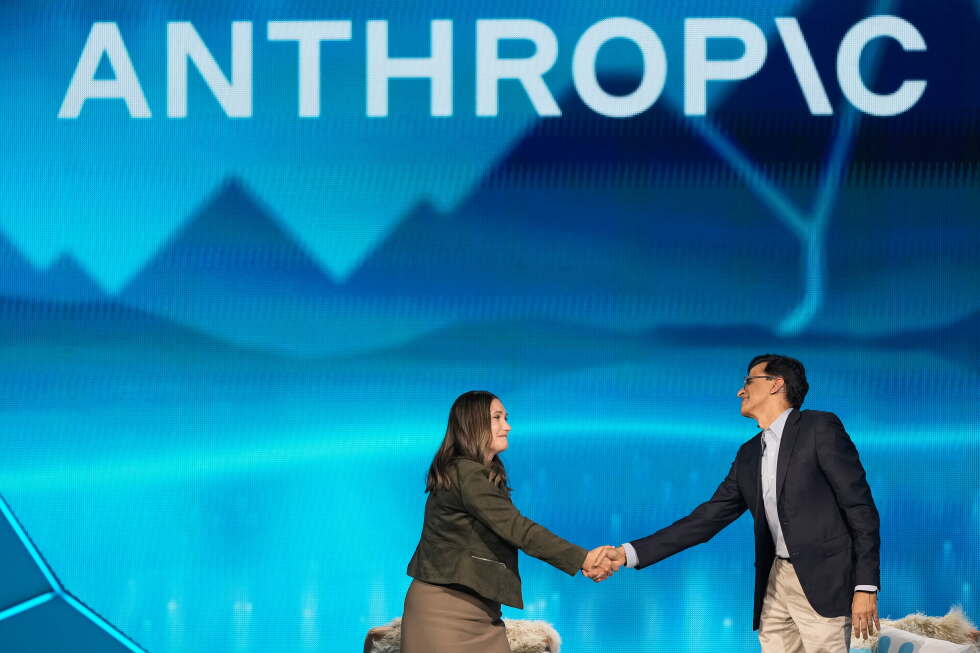
Anthropic shuts Fable 5 and Mythos 5 after U.S. export order
Anthropic says it has taken its Fable 5 and Mythos 5 AI models offline after the U.S. government ordered the company to block access by foreign nationals on national-security grounds. The company says the letter arrived at 5:21 p.m. U.S. Eastern time on 12 June and covered foreign nationals inside and outside the United States, including Anthropic employees. To avoid accidental non-compliance, Anthropic says it disabled the models for all customers while it seeks restoration of access. The U.S. concern, as Anthropic describes it, appears to involve a possible jailbreak of Fable 5, but the company says the demonstrated issue was limited and did not show unique capabilities beyond other public models. The case matters beyond one vendor because it tests whether frontier AI models are now treated less like ordinary software services and more like controlled strategic technology.
Belgian software firms, cybersecurity teams, universities, start-ups and public bodies increasingly depend on U.S.-hosted AI services. Anthropic's shutdown shows that access can be interrupted by U.S. national-security decisions even when the users are lawful customers in Europe. For EU officials and Belgium-based businesses, the episode sharpens the practical question behind the AI Act and digital sovereignty policy: who controls access to frontier tools when safety, export controls and commercial deployment collide?
Anthropic (U.S. AI company founded in 2021 and best known for Claude) is one of the leading frontier-model labs competing with OpenAI, Google DeepMind and Meta. Fable 5 (Anthropic's newly released public model, according to the company) is described by Anthropic as a safeguarded version of the more restricted Mythos line. Mythos 5 (Anthropic's higher-capability model, according to multiple reports) is tied to sensitive cybersecurity uses rather than ordinary consumer deployment. Dario Amodei (Anthropic co-founder and chief executive) is the company's public policy voice on AI risk. Howard Lutnick (U.S. commerce secretary in the Trump administration) is reported to have sent the export-control letter. The European Commission (EU executive based in Brussels) oversees the AI Act's general-purpose AI rules through the European AI Office. The EU AI Act (Regulation 2024/1689, in force since 2024) is the bloc's horizontal AI law.
Background
The dispute follows a broader shift in AI governance. The European Commission says the EU AI Act entered into force in 2024 and created specific duties for general-purpose AI models, with extra obligations for models designated as systemic risk. In the United States, President Joe Biden's 2023 AI executive order used federal reporting and safety-testing tools; President Donald Trump revoked it in January 2025 and later pursued a lighter national framework. The Anthropic order is different in tone: it uses export-control logic, closer to controls on chips or dual-use technology than to ordinary consumer software regulation.
The wider picture
Frontier AI is increasingly treated as strategic infrastructure alongside chips, cloud capacity and cybersecurity tools. The U.S. order suggests Washington may use national-security powers to control model access, not only hardware exports. For Europe, that raises the familiar sovereignty issue: reliance on foreign platforms can become a geopolitical vulnerability when policy priorities diverge.
Why now
The trigger was the U.S. government's 12 June directive to Anthropic, which the company says cited national-security concerns and required it to block foreign-national access to Fable 5 and Mythos 5.
What to watch
Watch whether Anthropic announces restored access, whether the Commerce Department publishes or clarifies the licensing basis, and whether EU officials address the case under the AI Act's general-purpose AI framework. Any licence exemptions for allied countries would be especially relevant for Belgian and EU users.
Opposing perspectives
- Anthropic
Anthropic's statement argues that governments should be able to block unsafe deployments, but only through a transparent and technically grounded process. The company says this order did not identify a specific national-security basis, treated a limited jailbreak demonstration as decisive and forced a broad shutdown affecting lawful customers.
- U.S. national-security officials
The U.S. directive frames the models as sensitive strategic technology whose access by foreign nationals requires control. In that view, the cost of a sudden service interruption is outweighed by the risk that a high-capability model could be misused for cyber operations or other dual-use activity before regulators understand the exposure.
- European Commission AI Act framework
The Commission's AI Act framework treats the issue as one of lifecycle governance rather than a one-off access ban: general-purpose AI providers must document, evaluate and mitigate systemic risks. From that perspective, the episode reinforces why Brussels wants structured obligations, incident reporting and oversight capacity before frontier tools spread across the EU market.
Sources & evidence
- Euronews - Pourquoi Anthropic suspend l'acces a ses modeles d'IA Fable 5 et Mythos 5 · 2026-06-13
- Associated Press - Anthropic says it has taken its latest AI models offline to comply with new export controls · 2026-06-13
- Axios - Trump admin blocks foreign access to Anthropic's most powerful AI · 2026-06-13
- Wired - Anthropic Says It's Taking Claude Fable 5 Offline to Comply With US Government Order · 2026-06-13
- Business Insider - Anthropic yanks access to Mythos and Fable models after Trump administration bans foreign use · 2026-06-13
- European Commission - AI Act regulatory framework
- European Commission - General-Purpose AI Code of Practice
- Isaac David and Arthur Gervais, Benchmarking Mythos-Linked Bug Rediscovery, arXiv, 2026 · 2026-05-17
- Lily Stelling et al., Existing Industry Practice for the EU AI Act's General-Purpose AI Code of Practice Safety and Secu · 2025-04-21