Aymen Hussein carries Iraq back to the World Cup
Aymen Hussein has become the face of Iraq's return to the World Cup, turning a career shaped by displacement and family loss into the decisive goal of a historic qualification campaign. Hussein has said his father, an Iraqi Army officer, was killed when he was a child and that his brother was later abducted during the Islamic State period. On the pitch, FIFA's tournament schedule places Iraq in Group I with France, Senegal and Norway, while Iraq's coaching staff has described a qualifying route disrupted by closed airspace, visa complications and a long journey to Mexico. Hussein's late March winner against Bolivia gave Iraq its first World Cup place since 1986. The story is primarily a football profile, but it also shows how national teams from conflict-affected societies can carry meanings far beyond results, including for Iraqi and Arab communities following the tournament from Belgium.
For football followers in Belgium, Hussein's story gives Iraq a clear human focal point before Group I begins. For Iraqi, Arab and wider diaspora communities in Brussels, Antwerp, Liège and elsewhere, Iraq's return is not just a sporting result but a shared cultural moment. Belgian viewers also see a broader World Cup pattern: expanded qualification gives more countries a stage, while the pressure on players from conflict-affected backgrounds can become part of the tournament's emotional weight.
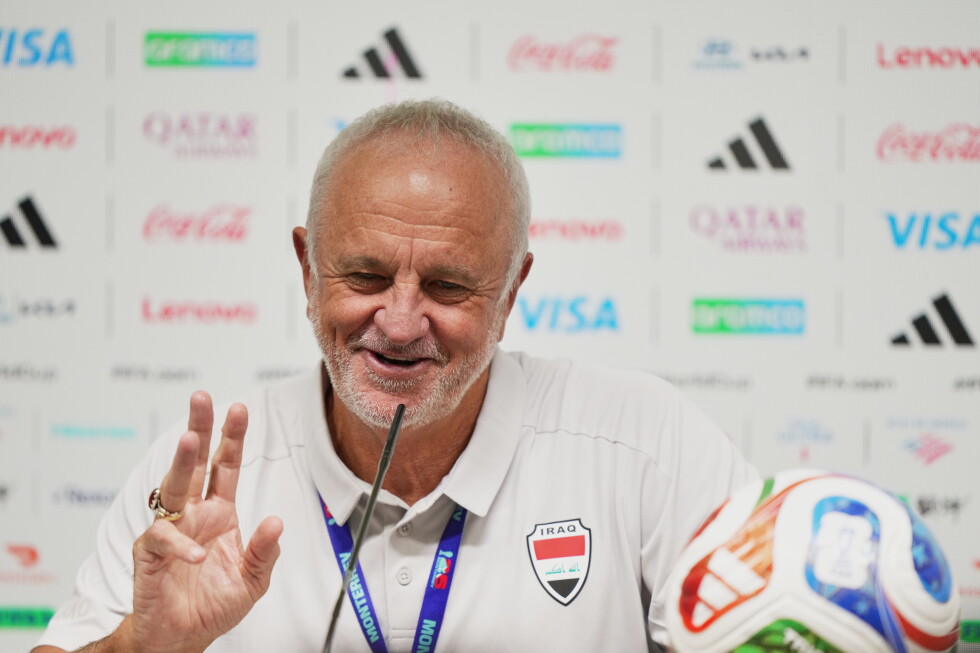
Aymen Hussein (Iraqi striker, born in Hawija in 1996) is Iraq's leading attacking figure at the 2026 World Cup. Iraq national football team (the men's side of the Iraq Football Association) is returning to the World Cup for the first time since Mexico 1986. Graham Arnold (Australian coach, appointed to Iraq in 2025) leads the team after previously taking Australia to the 2022 World Cup knockout stage. René Meulensteen (Dutch assistant coach and former Manchester United first-team coach) is part of Iraq's staff. Hawija (district in Kirkuk governorate, northern Iraq) was heavily affected by conflict and Islamic State control. Kirkuk (oil-rich, multi-ethnic province in northern Iraq) is Hussein's home region. FIFA World Cup 2026 (48-team tournament in Canada, Mexico and the United States) is the expanded edition of football's biggest event. Bolivia (South American national team) lost the decisive play-off to Iraq in Mexico.
Background
Iraq's football history has repeatedly intersected with national crisis. The team reached the 1986 World Cup in Mexico but exited the group stage without a point. In 2004, Iraq reached the Olympic semi-finals in Athens, a result widely read as a rare unifying moment after the US-led invasion. In 2007, Iraq won the Asian Cup in Jakarta, beating Saudi Arabia in the final after a tournament played while sectarian violence continued at home. Hussein's 2026 qualification goal therefore fits an older pattern: Iraqi football periodically becomes a national symbol when ordinary political life offers few shared celebrations.
The wider picture
This is not a diplomatic story, but its background is geopolitical. Iraq's route to the tournament was shaped by regional conflict, closed airspace and visa logistics, according to the team's staff and AP's account of the play-off build-up. The sporting achievement therefore carries a familiar global pattern: athletes from unstable states can reach international stages while their preparation remains exposed to security and mobility constraints.
Why now
The story is timely because the World Cup group stage is under way and Iraq are about to play their first finals match since 1986. Hussein's biography gives readers a person through whom to understand Iraq's return before the football itself takes over.
What to watch
Watch Hussein's role against Norway on 16 June and whether Iraq can create enough penalty-box service for him. The following Group I fixtures against France and Senegal will show whether Iraq's play-off resilience can survive against faster, deeper squads.
Sources & evidence
- Al Jazeera - ‘Lion of Mesopotamia’: How Aymen Hussein beat tragedy to reach World Cup · 2026-06-14
- AP News - After a harrowing travel ordeal, Iraq faces Bolivia for a 2026 World Cup spot · 2026-03-31
- The Guardian - ‘It was madness in Baghdad’: René Meulensteen on coaching Iraq and helping Ronaldo · 2026-06-09
- FIFA - FIFA World Cup 26 tournament hub
- FourFourTwo - Iraq World Cup 2026 squad: Graham Arnold's final 26-man selection · 2026-06-07