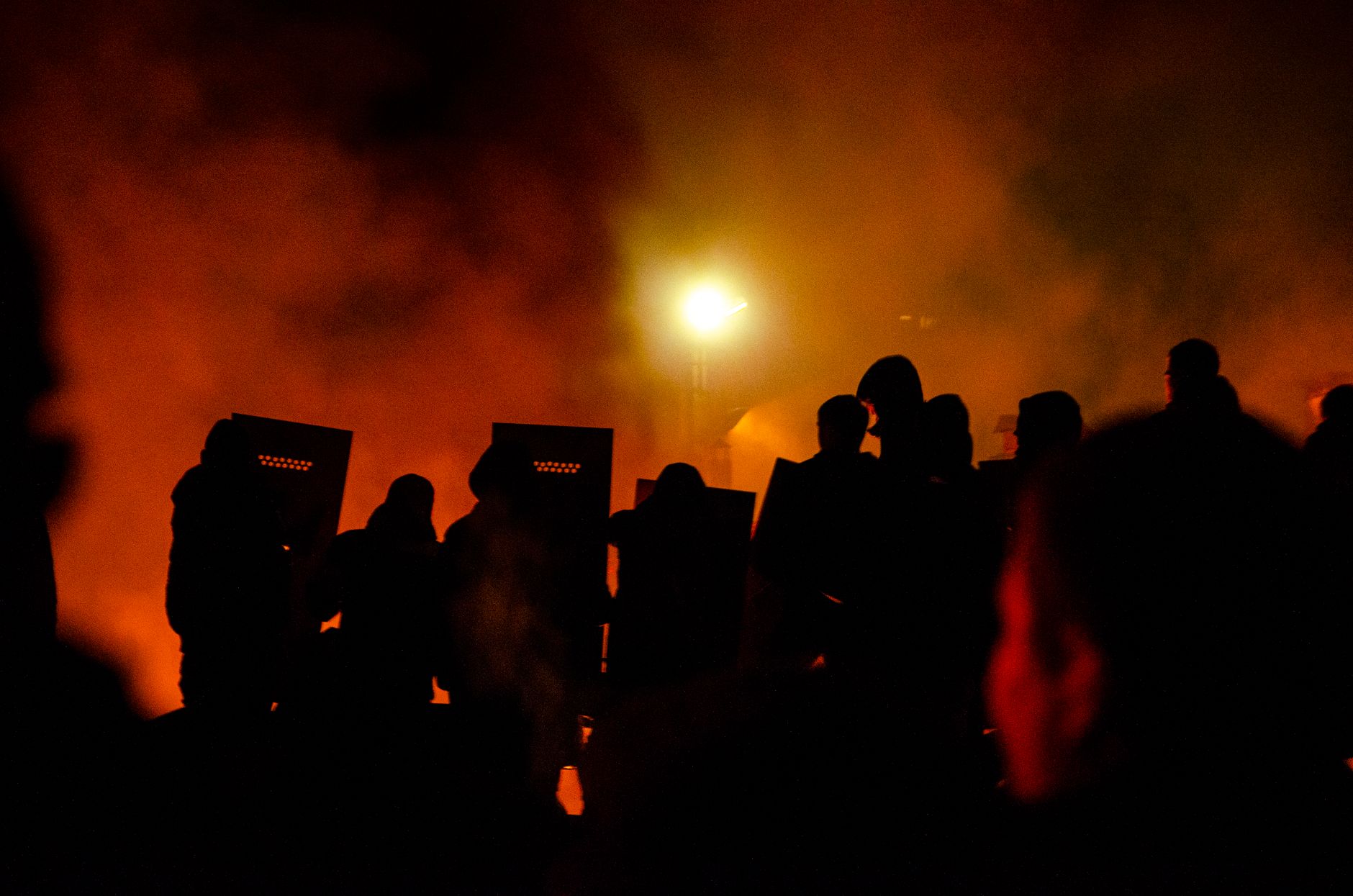
Belfast police arrest 19 after anti-immigrant riots
The Police Service of Northern Ireland said 19 people had been arrested after two nights of rioting around Belfast, where masked crowds attacked police, burned vehicles and targeted homes after a knife attack in north Belfast. Belfast Magistrates' Court heard that Hadi Alodid, a Sudanese man, has been charged with attempted murder, possession of a knife and making threats to kill; the charges remain allegations unless proven in court. The violence has turned a criminal case into a wider test of public order, anti-immigrant mobilisation and online amplification. The Northern Ireland Executive said justice must be allowed to run its course and condemned people who were using public anger for destructive purposes. For Europe, the episode is a reminder that migration politics, platform governance and local identity conflicts can interact quickly, even in a post-conflict society built around power-sharing safeguards.
For Belgian readers, the main story is not Belgium but a nearby European public-order crisis where migration, online incitement and local identity politics collide. It matters to Belgian voters, schools, civil-society groups and federal security officials because Belgium faces its own debates on asylum, hate speech and platform responsibility. EU institution staff and policy-engaged readers in Brussels will also recognise the parallel with the EU's Digital Services Act, which puts systemic-risk duties on major platforms used in Belgium.
Belfast (Northern Ireland's capital and largest city) is the centre of the latest disorder. Northern Ireland (UK region created in 1921) remains politically shaped by unionist, nationalist and cross-community identities. Stephen Ogilvie (the injured Belfast man named by police and family statements) is the victim in the knife attack. Hadi Alodid (Sudanese man living in Belfast) is the defendant charged in Belfast Magistrates' Court. The Police Service of Northern Ireland, or PSNI (Northern Ireland's post-2001 police force), is leading the public-order response. Stormont (the Belfast estate housing Northern Ireland's devolved institutions) is shorthand for the Executive and Assembly. The Good Friday Agreement (1998 peace settlement) underpins power-sharing and the sensitive Irish border. The Common Travel Area (UK-Ireland free-movement arrangement predating both states' EU membership) is central to the border debate. Ofcom (UK communications regulator) enforces online-safety duties. X (Elon Musk's social platform) is one platform scrutinised over crisis content.
Background
The Agreement reached in the multi-party negotiations on 10 April 1998 set Northern Ireland's post-Troubles framework around consent, rights, cross-community government and non-violence. ARK's February 2026 research update says the Northern Ireland Life and Times survey found 56% of respondents in 2024 believed racial prejudice had increased over the previous five years, up 25 percentage points from 2023. The same update cites serious Belfast anti-immigration unrest in August 2024 and Ballymena riots in summer 2025 after arrests of Romanian teenagers, showing that the latest violence fits a recent pattern rather than a one-off street reaction.
Why now
The trigger was the circulation of a graphic knife-attack case in north Belfast, followed by calls for demonstrations and online discussion of the defendant's migration status. The unrest became timely because police, courts and political leaders had to respond while the criminal case was still at an early stage.
What to watch
Watch the next court hearing in the attempted-murder case, further PSNI arrest updates, and whether UK ministers bring forward crisis-time online-safety changes. A separate signal will be whether Northern Ireland parties turn the episode into a sustained argument over the Common Travel Area or keep the focus on public order.
Opposing perspectives
- Police Service of Northern Ireland
The PSNI frame is that the knife attack is a criminal investigation and the disorder is separate public-order offending. The force's position, as carried in police statements, is that sharing addresses and threatening material online puts lives at risk and that arrests will continue where evidence supports prosecution.
- Northern Ireland Executive
The Executive's joint position is that public anger over the knife attack cannot override due process. Its statement argues that people have the right to peaceful protest, but that arson, intimidation and attacks on homes damage the very communities rioters claim to defend.
- Democratic Unionist Party / border-control advocates
The DUP-linked argument is that the case exposes public concern about asylum processing and the Common Travel Area route into Northern Ireland. This frame condemns rioting but says governments must answer questions about border enforcement, returns and how people with no local ties enter the UK system.
- Digital-regulation advocates in Westminster and Brussels
The UK science and technology committee frame is that viral amplification during crises can turn a local crime into wider disorder. For EU policy readers, the analogous concern is whether very large platforms' risk-mitigation duties under regimes such as the Digital Services Act are strong enough in moments of public danger.
Sources & evidence
- France 24 - En Irlande du Nord, des violences anti-immigrés dans une province marquée par les divisions · 2026-06-13
- Associated Press - Police blast water cannons at Belfast protesters as unrest flares again after stabbing · 2026-06-10
- The Guardian - Number of arrests after riots in Northern Ireland rises to 19 · 2026-06-12
- The Guardian - Belfast riots trigger renewed scrutiny over loyalist paramilitary influence · 2026-06-12
- Le Monde - United Kingdom faces new night of anti-immigrant riots in Belfast, following a now-familiar pattern · 2026-06-11
- CAIN Web Service, Ulster University - Agreement reached in the multi-party negotiations, 10 April 1998 · 1998-04-10
- NISRA - Census 2021 main statistics ethnicity tables · 2022-09-22
- Philip McDermott, ARK - Attitudes on Immigration and Cultural Diversity in Northern Ireland, Research Update 171 · 2026-02-01
- France 24