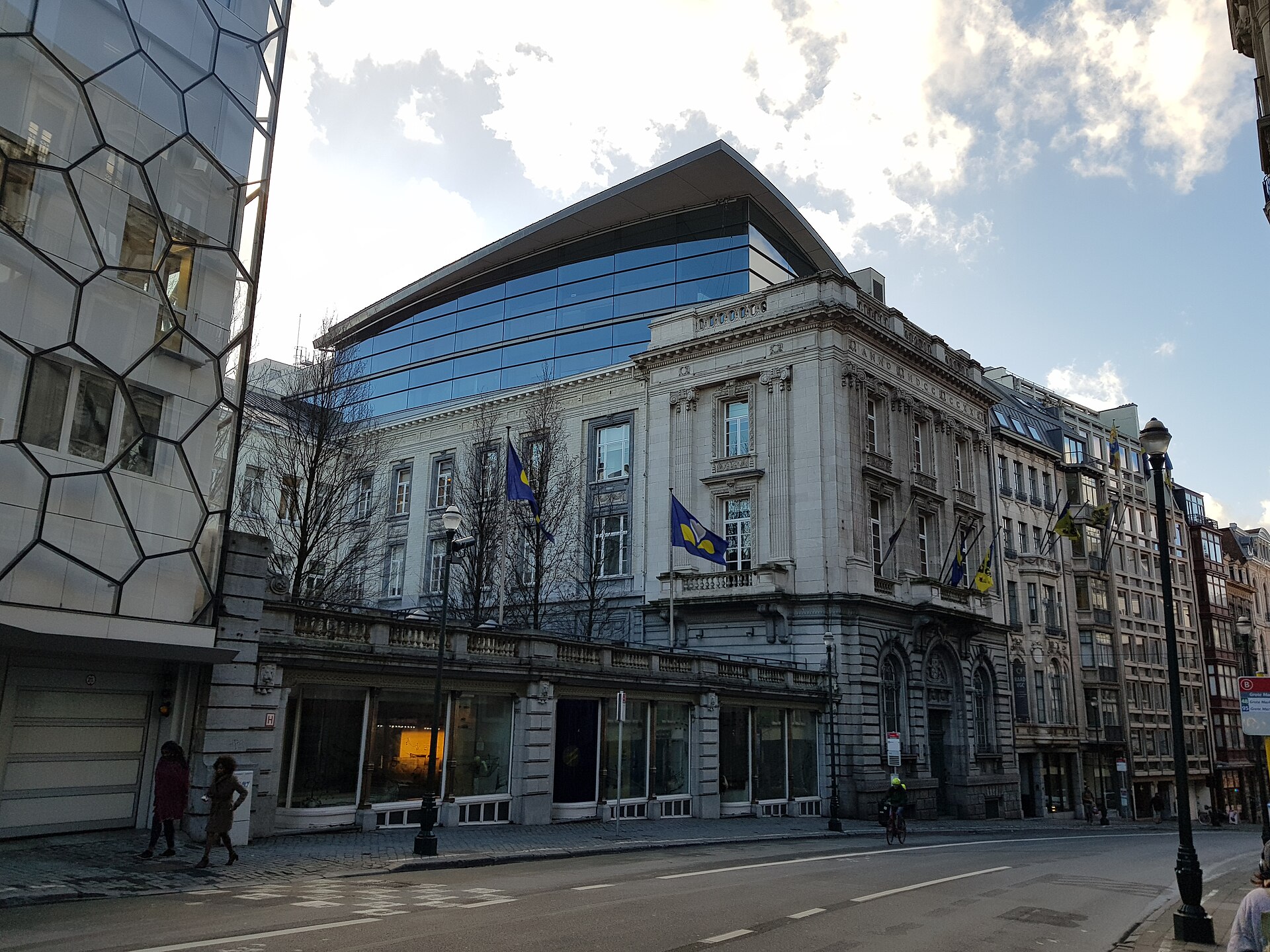
Belgium’s youngest senator wants the Senate opened to students during exam periods
Mauro Michielsen, the Vooruit co-opted senator described by VRT NWS as the youngest senator in the country, wants the Belgian Senate in Brussels to be made available as a study space for students during the blokperiode. The proposal is small in budgetary terms but symbolically loaded: it would turn part of a federal institution often criticised as remote and underused into a practical public service at peak study times.
For students in Brussels, the proposal speaks to a familiar exam-season problem: quiet, reliable and accessible study places fill quickly. For the Senate, it tests whether a federal institution with reduced day-to-day legislative activity can make its public value more visible without compromising security, political neutrality or parliamentary work. For readers, the issue is not only where students can study; it is also how Belgian institutions use prominent public buildings at moments when citizens need practical services.
The subject is the Belgian Senate, the upper chamber of the Federal Parliament, and a proposal by Mauro Michielsen, co-opted senator for Vooruit, to open Senate premises in Brussels to students during exam-study periods. In Belgium’s current 2024-2029 legislative cycle, the Senate is no longer directly elected and has limited legislative powers, but it remains constitutionally relevant for institutional matters, appointments and federal-state questions. The practical question is whether a secured parliamentary building can be used, even temporarily, as part of Brussels’ wider network of study spaces.
Background
The Senate was created in 1831 as a full second chamber, but successive state reforms changed its role. The 1993 and 2014 reforms reduced its size and transformed it into a chamber representing Belgium’s federated entities. According to the Senate’s own institutional explanation, its composition fell from 184 members to 60, with 50 senators coming through regional and community parliaments and 10 co-opted members. Since 2014, its legislative role has been narrower, focused mainly on constitutional, institutional and federal-structure questions. That history is why even a modest public-access proposal carries a wider institutional subtext: the Senate is regularly discussed not only as a parliament, but as a building, symbol and cost centre.
Impact
Regional — The direct impact would be in Brussels, where the Senate sits and where Brik already coordinates study spaces with universities, cultural venues, companies and public partners. If implemented, the measure would add a high-profile federal location to a regional student-service ecosystem rather than replace existing campus or city study rooms.
Opposing perspectives
- Vooruit and Mauro Michielsen: practical openness
The Vooruit frame is that a federal institution should be useful beyond formal sittings. Opening rooms during the blokperiode would give students extra quiet space and show that the Senate, often seen as distant, can serve citizens in a visible and practical way.
- Senate administration and security services: controlled access first
The institutional frame is likely to focus on feasibility: parliamentary buildings are secured workplaces, not ordinary libraries. Any opening would need registration, supervision, clear hours, insurance rules, separation from parliamentary offices and safeguards for political neutrality.
- Brussels student-services actors such as Brik: useful if coordinated
Brik’s existing Study Spaces model suggests demand exists, but added Senate capacity would work best if integrated into the current reservation and location network. A one-off symbolic opening would help less than predictable places, clear rules and easy access for students from different institutions.
- Senate abolition supporters: public use does not settle the bigger debate
Parties and voters who favour abolishing or further reducing the Senate may welcome a practical student measure while still arguing that it does not answer the structural question: whether Belgium needs a separate Senate with its current cost, building and constitutional role.