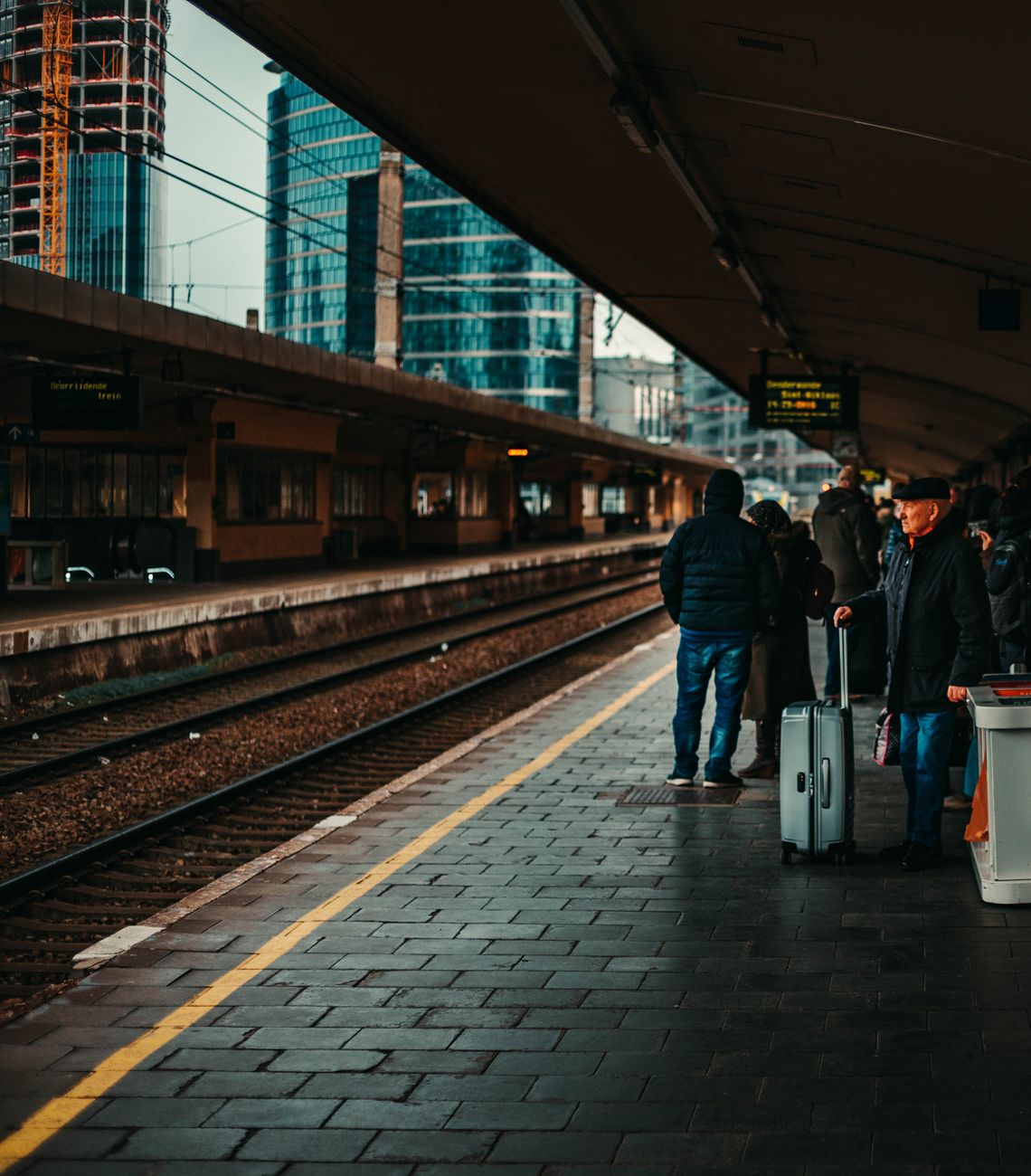
Brussels rail shutdown shows why one cable fault can ripple through Belgium’s commute
Train traffic through Brussels was briefly halted after smouldering cables were detected on the rail network, according to Het Nieuwsblad. The disruption mattered beyond a single station incident because Brussels is Belgium’s central rail hinge: commuters from Flanders and Wallonia, airport and Eurostar passengers, EU-institution staff and people crossing the city all depend on the same constrained north-south rail spine. The immediate operational choice was safety-first: stop trains, inspect the fault and prepare overnight repairs rather than keep services moving through potentially unsafe infrastructure. For passengers, the practical message is to check SNCB/NMBS live departure information before travelling through Brussel/Bruxelles, keep delay confirmations where connections are missed, and expect knock-on changes even after trains restart.
For a Belgium-based reader, this is not only a delay story. A fault near the Brussels rail core can disrupt a Leuven-to-Brussels office trip, a Walloon commuter changing at Central, a Flemish civil servant heading to the Northern Quarter, or an EU visitor connecting from Brussels-South to the European Quarter. It also illustrates the narrow margin in Belgium’s rail system: when the capital’s central section is constrained, there are limited easy substitutes. Safety decisions can therefore look abrupt to passengers but are central to preventing a cable incident from becoming a fire, signalling failure or evacuation problem.
The subject is a short but system-wide rail interruption in Brussels, reportedly caused by smouldering cables. The named operational stakeholders are Infrabel, which manages Belgian rail infrastructure and traffic control; SNCB/NMBS, the national passenger operator; STIB/MIVB, whose metro, tram and bus network absorbs displaced city passengers; and international operators using Brussels-South, including Eurostar, ICE and TGV services. The Belgian and EU-institutional relevance is direct: Brussels is both Belgium’s densest commuter hub and the workplace for EU institutions including the European Commission, Council of the EU and European Parliament, whose staff and visitors often depend on rail links through Brussels-North, Brussels-Central and Brussels-South.
Background
Brussels’ north-south rail connection opened in 1952 after decades of planning and construction. It was designed to solve the old problem of separate north and south terminal stations, but its success made it a structural bottleneck. Today, the same link concentrates domestic commuter trains, intercity services and connections to international rail at Brussels-South. That concentration is efficient on normal days and fragile during infrastructure incidents.
Impact
Regional — The strongest regional impact is in the Brussels-Capital Region, especially around Brussels-North, Brussels-Central and Brussels-South. The disruption also affects Flemish and Walloon commuter corridors because many intercity and suburban services cross the capital rather than terminating outside it.
Opposing perspectives
- Infrabel and SNCB operational-safety framing
The rail-side framing is that stopping train traffic, even completely and abruptly, is justified when cables are smouldering because electrical, signalling and fire risks must be checked before normal service resumes. Het Nieuwsblad’s quoted phrase, “herstellingen moeten uitvoeren,” points to a repair-first logic: the priority is restoring the infrastructure safely, even if passengers see the decision mainly as disruption.
- Brussels commuters and EU-quarter workers
For commuters, EU staff and international visitors, the issue is less technical and more practical: one infrastructure fault can interrupt work, school pickups, appointments and international connections. Their framing differs from a narrow incident report because Brussels rail is a daily public service backbone. They need clear alternative routes, credible restart times and usable delay proof for missed connections.
Sources & evidence
- Het Nieuwsblad · 2026-06-22
- Het Nieuwsblad · 2026-06-22
- Infrabel
- SNCB/NMBS
- European Union · 2021-05-17
- Infrabel Network Statement