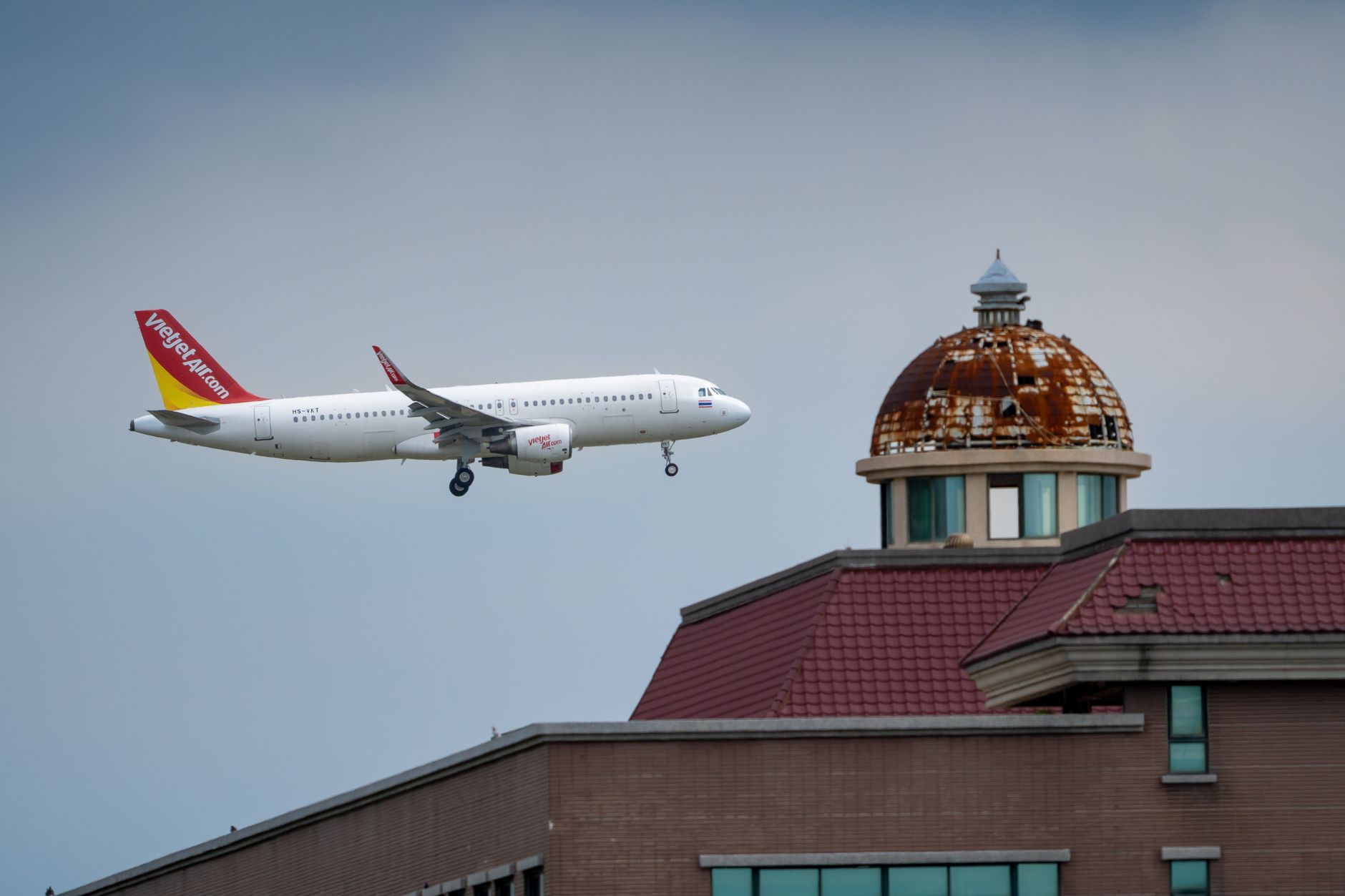
Brussels Region takes the federal state to court over airport flight paths
The Brussels-Capital Region has opened a new legal front against the Belgian federal state over aircraft flying above Brussels, RTBF reported, turning a long-running dispute over Brussels Airport routes into a direct institutional clash between regional environmental powers and federal aviation control. The regional action targets the way the federal level manages the survol of Brussels from Brussels-National Airport at Zaventem, where flight paths, runway use and night operations have repeatedly shifted the noise burden between Brussels, Flemish Brabant and parts of Walloon Brabant. The core issue is competence. The federal government, through the Federal Public Service Mobility and Transport and the aviation authorities under Federal Minister of Mobility, Climate and Environmental Transition Jean-Luc Crucke, is responsible for air navigation and traffic rights. The Brussels-Capital Region, led by Minister-President Boris Dilliès in the 2024-2029 legislature, has powers over environment, public health, territorial planning and noise standards on its territory. The legal move says, in effect, that federal aviation choices cannot be treated as neutral technical decisions when they create measurable noise exposure for densely populated Brussels neighbourhoods. It also comes after years of rulings, complaints and political negotiations failed to produce a stable national agreement on Zaventem routes. For residents, the case is about sleep, health and predictability. For the airport and federal authorities, it is about maintaining Belgium's main air gateway while respecting safety, European aviation rules and competing regional demands.
This matters because the case tests how Belgium balances a national airport with regional environmental protection in one of the country's most densely populated areas. A court-backed change could force new flight-path choices, stricter noise mitigation or renewed federal-regional talks. A defeat for Brussels would leave the political problem largely unchanged: residents continue to seek relief, while federal aviation authorities and the airport argue that safe and workable routing cannot be redesigned by one region alone.
The subject is the Brussels-Capital Region's legal action against the Belgian federal state over aircraft overflights linked to Brussels Airport. Brussels Airport is located in Zaventem, in Flanders, but many departures and arrivals affect residents inside the Brussels Region. Airspace management, flight procedures and aviation safety sit mainly at federal level, while Brussels applies regional environmental and noise rules. That institutional split explains why the dispute repeatedly moves from cabinet tables to courts.
Background
The Brussels overflight dispute has been politically charged for more than two decades. It intensified after route changes associated with the 2014 so-called Wathelet plan, which reorganised departures from Brussels-National and triggered complaints from Brussels residents and communes. Earlier disputes over night flights and cargo operations had already shown the difficulty of reconciling airport growth with residential noise. The institutional background is Belgium's federal structure: aviation remains mainly federal, but regions acquired strong environmental powers. That division allows Brussels to act against noise on its territory while the federal level keeps authority over air traffic rules and safety.
Impact
Regional — The direct regional impact is in Brussels communes under departure and arrival routes, especially where aircraft noise intersects with dense housing, schools and night-time exposure. The legal action also affects neighbouring Flemish municipalities around Zaventem because any redistribution of routes can move noise from one community to another rather than eliminate it.
Opposing perspectives
- Brussels regional government and affected residents
The Brussels-Capital Region's frame is that federal aviation decisions impose environmental and health costs on Brussels residents without giving the region sufficient control over the source of the nuisance. Residents' committees and Brussels communes under flight paths generally argue that noise exposure, especially early morning and night-time overflights, should be reduced rather than redistributed through technical route adjustments.
- Federal aviation authorities and airport-operation interests
The federal frame prioritises safe, legally robust and operationally workable airspace management for Belgium's main airport. Federal authorities and airport stakeholders usually argue that runway use depends on wind, safety rules, international aviation standards and network capacity, and that one region cannot demand changes that simply transfer the burden to other communities or undermine airport reliability.
- Flemish municipalities and economic stakeholders around Zaventem
The Flemish frame is split between residents near the airport who also oppose concentrated noise and economic actors who stress the airport's jobs, cargo role and national connectivity. Flemish local authorities have often resisted solutions seen as shifting more traffic over their municipalities, while business constituencies warn against measures that would weaken Brussels Airport's competitiveness.
- Public-health and environmental organisations
Health and environmental groups frame the issue less as a Belgian institutional quarrel and more as a chronic exposure problem. Their argument is that aircraft noise should be assessed by health impact, sleep disturbance and cumulative exposure, not only by average technical thresholds or the administrative boundary between Brussels, Flanders and the federal state.
Sources & evidence
- RTBF - Survol de Bruxelles : la Région bruxelloise attaque l'Etat fédéral
- Federal Public Service Mobility and Transport - Aviation environment
- Federal Public Service Mobility and Transport - Overflights · 2022-12-15
- Federal Public Service Mobility and Transport - Airports and aerodromes
- European Environment Agency reporting on transport noise, via The Guardian coverage of the 2025 EEA report · 2025-06-24