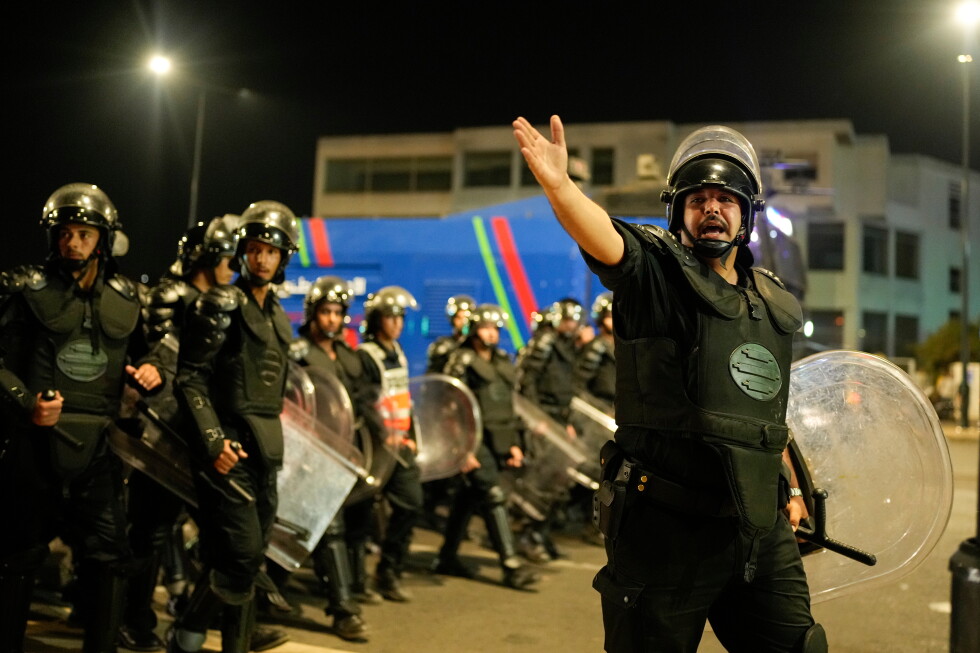
Brussels youth protest again brings small fires and firecrackers into a wider Gen Z unrest story
Brussels is again dealing with disorder around a youth protest, after De Standaard reported renewed small fires and firecrackers — the Dutch shorthand was "opnieuw brandjes en voetzoekers bij jongerenprotest in Brussel". For people living, working or studying in the capital, the immediate issue is public order: how Brussels police and municipal authorities protect the right to demonstrate while stopping intimidation, damage and unsafe pyrotechnics in dense streets. The Belgian angle is direct but not the whole story. Brussels is both a city with large diaspora communities and the seat of EU institutions that track protest movements, civil rights and stability in neighbouring regions. Named stakeholders include the Brussels-Capital/Ixelles police zone, City of Brussels mayor Philippe Close, the Brussels-Capital Region, Belgian-Moroccan community organisations, the Moroccan embassy in Brussels, and the EU's foreign-policy apparatus, including the European External Action Service. The international context is a broader wave of youth-led protest politics, especially around Morocco's GenZ 212 movement, which international agencies have linked to frustration over healthcare, education, corruption, unemployment and state spending priorities. AP reported that Moroccan authorities later charged more than 2,400 people after youth-led protests. Reuters and AP coverage framed the movement as a challenge to Morocco's economic and social model rather than a simple law-and-order story. That distinction matters in Brussels. Anglo-wire framing often starts with instability abroad, casualties or arrests. A Belgium-based reader also needs the civic-order layer: when an overseas political grievance is expressed in Brussels, the city becomes the stage, residents carry the security cost, and Belgian authorities must avoid conflating peaceful diaspora expression with the smaller groups using fires, firecrackers or confrontation. No detailed Belgian federal foreign-policy response was found in the sources checked. That silence is notable because Belgium has close social ties with Morocco and Brussels hosts EU institutions that regularly stress youth participation, rule of law and public calm. The EU-side line reported during the Morocco protests was to recognise youth participation in public life and call for calm by all parties. The next question is whether the Brussels protest remains a contained public-order incident or becomes part of a repeated mobilisation cycle. Police communication, any administrative arrests, organiser statements, and responses from Belgian-Moroccan civic groups will determine whether this is treated mainly as local disturbance, diaspora politics, or a Brussels security-management test.
For Belgium Pulse readers, the issue is both practical and civic. Brussels residents need to know whether streets, public transport and police deployments are affected. EU staffers and internationally connected readers also need to understand why a local protest in Brussels can carry foreign-policy and diaspora significance without turning Brussels-as-city into a proxy for Brussels-as-EU-capital.
The subject is a renewed youth protest in Brussels involving small fires and firecrackers, set against a wider international pattern of youth-led mobilisation, especially the Morocco-linked GenZ 212 protest wave. The Brussels facts remain the article's trigger; the broader international frame explains why diaspora-linked protests can surface in Belgium's capital.
Background
Brussels has repeatedly hosted protests tied to international crises and diaspora politics. The city also has a sensitive history of youth-police tensions and public-order incidents. The broader Gen Z protest pattern differs from older party-led or union-led mobilisation because online networks can turn foreign grievances into rapid, loosely organised street gatherings abroad.
Impact
Regional — The impact is concentrated in Brussels, where police, municipal authorities and residents face the direct consequences of fires, firecrackers and crowd-control decisions. The wider Belgian impact depends on whether similar gatherings spread to other cities with large Moroccan or North African diaspora communities.
Opposing perspectives
- Brussels public-order authorities
The Brussels policing frame is local and practical: peaceful assembly is protected, but fires, voetzoekers and intimidation create safety risks for residents, shopkeepers, public transport users and officers. Under Belgium's constitutional approach, open-air gatherings can be regulated by police laws, so the central question is proportional crowd management, not the foreign grievance alone.
- EU foreign-policy and rights officials
The EU-side framing differs from a narrow riot narrative. During the Morocco protest wave, an EU foreign-affairs spokesperson was reported as recognising the importance of youth participation in public life while calling for calm. That perspective treats youth mobilisation as politically meaningful, while still rejecting violence and escalation.
- Moroccan youth protest movement
GenZ 212 and aligned protesters present the movement as a social-rights campaign, not a public-disorder project. Their core message has focused on healthcare, education, employment, corruption and dignity. That framing helps explain why diaspora attention can reach Brussels, even when local incidents such as brandjes and voetzoekers dominate Belgian headlines.
- Moroccan state authorities
Moroccan authorities have framed unrest through legality, damage and security-force injuries, arguing that demonstrations outside the legal framework escalated into violence. This view conflicts with rights groups that describe the response as excessive and with young protesters who say the social grievances remain unanswered.
Sources & evidence
- De Standaard
- Associated Press · 2025-10-29
- Reuters · 2025-10-06
- The Guardian · 2025-12-18
- Belgian Constitution, Article 26
- European External Action Service