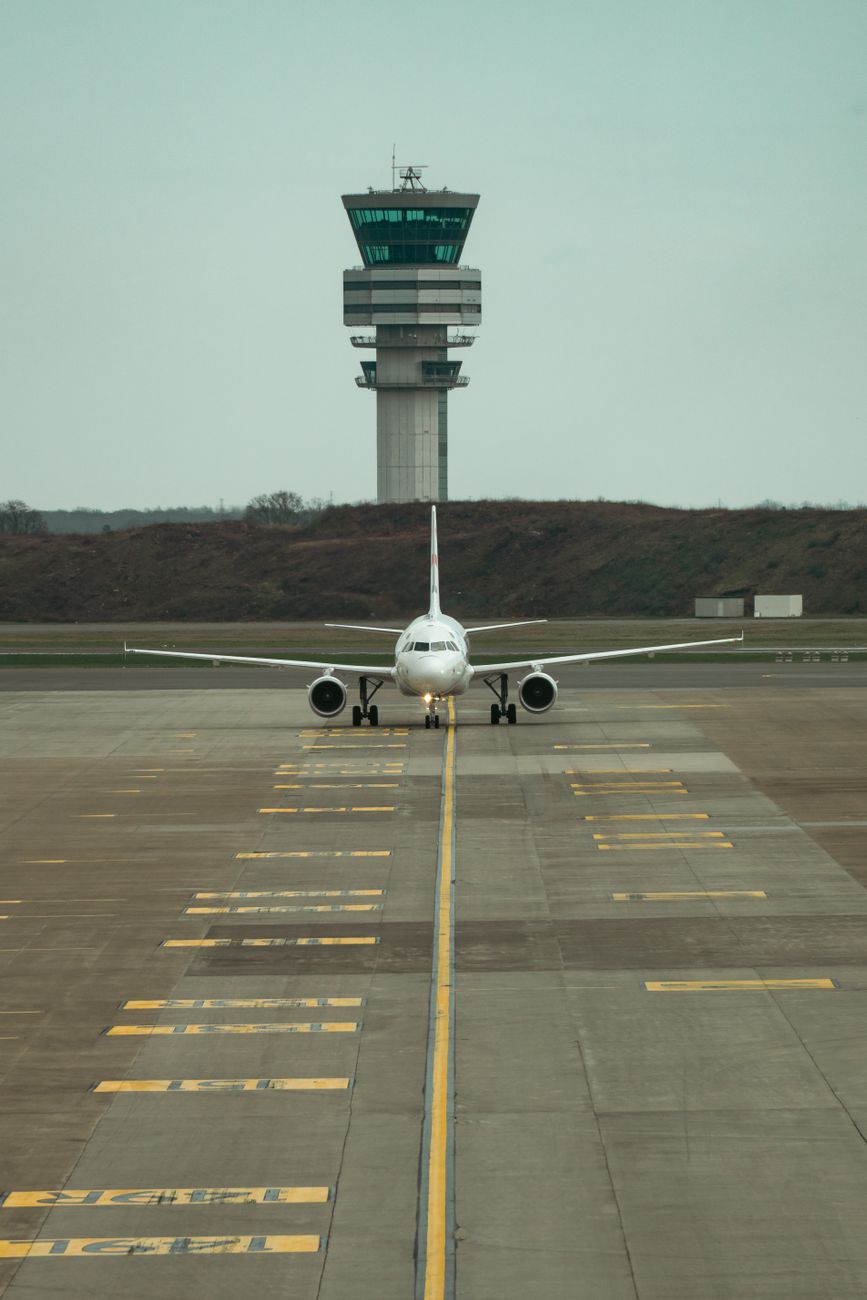
Can Brussels force the federal government to change its aircraft ‘highway’?
The Brussels-Capital Region is taking the federal government back to court over what Dutch-language reporting describes as a “vliegtuigsnelweg”, an aircraft highway that concentrates flights over parts of Brussels. The Region is reportedly seeking court-ordered penalties, or dwangsommen, if the federal level does not adjust the contested flight-routing practice. The case matters because air routes around Brussels Airport sit at the fault line between federal aviation powers, regional noise rules and local residents’ health concerns. It also lands in the 2024-2029 political cycle, with Prime Minister Bart De Wever’s federal government and Minister of Mobility, Climate and Environmental Transition Jean-Luc Crucke facing a dossier that has repeatedly defeated Belgian compromise.
For residents under concentrated routes, the practical issue is sleep, work-from-home disruption and repeated exposure to peak aircraft noise. For passengers and airport-linked businesses, the risk is that sudden legal pressure could force operational changes at Belgium’s main airport. For politics, the case tests whether the De Wever federal government can solve a long-running Brussels Airport dispute without shifting noise from one community to another. It is also a service issue for people living in Brussels: the relevant authority is not their municipality, but a mix of regional environmental services, federal mobility authorities and, ultimately, the courts.
The true subject is not Brussels Airport as a passenger hub, but the governance of aircraft noise around it. Brussels Airport is located in Zaventem, in Flanders, while many departure and arrival routes affect residents in the Brussels-Capital Region. Air navigation, flight procedures and federal aviation policy fall under the federal level, involving the Federal Public Service Mobility and Transport and air-navigation provider skeyes. Environmental noise standards and enforcement in Brussels belong to the Brussels-Capital Region. That split explains why the Region can complain about noise exposure but cannot itself redraw the flight paths. The current case reportedly asks a judge to oblige the federal government to act, potentially under financial pressure through penalties.
Background
Aircraft noise around Brussels Airport has been politically sensitive for decades because the airport is outside Brussels but close to dense urban neighbourhoods. The 2014 Wathelet flight-route plan became a turning point: it tried to spread traffic but triggered major complaints in Brussels after many flights were routed over populated areas. Since then, Belgian governments have cycled between technical adjustments, court cases and intergovernmental talks. The deeper pattern is institutional: the federal state controls air traffic rules, Flanders hosts and economically benefits from the airport, and Brussels enforces noise standards for residents who often have no direct control over the airport’s operation.
Impact
Regional — The direct regional impact is in Brussels, especially neighbourhoods under concentrated routes from Brussels Airport. The dispute may also affect Flemish municipalities around Zaventem if any court-ordered change redistributes aircraft movements.
Opposing perspectives
- Brussels regional government and affected residents
The Brussels-Capital Region’s frame is that concentrated overflights impose an unfair burden on urban residents and that federal inaction leaves the Region with noise violations it cannot solve alone. Residents’ associations and municipalities under the routes tend to argue that spreading or reducing flights is a health and quality-of-life issue, not a technical inconvenience.
- Federal mobility authorities and air-navigation operators
The federal frame is usually operational and legal: route changes must respect aviation safety, runway use, weather conditions and international procedures. Federal Minister Jean-Luc Crucke and the Federal Public Service Mobility and Transport must balance court pressure with the need to keep Brussels Airport functioning predictably.
- Brussels Airport Company and Flemish economic constituencies
The airport and Flemish economic actors generally stress connectivity, jobs and cargo activity. Their concern is that abrupt or fragmented court-driven changes could weaken Belgium’s main airport, move noise elsewhere without reducing it, and create uncertainty for airlines and logistics companies.
- Dutch-language and francophone media frames
Dutch-language reporting often presents the dispute as an institutional conflict between Brussels and the federal state, with Flemish airport interests in the background. Francophone coverage of similar cases has more often used the language of “survol de Bruxelles”, highlighting residents’ exposure and the political inability to deliver a durable settlement.