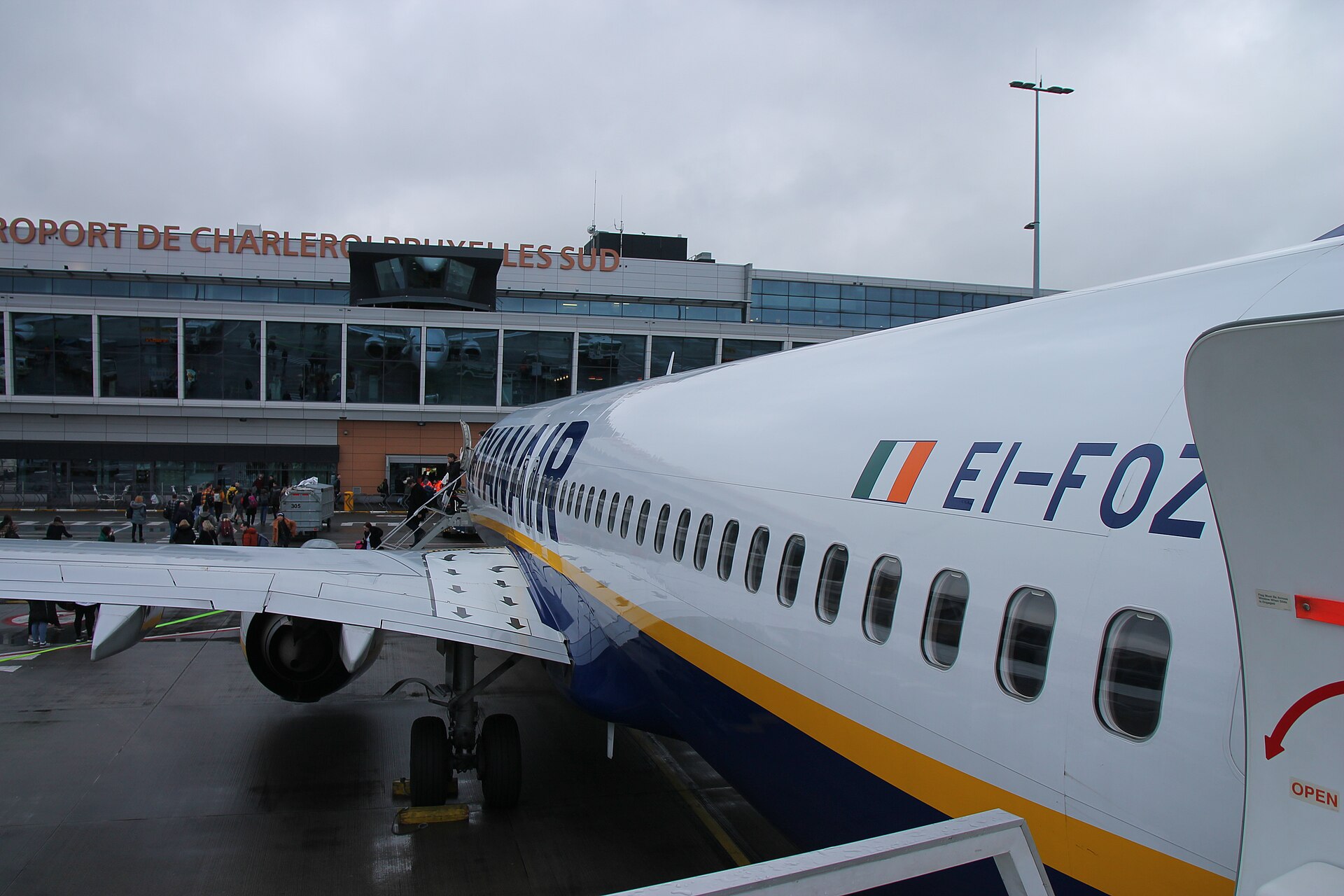
Can Charleroi Airport absorb Belgium’s higher passenger taxes without losing flights?
Belgium’s low-cost aviation model is entering a harder phase. Jan Jambon of N-VA, the federal finance minister, is not backing away from the planned increase in the federal aviation passenger tax, according to La DH, while Charleroi has also introduced a local passenger levy. For Brussels South Charleroi Airport, which handled about 10.5 million passengers in 2024, the issue is not only a few extra euros on a ticket: it is whether airlines with mobile aircraft, especially Ryanair, decide that the airport remains cheap enough to justify capacity growth. Ryanair has already warned it could remove roughly 1.1 million seats from Charleroi in 2026 and another 1.1 million in 2027 if the tax burden rises as planned. That would be a significant shock for Wallonia’s main passenger airport, whose business model depends on high volume, low fares and fast aircraft turnarounds.
For households, the immediate effect is simple: a family of four flying from Charleroi could face a visible extra cost on top of baggage, seat-selection and shuttle charges. For businesses in Hainaut, Walloon Brabant and Brussels, the bigger issue is route availability. If airlines cut frequencies or withdraw routes, cheap weekend flights disappear first, but business travellers also lose flexible links to secondary European cities. For the airport and surrounding firms, fewer passengers means less parking income, retail spending, shuttle demand, handling work and hospitality activity. The tax debate therefore lands directly on household travel budgets and on a regional employment ecosystem built around volume.
The subject is Brussels South Charleroi Airport, operated by Brussels South Charleroi Airport SA, a Walloon regional airport in Gosselies and Belgium’s second-largest passenger airport after Brussels Airport at Zaventem. Its commercial centre of gravity is low-cost short-haul travel, with Ryanair as the dominant carrier and Wizz Air also present. The political trigger is Belgium’s aviation tax policy: a federal passenger tax increase defended by Jan Jambon, combined with a Charleroi municipal tax of €3 per departing passenger introduced in 2026. The business question is whether these taxes raise public revenue and environmental price signals without damaging the airport’s traffic base, local jobs and connectivity.
Background
Charleroi’s aviation story is a post-industrial regional development case. The airport was transformed from a modest regional facility into a major low-cost base after Ryanair arrived in the late 1990s and made Charleroi its first continental European base in 2001. That growth gave Wallonia a second aviation pole alongside Liège’s cargo airport and helped Charleroi diversify beyond heavy industry. But the model has always been exposed to two pressures: EU scrutiny of public support for airports and airlines, and the ability of low-cost carriers to move aircraft quickly when airport charges or taxes rise.
Impact
Regional — The impact is concentrated in Wallonia, especially Charleroi and the wider Hainaut economy. Charleroi Airport is not just an airport: it anchors parking operators, shuttle companies, hotels, cleaning contractors, ground handlers, retail concessions and the Aéropole business zone. A large capacity cut would be felt locally before it appeared in national GDP data.
Opposing perspectives
- Federal government and tax-policy supporters
Jan Jambon and supporters of higher aviation taxation argue, in effect, that air travel should contribute more fairly to public finances and environmental costs. Their position is that a few euros per passenger is modest compared with the total cost of travel and that Belgium should not permanently underprice flying simply to retain airline capacity.
- Charleroi Airport, Ryanair and local business interests
The airport side sees the tax stack as a competitiveness problem. Low-cost airlines compare Charleroi with airports in France, the Netherlands, Germany, Italy and Central Europe. If the total charge per passenger rises, aircraft can be redeployed elsewhere, leaving Wallonia with fewer routes, weaker airport income and a local jobs risk.
- Environmental groups and rail advocates
Environmental constituencies generally view aviation taxes as a necessary correction because short-haul flying benefits from tax advantages compared with road and rail, especially on fuel. Their concern is that airports frame any tax increase as a jobs threat while ignoring climate costs and the availability of train alternatives on some routes.
- Passengers in Wallonia, Brussels and northern France
Travellers mainly judge the issue through price and convenience. A small tax may be acceptable if routes remain available, but a reduced schedule could push passengers toward Zaventem, Lille, Luxembourg or Eindhoven, adding train, shuttle, fuel or parking costs that are not visible in the ticket price.
Sources & evidence
- La DH · 2026-06-11
- Reuters · 2026-01-14
- Brussels South Charleroi Airport
- Brussels Airport Company · 2025-01-12
- FPS Mobility and Transport Belgium