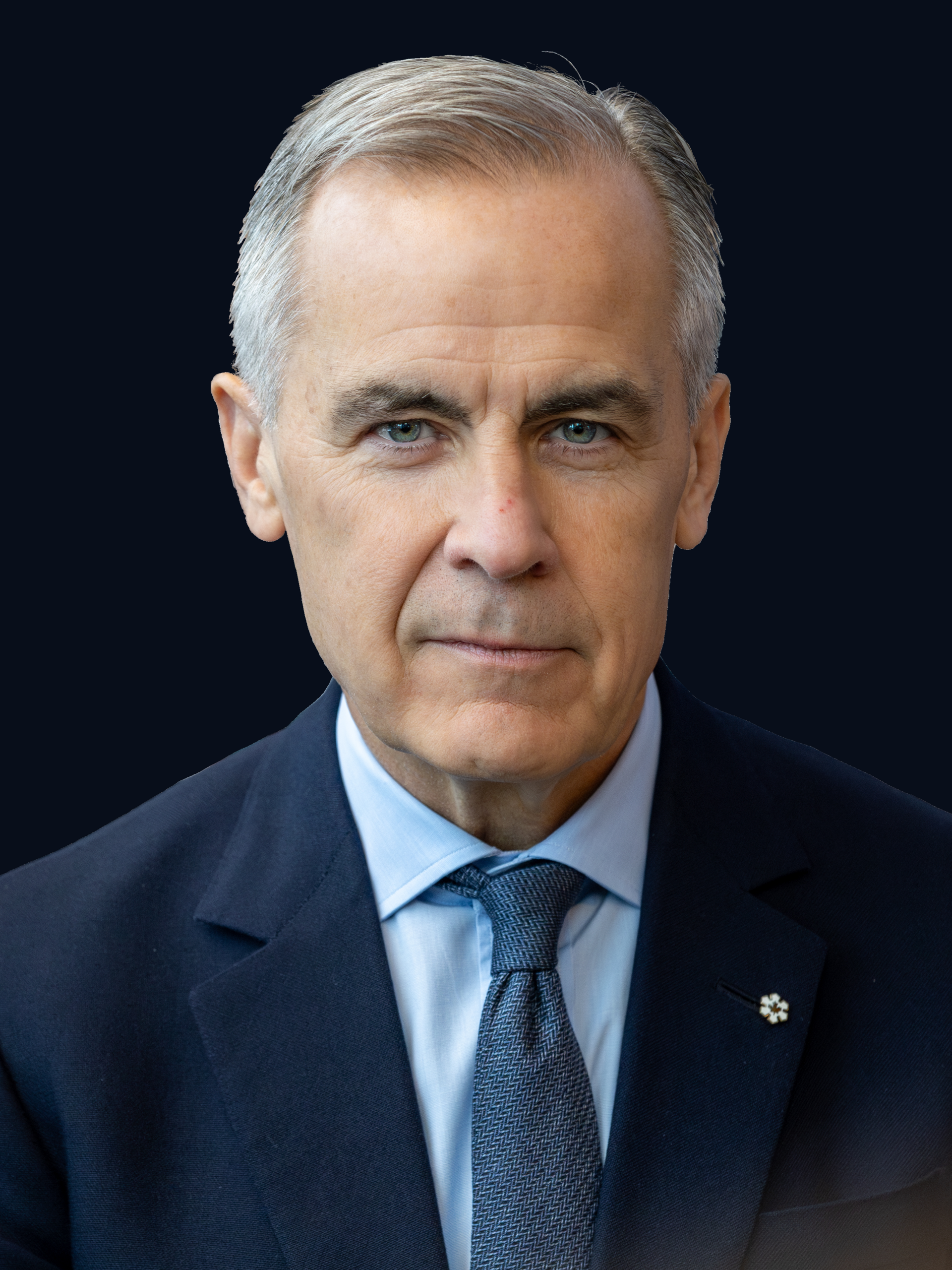
Carney urges Canada and EU to build middle-power bloc before G7
Canadian Prime Minister Mark Carney used a Dublin visit before the G7 summit in France to argue that Canada and the European Union should act together as a “third path” in a more coercive global order. Carney said Canada and Europe can multiply their weight through trade, defence procurement, critical minerals and diplomatic coordination rather than competing for favour with Washington. The immediate setting is the 15-17 June G7 summit in Évian-les-Bains, where U.S. trade policy and the scheduled USMCA review will shadow talks among allies. For Europe, the speech reinforces an existing EU-Canada track: the Council of the EU says Canada signed an EU security and defence partnership on 23 June 2025, and the European Commission says CETA has lifted EU-Canada goods and services trade since provisional application in 2017. Belgium’s role is indirect but real because Brussels hosts the EU institutions turning that strategy into policy.
For Belgium-based readers, this is mainly an EU and trade story. Belgian exporters, port operators, logistics firms, defence suppliers and policy teams in Brussels all operate inside EU frameworks that could deepen with Canada. The European Commission says CETA has already expanded EU-Canada trade, while the Council of the EU describes security partnerships as tools for defence, cyber, maritime and hybrid-threat cooperation. Belgian voters and businesses should read Carney’s message as another sign that Europe’s economic security agenda is becoming less U.S.-centric.
Mark Carney (Canadian prime minister since 2025 and former Bank of Canada and Bank of England governor) is recasting Canadian foreign policy around diversification from the United States. Micheál Martin (Ireland’s Taoiseach, or head of government) hosted Carney in Dublin before Ireland’s forthcoming Council of the EU presidency. Emmanuel Macron (French president and host of the 2026 G7) is convening leaders in Évian-les-Bains, a French town on Lake Geneva. The G7 (Canada, France, Germany, Italy, Japan, the United Kingdom, the United States and the EU as participant) is an informal forum of advanced economies. CETA (the EU-Canada Comprehensive Economic and Trade Agreement, provisionally applied since 2017) is the main trade framework. SAFE (Security Action for Europe, the EU defence procurement loan instrument) is the defence-industrial channel Carney wants Canada to use. USMCA (the United States-Mexico-Canada Agreement, in force since 2020) is Canada’s dominant North American trade pact.
Background
The broader arc predates Carney’s Dublin speech. The European Commission says CETA provisionally entered into force on 21 September 2017, removing most tariff barriers while full ratification remains unfinished. The Council of the EU says security and defence partnerships became a Strategic Compass tool after March 2022, when Russia’s full-scale war in Ukraine had already pushed Europe toward more structured defence cooperation. Canada and the EU signed their security and defence partnership on 23 June 2025. The World Economic Forum’s 2026 Global Risks Report then framed geoeconomic confrontation as a leading near-term risk, which helps explain Carney’s middle-power language.
The wider picture
Carney’s message reflects a world where U.S. protectionism, Chinese industrial power, Russia’s war against Ukraine and supply-chain coercion have weakened the older assumption that allies can rely on open markets and U.S. leadership. The middle-power idea is a hedge: Canada and Europe remain Western partners, but want more room to act together when great powers weaponise trade or security dependence.
Why now
The trigger is the G7 summit in France on 15-17 June, combined with Canada’s looming USMCA review and continuing uncertainty over U.S. trade policy. Carney used stops in Paris and Dublin to frame Europe as Canada’s strategic partner before leaders gather.
What to watch
Watch whether the G7 produces language on trade coercion, critical minerals or defence-industrial cooperation, and whether Carney secures visible backing from EU leaders. The next test is the USMCA review around 1 July, followed by any EU-Canada movement on digital trade, CETA committees or SAFE-related procurement.
Opposing perspectives
- Carney government / Canadian diversification camp
Carney’s argument is that Canada can reduce vulnerability to U.S. pressure by deepening EU trade, defence procurement and critical-minerals ties. Carney said in Dublin that middle powers can combine influence rather than compete for favour, and he presents Europe as the natural partner for that shift.
- U.S. administration / trade-negotiation camp
The U.S. position, as described by an administration official quoted in the coverage, is that no major Canada breakthrough is expected at the G7 and that Washington remains focused on USMCA leverage. This frame treats Carney’s European push as secondary to the still-dominant North American trading relationship.
- EU institutions / strategic-partnership camp
The Council of the EU frames security and defence partnerships as a structured way to work with like-minded non-EU countries on cyber, maritime security, hybrid threats and crisis management. In this view, Canada is not a symbolic partner but part of the EU’s wider toolkit for geopolitical resilience.
Sources & evidence
- Al Jazeera — ‘A global rupture’: Carney calls for Canada-EU unity before G7 summit · 2026-06-13
- Associated Press — Canada’s Carney says middle-power countries shouldn’t compete for favor with the US · 2026-06-13
- Associated Press — Ahead of G7, Carney softens tone toward Trump · 2026-06-12
- European External Action Service — EU Security and Defence Partnerships
- Council of the EU — Security and defence partnerships · 2026-03-24
- European Commission — EU trade relations with Canada
- World Economic Forum — Global Risks Report 2026 · 2026-01-14
- The Guardian — Canada and EU sign defence pact amid strained US relations and global instability · 2025-06-23