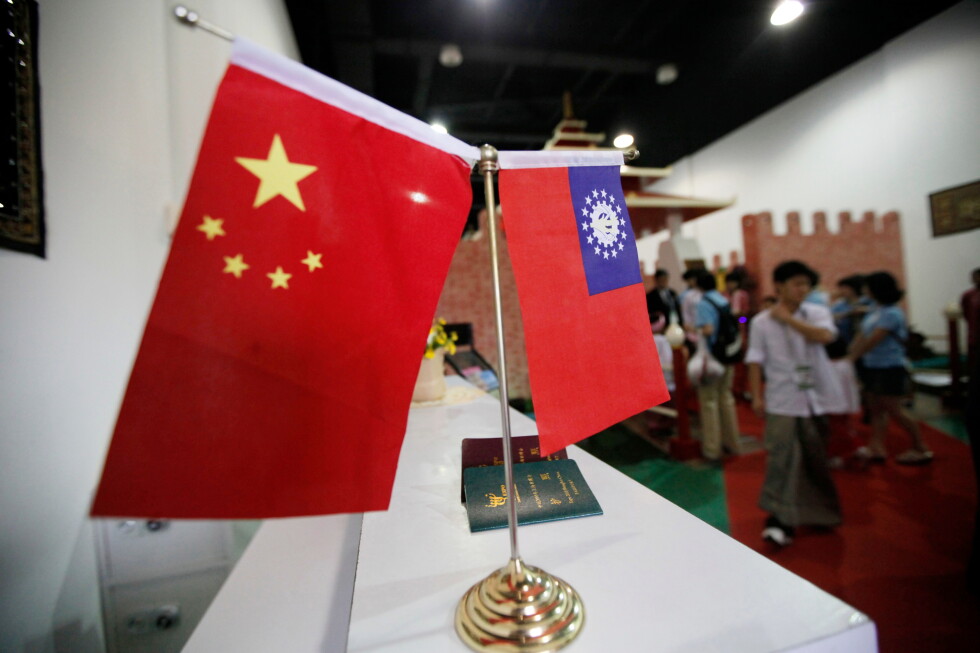
China detains Min Zin on espionage allegations
China's Ministry of Foreign Affairs says Min Zin, a US citizen and Myanmar-focused political analyst, has been placed under criminal compulsory measures on suspicion of espionage and endangering national security. The case matters beyond one detention because Min Zin's work sits at a sensitive intersection: Myanmar's civil war, China's border-security interests, rare earth supply chains and US-China diplomacy. The Ministry said the US consulate general in Guangzhou had been notified, while the US State Department's China advisory already warns that academics and researchers can face detention under broad national-security laws. The facts publicly available do not show what specific conduct China alleges. For European readers, the strongest link is strategic rather than consular: Myanmar remains under EU sanctions after the 2021 coup, while China-Myanmar border politics affect minerals and regional security debates watched in Brussels.
For Belgian and EU readers, this is mainly an international security and research-freedom story. Belgian universities, think tanks, NGOs, China-facing businesses and EU officials in Brussels all work in environments where open-source research, fieldwork and data gathering can be treated differently by authoritarian states. The European Commission's Critical Raw Materials Act also frames rare earth supply as a strategic issue for European industry, making Myanmar-China border politics relevant to Belgian manufacturers, clean-tech firms and policy readers even though no Belgian citizen is directly involved.
Min Zin (US citizen, Myanmar-born scholar and founder of the Institute for Strategy and Policy Myanmar) studies Myanmar politics, China-Myanmar relations and conflict dynamics. The Institute for Strategy and Policy Myanmar, or ISP Myanmar (Myanmar-focused policy research group operating across the region after the 2021 coup), analyses politics, resources and war. Kunming (capital of China's Yunnan province) is a major southwestern city close to Myanmar and a hub for China-Myanmar exchanges. Yunnan (Chinese province bordering Myanmar, Laos and Vietnam) is central to Beijing's border-security policy. Lin Jian (Chinese Foreign Ministry spokesperson since 2024) announced Beijing's position. The US consulate general in Guangzhou (US diplomatic post in southern China) handles consular cases in its district. Min Aung Hlaing (Myanmar military leader who led the 2021 coup and later became president after a disputed process) is due in China, according to China's Foreign Ministry. UC Berkeley (California public research university) is listed in reports as Min Zin's doctoral institution.
Background
Min Zin's profile is rooted in Myanmar's 1988 pro-democracy uprising, which the military suppressed and which shaped a generation of exiled activists and analysts. Myanmar's military seized power again on 1 February 2021, prompting civil war, EU sanctions and wider diplomatic isolation. The Council of the EU said in March 2021 that sanctions targeted commanders responsible for the coup and repression. China has since tried to manage instability on its Myanmar border while maintaining influence with the junta and armed groups. The US State Department's China advisory, issued in November 2024, warned that researchers can be detained for alleged national-security violations.
The wider picture
Myanmar is a pressure point in China's neighbourhood strategy: it borders Yunnan, hosts strategic corridors and supplies resources watched by global industry. Rare earth research adds another layer because Klimek, Baum, Gerschberger and Hess's 2025 trade-risk study argues that the EU and US remain vulnerable in rare-earth-dependent industrial tiers. The detention therefore lands inside a wider contest over information, minerals and influence.
Why now
The story is timely because China's Ministry of Foreign Affairs confirmed the detention on 12 June 2026 after Min Zin reportedly disappeared on 3 June. It also comes just before Min Aung Hlaing's reported 15-19 June visit to China and amid attempts to steady US-China relations.
What to watch
Watch for formal charges, a public US State Department statement, access by US consular officials, any statement from ISP Myanmar or UC Berkeley, and Myanmar-related announcements during Min Aung Hlaing's reported 15-19 June China visit. The absence of detail will itself be a signal in a national-security case.
Opposing perspectives
- Chinese Ministry of Foreign Affairs
China's Ministry of Foreign Affairs frames the case as a national-security matter: foreign nationals in China must obey Chinese law, and suspected espionage can justify criminal compulsory measures. In that view, the arrest is not a diplomatic bargaining chip but a legal response to conduct Beijing says endangered state security.
- US consular and research-freedom constituency
The US consular frame is that China's national-security and state-secrets rules are broad enough to put academics, analysts and business researchers at risk. The US State Department's advisory warns that researchers can be detained for accessing public material, so this case will be read as a warning about fieldwork in China.
- EU strategic-autonomy policymakers
For EU industrial and foreign-policy officials, the arrest is not primarily a consular case but another signal that China-linked research, Myanmar instability and rare-earth supply chains now overlap. The European Commission's Critical Raw Materials Act frames diversified access to strategic inputs as a competitiveness and security priority.
Sources & evidence
- Al Jazeera, China arrests US researcher it says is suspected of 'spying' · 2026-06-12
- Associated Press, US scholar with history of activism in Myanmar arrested in China on suspicion of espionage · 2026-06-12
- U.S. Department of State, China Travel Advisory · 2024-11-27
- Council of the EU, Myanmar/Burma: EU sanctions 11 people over the recent military coup and ensuing repression · 2021-03-22
- European Commission, Critical Raw Materials Act
- Peter Klimek, Sophia Baum, Markus Gerschberger and Maximilian Hess, Systemic Trade Risk Suppresses Comparative Advantage · 2025-08-01
- Le Monde, How China has relocated its most polluting mines to war-torn Myanmar · 2025-07-23