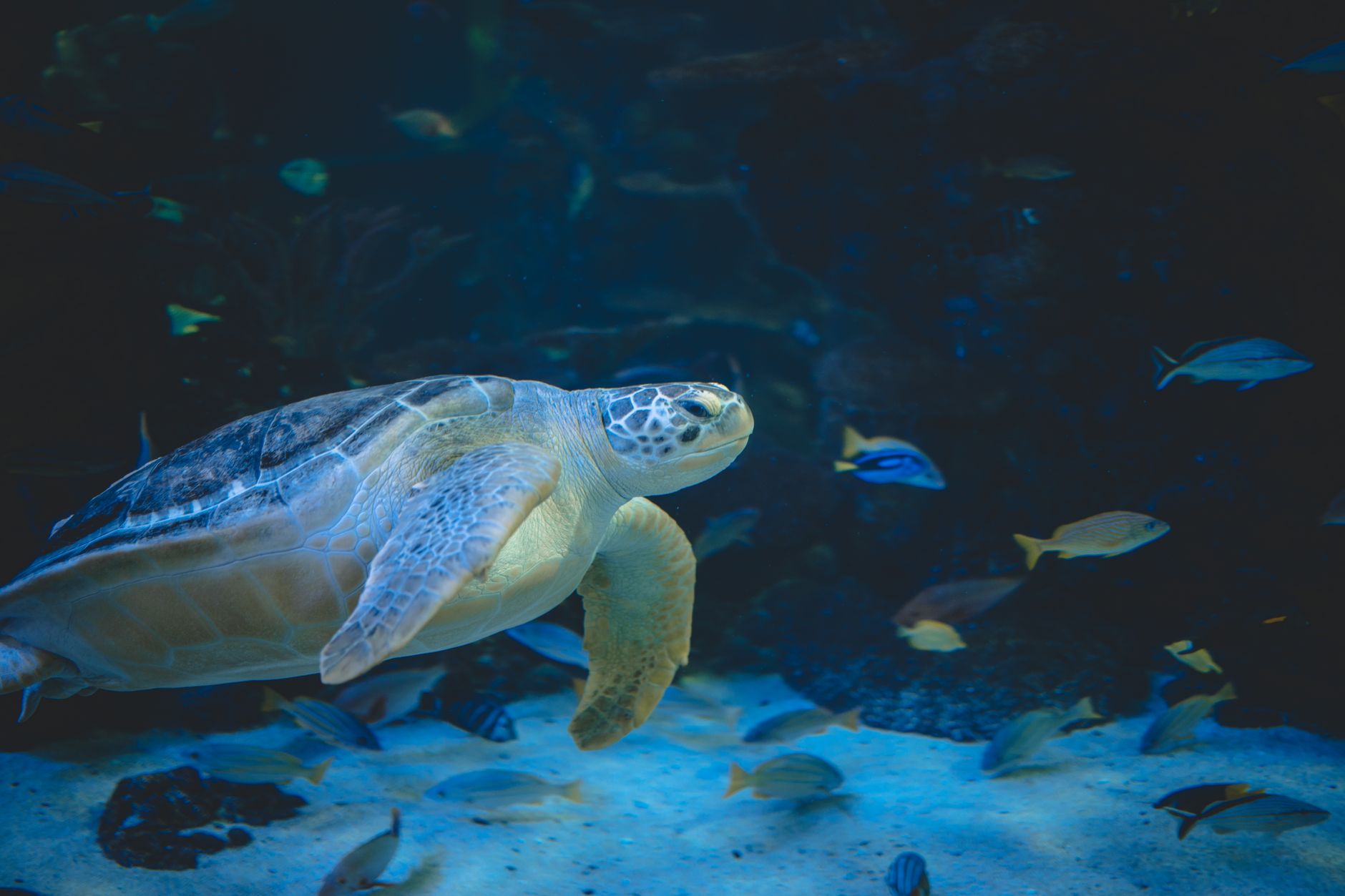
China's state security ministry accuses foreign agencies of using sea animals
China's Ministry of State Security says foreign intelligence services are using sensor-fitted marine animals and unmanned devices to collect data around China's coastline. The ministry alleged that turtles, fish, buoys and wave gliders can transmit information on water temperature, salinity, currents and vessel activity, but it did not identify the alleged operators or provide public evidence that would allow independent verification. The immediate story is part technological warning, part domestic security message: Beijing is presenting the seabed and littoral waters as another arena of strategic competition. For Belgium Pulse readers, the link is not the animals themselves but the doctrine behind the allegation. The Council of the EU's revised maritime security strategy says Europe is also prioritising maritime-domain awareness, underwater infrastructure protection and cooperation with NATO. The same tools that gather scientific ocean data can become politically sensitive in contested waters.
For Belgian residents, businesses and policymakers, the story is a reminder that maritime security now covers sensors, data flows and undersea infrastructure, not only ships. Belgium's North Sea economy depends on ports, offshore energy, telecoms cables and cross-border security cooperation. EU officials, diplomats and defence-sector readers in Brussels will read China's allegation through a broader contest over who may collect oceanographic data, where, and under what legal or military assumptions.
China's Ministry of State Security (China's civilian intelligence and counter-espionage agency, created in 1983) is the state body behind the allegation. WeChat (Tencent's dominant Chinese messaging and social-media platform, launched in 2011) is the channel through which the ministry has increasingly published public security messaging. The South China Sea (a contested maritime region linking China, Southeast Asia and major trade routes) is a recurring flashpoint for surveillance and naval activity. The East China Sea (waters between China, Japan, Taiwan and Korea) includes disputed islands and intensive military monitoring. The Taiwan Strait (the narrow waterway between mainland China and Taiwan) is one of the world's most sensitive military corridors. Sevastopol (Crimean Black Sea port used by Russia's fleet) is relevant because UK defence intelligence previously described Russian dolphin deployments there. The Council of the EU (the Brussels-based institution representing member-state governments) sets EU maritime-security priorities. NATO (the transatlantic defence alliance headquartered in Brussels) is central to European undersea-infrastructure protection.
Background
The Guardian reported that China's ministry linked the allegation to earlier claims about devices in the South China Sea, East China Sea and Taiwan Strait. In 2016, China seized a US Navy underwater drone in the South China Sea before returning it, an episode that showed how scientific-looking maritime sensors can become diplomatic incidents. In 2023, UK defence intelligence said Russia had trained dolphins at Sevastopol to counter divers. In Europe, the 2022 Nord Stream explosions and the 2023 Balticconnector incident pushed the EU and NATO to treat seabed infrastructure as a security priority.
The wider picture
The allegation reflects a wider great-power competition over the underwater domain. States want to monitor submarines, protect cables and pipelines, and control data gathered near sensitive coasts. In contested areas such as the South China Sea and Taiwan Strait, even civilian or scientific devices can be interpreted as military assets. Europe faces parallel concerns in the Baltic and North Sea after recent infrastructure incidents.
Why now
The story is timely because China's Ministry of State Security published a new public allegation on 12 June 2026, fitting its recent pattern of using public messaging to mobilise counter-espionage awareness and frame national security threats for a domestic audience.
What to watch
Watch whether China releases images, locations or technical details of the alleged devices, names a foreign operator, or links the claim to enforcement action against research bodies. For Europe, the next useful signal is the Council and Commission progress report on implementing the EU maritime-security strategy, expected three years after approval.
Opposing perspectives
- China's Ministry of State Security
China's Ministry of State Security frames the issue as an underwater intelligence threat: foreign services, research platforms and autonomous devices are allegedly turning oceanographic data into military advantage. Its strongest argument is that temperature, salinity and acoustic data can help map submarine conditions, so apparently scientific collection near sensitive waters cannot be treated as neutral.
- EU and NATO maritime-security planners
The Council of the EU and the CSIS brief frame the wider problem as maritime-domain awareness and infrastructure resilience. Their strongest reading is that the underwater domain is becoming strategically congested, but effective protection requires evidence, attribution standards and cooperation with private infrastructure operators rather than broad suspicion of every sensor at sea.
Sources & evidence
- Euronews, "La Chine affirme que des 'tortues espionnes' etudient son littoral" · 2026-06-12
- The Guardian, "'Spy turtles' and 'spy fish' being used to monitor Chinese waters, Beijing claims" · 2026-06-12
- Council of the EU, "Maritime security: Council approves revised EU strategy and action plan" · 2023-10-24
- Sean Monaghan, Otto Svendsen, Michael Darrah and Ed Arnold, "NATO's Role in Protecting Critical Undersea Infrastructure" · 2023-12-19