Chinese robot makers test AI cleaners in homes
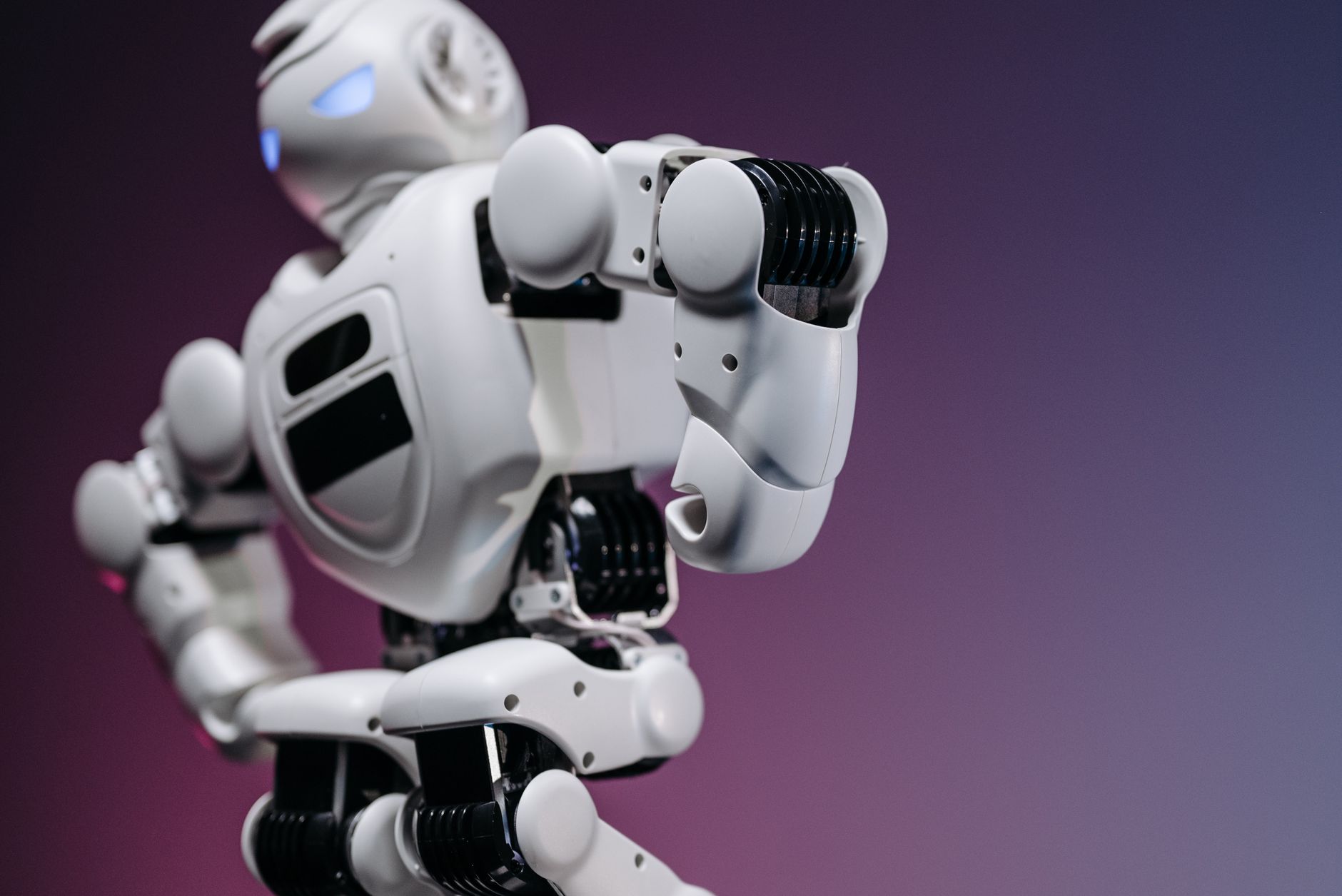
Chinese robotics companies are moving humanoid and arm-equipped service robots from trade-show floors into trial household cleaning tasks, a small but telling step in the race to turn embodied AI into consumer products. The most concrete test now visible is modest: a helper robot can sort shoes, fold clothes and change rubbish bags, while a human cleaner remains present. The Ministry of Industry and Information Technology says China had more than 140 humanoid-robot manufacturers and more than 330 models in 2025, while Omdia says AGIBOT and Unitree each shipped more than 5,000 general-purpose embodied robots that year. The issue for Belgian and EU readers is not whether these machines replace domestic cleaners tomorrow. It is whether camera-, microphone- and cloud-connected robots can meet EU product-safety, cybersecurity, data-protection and AI rules before Chinese suppliers try to scale beyond Asia.
Belgian consumers, domestic-service workers, care providers, importers and electronics retailers will feel this first as a standards and trust question, not a household revolution. A robot that maps rooms, records voice commands or uploads sensor data touches GDPR, cybersecurity and product-liability expectations inside Belgian homes. The European Commission says connected products must meet Cyber Resilience Act obligations, while AI systems embedded in regulated products face AI Act duties later in the decade. That affects Belgian buyers before mass adoption does.
AGIBOT (Shanghai-based robotics company founded in 2023 by former Huawei engineers) and Unitree Robotics (Hangzhou-based robot maker founded in 2016, known for quadruped and humanoid platforms) are among the Chinese vendors pushing embodied AI into real-world tasks. Matrix Robotics (Chinese humanoid startup led by Allen Zhang) and EngineAI (Shenzhen humanoid-robot company founded in 2023) illustrate the broader commercial field. The Ministry of Industry and Information Technology (China's central industry and technology ministry) tracks the sector's scale. Omdia (London-based technology research firm) and Morgan Stanley (US investment bank) provide market estimates cited in current reporting. The European Commission (EU executive based in Brussels) oversees the EU AI Act and Cyber Resilience Act, the rulebooks that will shape any connected robot entering the EU market.
Background
Domestic robots have been commercially familiar since early robot vacuum cleaners, but humanoid helpers remain much less mature. Ecovacs Robotics began selling floor-cleaning robots in the 2000s, while newer Chinese humanoid companies accelerated after 2023 as large language models and vision-language systems improved command following. The European Commission says the AI Act entered into force on 1 August 2024, and the Cyber Resilience Act entered into force on 10 December 2024. Those dates matter because the EU is building product rules just as Chinese manufacturers test whether embodied AI can leave controlled demos and function in private homes.
The wider picture
Robotics is becoming another front in the wider China-US-EU competition over advanced manufacturing, AI supply chains and technical standards. China appears strongest in hardware scale and data-rich deployment environments, while the EU's leverage lies in market access rules. For Belgium, the strategic issue is whether European regulation can protect users without excluding useful innovation.
Why now
The story is timely because Chinese companies are shifting from staged humanoid demonstrations to limited real-world service trials, while EU implementation clocks for AI and connected-product rules are now close enough to shape product planning.
What to watch
Watch whether Chinese vendors identify specific household models for export, whether EU importers seek CE-marked versions, and how the European Commission finalises guidance linking the AI Act with product-safety and cybersecurity rules before 2027-2028 obligations bite.
Opposing perspectives
- Chinese robotics manufacturers
Chinese robot makers argue that real-life deployment is beginning to validate the sector. Matrix Robotics, EngineAI and other vendors present household, hotel, logistics and public-service trials as the route from impressive demonstrations to repeatable products, while scale manufacturing and domestic supply chains could lower costs over time.
- Technology-market analysts
Market analysts quoted in current reporting frame the near-term barrier as demand rather than engineering spectacle. Their strongest argument is that many humanoid robots remain costly, fragile and better suited to structured settings such as factories, warehouses or labs than to cluttered private homes.
- EU regulators
The European Commission's regulatory frame treats connected AI products as market goods that must be trustworthy before scale adoption. The AI Act and Cyber Resilience Act approach suggests that convenience in the home does not remove obligations on cybersecurity, human oversight, documentation and market surveillance.
Sources & evidence
- Euronews — La Chine teste des robots nettoyeurs à domicile dotés d'IA · 2026-06-11
- Associated Press — China can build humanoids at scale. The hard part is finding enough buyers · 2026-06-06
- Business Insider — China is putting OpenClaw to work in robots · 2026-03-20
- European Commission — AI Act · 2026-05-11
- European Commission — Cyber Resilience Act · 2025-12-03
- Wenbo Li et al., CleanUpBench: Embodied Sweeping and Grasping Benchmark, arXiv, 2025 · 2025-08-07
- Victor Mayoral-Vilches et al., Cybersecurity AI: Hacking Consumer Robots in the AI Era, arXiv, 2026 · 2026-03-09