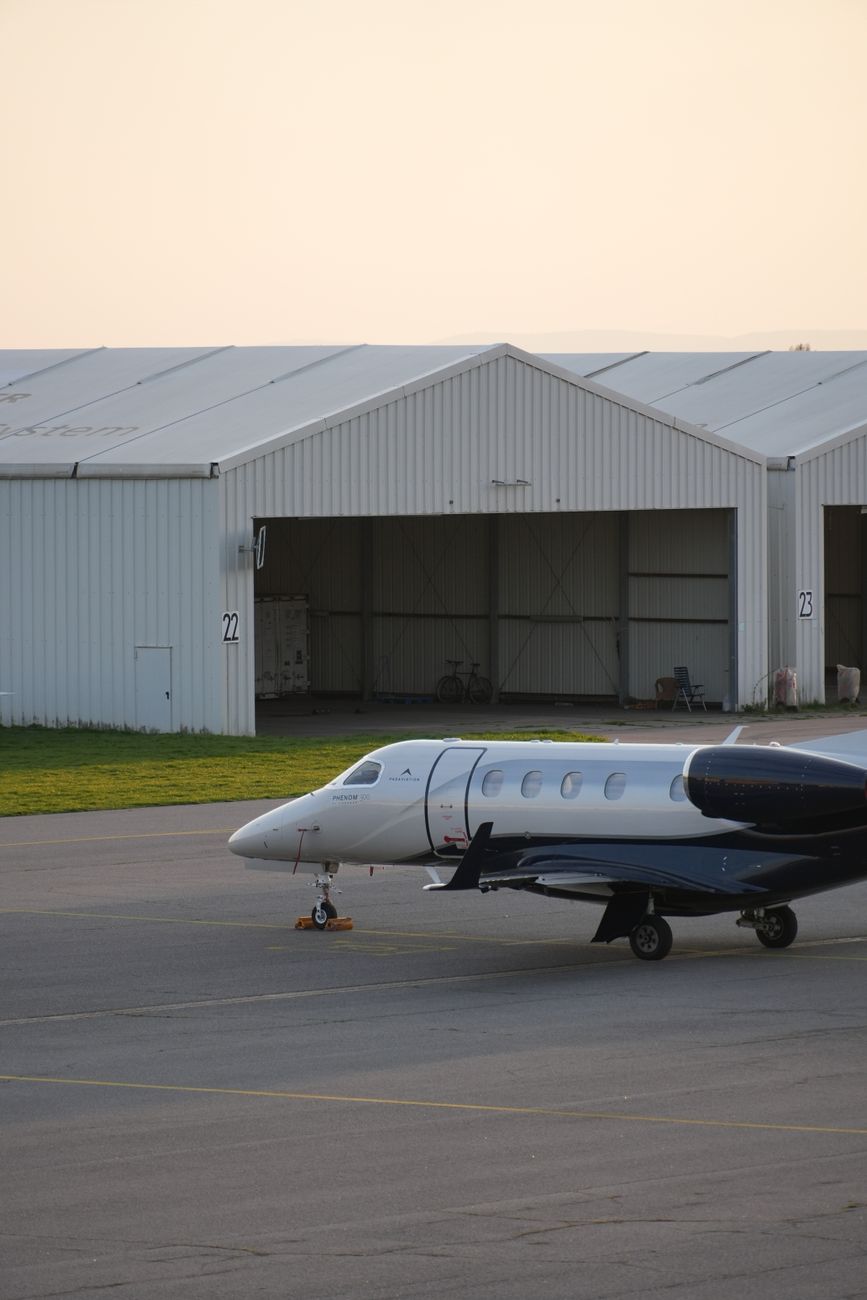
Could a grounded airliner become Wallonia's most practical aviation classroom?
For jobseekers and career-changers in Wallonia, the practical takeaway is simple: if the purchase reported by La DH is implemented as planned, aviation training around Charleroi should become more hands-on, with learners able to practise on a real passenger aircraft rather than only on components, simulators or classroom material. La DH reported on 5 June 2026 that Le Forem, the WAN and Wallonia are buying an airliner. The public-interest point is not the novelty of a regional body owning an aircraft; it is whether the equipment helps people move into regulated technical jobs in aircraft maintenance, airport operations and related industrial services. Anyone interested should treat this as a training opportunity to monitor, not as a passenger-service story: check Le Forem's training catalogue, ask a Forem adviser whether the course leads toward recognised aviation-maintenance pathways, and verify language and licensing requirements before committing time.
A real airliner can make aviation training more concrete for people who are not yet sure whether the sector fits them. For expats, new arrivals and internationally mobile workers in French-speaking Belgium, the useful question is: can this help me qualify for a stable technical job? The answer depends on the course design. A good pathway should explain prerequisites, language level, medical or safety constraints, whether the training is for jobseekers or workers, and how it connects to employers at Brussels South Charleroi Airport, Brussels Airport, maintenance companies or aerospace suppliers. As of 13 June 2026, readers should verify final course pages on leforem.be rather than assuming that the aircraft purchase alone creates an immediately open course.
The subject is a reported purchase of a passenger aircraft by Le Forem, the WAN named in the La DH report, and the Walloon Region for training use. Le Forem is Wallonia's public employment and vocational-training service, serving people registered in Walloon communes such as Charleroi, Namur, Liege, Mons or Tournai, excluding the German-speaking Community where ADG is competent. The practical centre of gravity is vocational training: aircraft maintenance is a regulated field in Europe, and real aircraft give trainees exposure to access panels, cabin systems, wiring routes, safety procedures, documentation habits and team workflows that are difficult to reproduce fully in a standard classroom. For Brussels residents, the route is different: Actiris handles jobseeker registration, while Bruxelles Formation covers many French-language training routes; Dutch-speaking residents would normally look to VDAB. The aircraft itself should therefore be understood as training infrastructure in Wallonie, not as a new airline, a public transport service or a tourism project.
Background
Charleroi's airport economy has grown from a regional airfield into Belgium's second passenger airport, helped by low-cost traffic and the wider Aeropole business zone. Wallonia has also long used public training tools to support industrial transition, especially in areas where older manufacturing jobs have declined. The reported airliner purchase fits that pattern: public equipment is being used to narrow the gap between classroom learning and workplace expectations. The broader lesson is that vocational training increasingly requires capital-intensive, sector-specific infrastructure, not just short courses and generic employability coaching.
Impact
Regional — The impact is primarily Walloon and especially relevant around Charleroi-Gosselies, where Brussels South Charleroi Airport, the Aeropole and aviation-linked employers create a local ecosystem for airport and maintenance skills. It may also matter for residents of nearby communes such as Fleurus, Courcelles, Pont-a-Celles and Seneffe who can reach training sites more easily than people in Luxembourg province or eastern Wallonia.
Opposing perspectives
- Walloon training planners and aviation employers
Supporters of the purchase are likely to argue that a complete aircraft gives trainees a realistic workplace environment and helps employers recruit people who understand safety procedures, documentation, confined spaces and the physical layout of an aircraft before their first job.
- Budget watchdogs and opposition politicians
Sceptical constituencies may ask whether buying and maintaining an airliner is proportionate, whether the aircraft will be used intensively enough, and whether public money would deliver more results through smaller equipment, employer subsidies or direct support for trainees.
- Prospective trainees and career changers
For learners, the practical question is less political: they need clarity on entry requirements, commuting, language, certification value and job outcomes. A visually impressive training aircraft matters only if it is tied to a transparent route into recognised work.