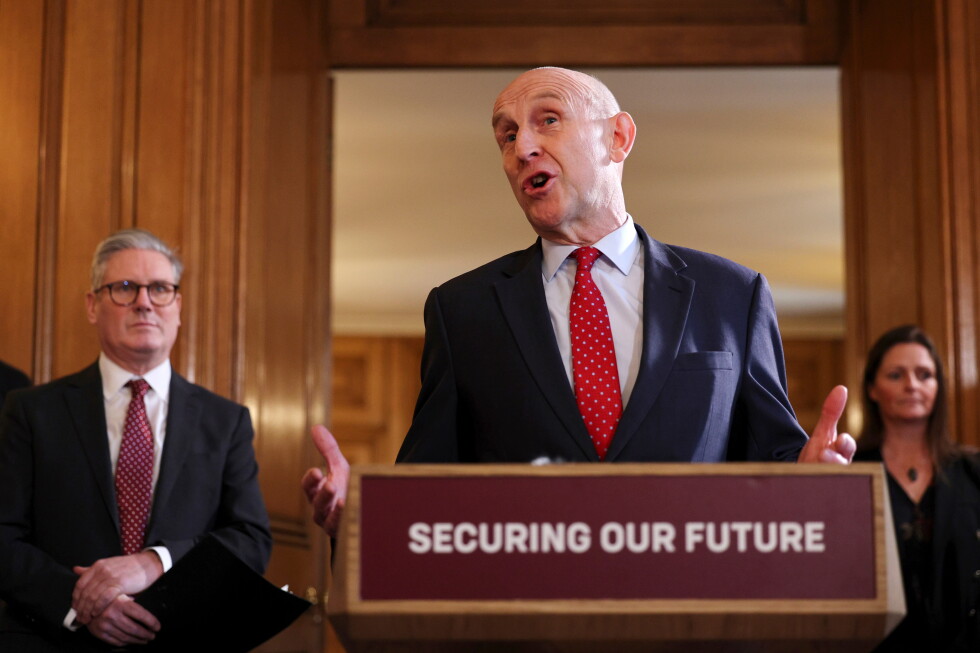
Dan Jarvis takes over UK defence after Healey quits over spending
Dan Jarvis became UK defence secretary on 11 June 2026 after the UK government confirmed his appointment and John Healey resigned in protest over the Defence Investment Plan. Healey said the settlement shown to him would lift defence spending only from 2.6% of GDP in 2027 to 2.68% by 2030, below the 3% by 2030 path he argued Britain needed. Prime Minister Keir Starmer's response said the plan would give the military the resources it needs while keeping public finances sustainable. The change matters beyond Westminster because Britain is a nuclear NATO ally, a major Ukraine backer and a partner in European defence planning. For Belgium, the link is indirect but real: NATO headquarters in Brussels and EU security institutions will watch whether London can match its strategic promises with budget choices before the next NATO summit.
Belgian readers are not directly governed by UK cabinet changes, but this one touches European security. Belgium hosts NATO headquarters in Brussels, participates in alliance planning and faces the same fiscal debate over higher defence spending. Belgian federal officials, defence-sector firms, Ukraine-policy watchers and voters following security budgets should read Jarvis's appointment as part of a wider European test: can governments fund deterrence, Ukraine support and industrial readiness without destabilising domestic spending choices?
Dan Jarvis MBE MP (British Labour politician, former Parachute Regiment officer and MP for Barnsley North) is the new UK Secretary of State for Defence. John Healey MP (Labour politician, defence secretary from July 2024 to June 2026) resigned over the defence funding settlement. Keir Starmer (UK prime minister since July 2024 and Labour leader) must now defend the spending plan. Rachel Reeves (UK chancellor of the exchequer) controls Treasury spending decisions. Al Carns (Labour MP and former armed forces minister) also resigned over the plan. The Ministry of Defence (UK government department responsible for armed forces and defence policy) owns the Defence Investment Plan. NATO (32-member North Atlantic Treaty Organization headquartered in Brussels) sets allied capability and spending goals. AUKUS (Australia-UK-US security partnership launched in 2021) is one of the strategic programmes under the defence secretary's brief.
Background
The Ministry of Defence's 2025 Strategic Defence Review said the UK should move to warfighting readiness, follow a NATO-first policy and raise defence spending to 2.5% of GDP by 2027, with 3% in the next Parliament if fiscal conditions allow. NATO's Hague Summit Declaration of 25 June 2025 committed allies to invest 5% of GDP annually by 2035, split between core defence and broader security-related spending. Healey's resignation therefore fits a longer post-Ukraine invasion pattern: European governments have accepted larger security ambitions while arguing over who pays, how fast and from which budgets.
The wider picture
Russia's war against Ukraine, US pressure for Europe to carry more defence weight and NATO's higher spending commitments form the backdrop. The UK dispute illustrates a wider Western problem: governments agree that deterrence, air defence, missiles, drones and industrial capacity must expand, but the bill competes with welfare states, debt constraints and electoral politics.
Why now
The trigger was Healey's rejection of the Defence Investment Plan settlement shown to him in June 2026. He said it did not put Britain on the spending path needed by 2030, and the government then confirmed Jarvis's appointment on 11 June 2026.
What to watch
Watch whether Jarvis publishes or revises the Defence Investment Plan, how Parliament reacts to the 2030 spending path, and whether the UK presents NATO with an annual plan that allies judge credible. Any further resignations or leadership pressure inside Labour would change the political weight of the defence dispute.
Opposing perspectives
- John Healey and defence-spending hawks
Healey's resignation letter argues that the Defence Investment Plan settlement did not match the threat environment or the military commitments already made by the UK. In this frame, accepting a slow spending path would force capability trade-offs, weaken readiness and make promises to NATO, Ukraine and service personnel less credible.
- Starmer government and Treasury fiscal realists
Starmer's response says defence must be funded in a way that protects sustainable public finances. This camp would argue that security depends not only on military budgets but also on economic credibility, borrowing costs and the ability to sustain spending over years rather than announce a politically satisfying but unfunded jump.
- Chatham House security-policy analysts
Chatham House's Olivia O'Sullivan says the episode shows a longer-term failure to reckon with the cost of rising defence commitments. The strongest version of this view is that Britain and other European states have made strategic promises after Russia's invasion of Ukraine without settling the taxes, cuts or borrowing needed to pay for them.
Sources & evidence
- Het Nieuwsblad lead item · 2026-06-12
- GOV.UK - Secretary of State for Defence
- GOV.UK - Dan Jarvis MBE MP
- GOV.UK - The Strategic Defence Review 2025 · 2025-06-02
- NATO - The Hague Summit Declaration · 2025-06-25
- Associated Press - UK defense secretary resigns over military spending · 2026-06-12
- The Guardian - Healey's shock resignation over defence plan pushes Starmer to brink · 2026-06-11
- Le Monde - UK defense minister resigns as Starmer fails to define military investment plan · 2026-06-12
- Chatham House / Olivia O'Sullivan comment on UK defence spending, carried in Guardian live coverage · 2026-06-11