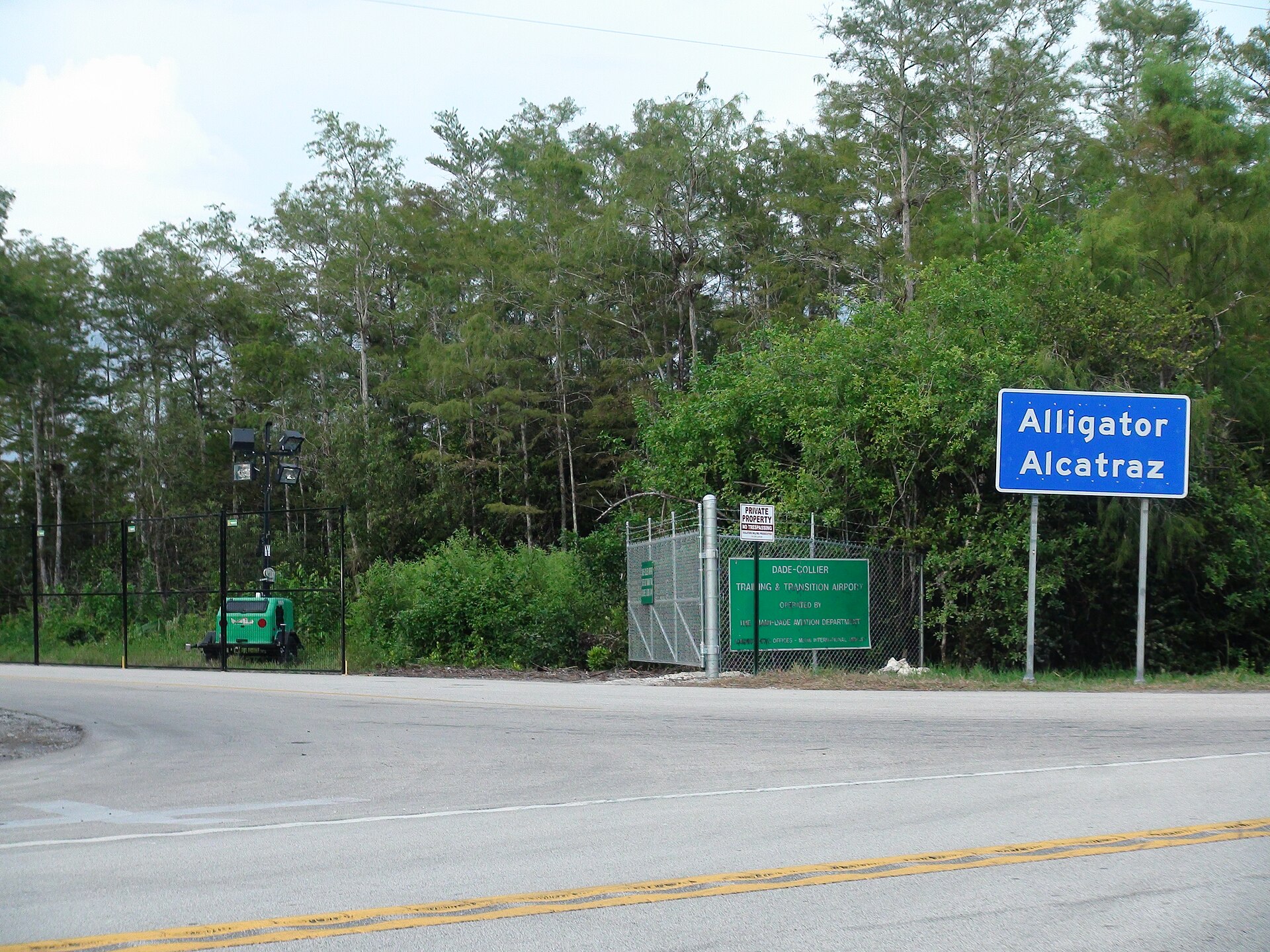
DHS moves detainees from Florida Everglades detention site
The U.S. Department of Homeland Security said all detainees had been moved out of the South Florida Detention Center, the Everglades facility widely known as Alligator Alcatraz, because of hurricane-season safety concerns. The department did not say how many people were transferred, where they were sent, or whether the site will close permanently. The move follows months of legal and human-rights challenges: immigrant-rights groups allege detainees were cut off from confidential legal access, while environmental and Indigenous plaintiffs have challenged the facility’s construction in the Big Cypress area. Florida Governor Ron DeSantis said in May that the temporary site had processed and deported 22,000 detainees since opening in July 2025. The central issue now is not only whether the camp stays empty, but whether transfers make legal representation and family contact harder for people already in immigration proceedings.
For Belgium Pulse readers, this is primarily an international rule-of-law and migration story. Belgian voters, lawyers, NGOs, public officials and EU policy staff regularly debate detention, returns and asylum processing; the U.S. case shows how emergency infrastructure, environmental law and access to counsel can collide when governments expand detention capacity quickly. It also matters to Belgian families and residents with transatlantic ties because transfers can make it harder for relatives, lawyers and consulates to track people in custody.
Alligator Alcatraz (informal name for a Florida immigration detention camp opened in July 2025) sits at the centre of the dispute. The South Florida Detention Center (state-run facility in the Florida Everglades) is the formal site referenced by U.S. authorities. The Florida Everglades (large wetland ecosystem in southern Florida) and Big Cypress National Preserve (federally protected area established in 1974) frame the environmental challenge. The U.S. Department of Homeland Security (federal department overseeing immigration enforcement since 2003) and U.S. Immigration and Customs Enforcement (DHS agency responsible for detention and removals) run the federal side of the system. Donald Trump (U.S. president in his second term) and Ron DeSantis (Florida governor since 2019) promoted the facility as part of a hard-line deportation strategy. The American Civil Liberties Union (U.S. civil-rights organisation founded in 1920) is litigating legal-access claims. The Miccosukee Tribe and Seminole people (Indigenous nations with deep Everglades ties) oppose the site’s impact on ancestral lands.
Background
The facility fits a longer U.S. pattern of using remote or improvised detention capacity during immigration surges. The Global Detention Project’s United States profile says the country operates the world’s largest immigration detention system, using roughly 200 facilities and booking about 300,000 people annually in recent years. In June 2025, environmental groups sued over the Everglades site before it opened. In July 2025, immigrant-rights groups filed H.C.R. v. Noem over access to counsel. In August 2025, a federal judge temporarily halted further construction in the environmental case, before later appellate developments allowed operations to continue.
The wider picture
The transfer comes amid a broader hardening of migration politics across North America and Europe. The geopolitical issue is not a military rivalry but the changing boundary of liberal-democratic migration control: states are testing faster removals, remote facilities and third-country arrangements while courts, NGOs and international monitors contest the human-rights costs.
Why now
The Department of Homeland Security linked the transfers to the start of the Atlantic hurricane season. The timing also follows months of litigation, public criticism and reports that detainees were already being moved out before the department confirmed the facility was empty.
What to watch
Watch for confirmation of where detainees were transferred, whether lawyers receive formal notices, whether Florida or federal officials announce a permanent closure, and whether the environmental and legal-access cases continue to seek orders that would prevent the site from reopening.
Opposing perspectives
- U.S. Department of Homeland Security
The Department of Homeland Security frames the transfers as a safety decision driven by hurricane-season risk. In that view, moving detainees out of a temporary Everglades site reduces exposure to severe weather while preserving the government’s broader ability to continue immigration detention and removals elsewhere.
- American Civil Liberties Union and immigration lawyers
The ACLU and immigration lawyers argue that moving people out does not resolve the alleged rights violations. Their strongest case is that remote detention, sudden transfers and poor notice can sever lawyer-client contact, weaken due-process protections and leave families unable to locate people in active immigration proceedings.
- Florida government and DeSantis administration
Florida officials have defended the site as a temporary instrument for federal immigration enforcement. Their argument is that state capacity helped accelerate removals, eased pressure on existing facilities and used an existing airstrip rather than building a permanent new prison complex from scratch.
- Environmental and Indigenous plaintiffs
Friends of the Everglades, the Center for Biological Diversity and Miccosukee representatives frame the case as an environmental and sovereignty dispute as well as an immigration one. Their argument is that emergency detention infrastructure should not bypass review in a protected wetland and culturally significant landscape.
Sources & evidence
- Al Jazeera - US transfers immigrants out of Florida Alligator Alcatraz detention centre · 2026-06-18
- Associated Press - All detainees from immigration facility Alligator Alcatraz have been transferred, DHS says · 2026-06-18
- The Guardian - Even as Florida moves detainees from Alligator Alcatraz, activists fight for its permanent closure · 2026-06-17
- American Civil Liberties Union - Groups Sue Trump Administration Over Lack of Access to Counsel for People Held at Flori · 2025-07-16
- CourtListener - Friends of the Everglades, Inc. v. Noem docket
- Global Detention Project - United States Detention Profile