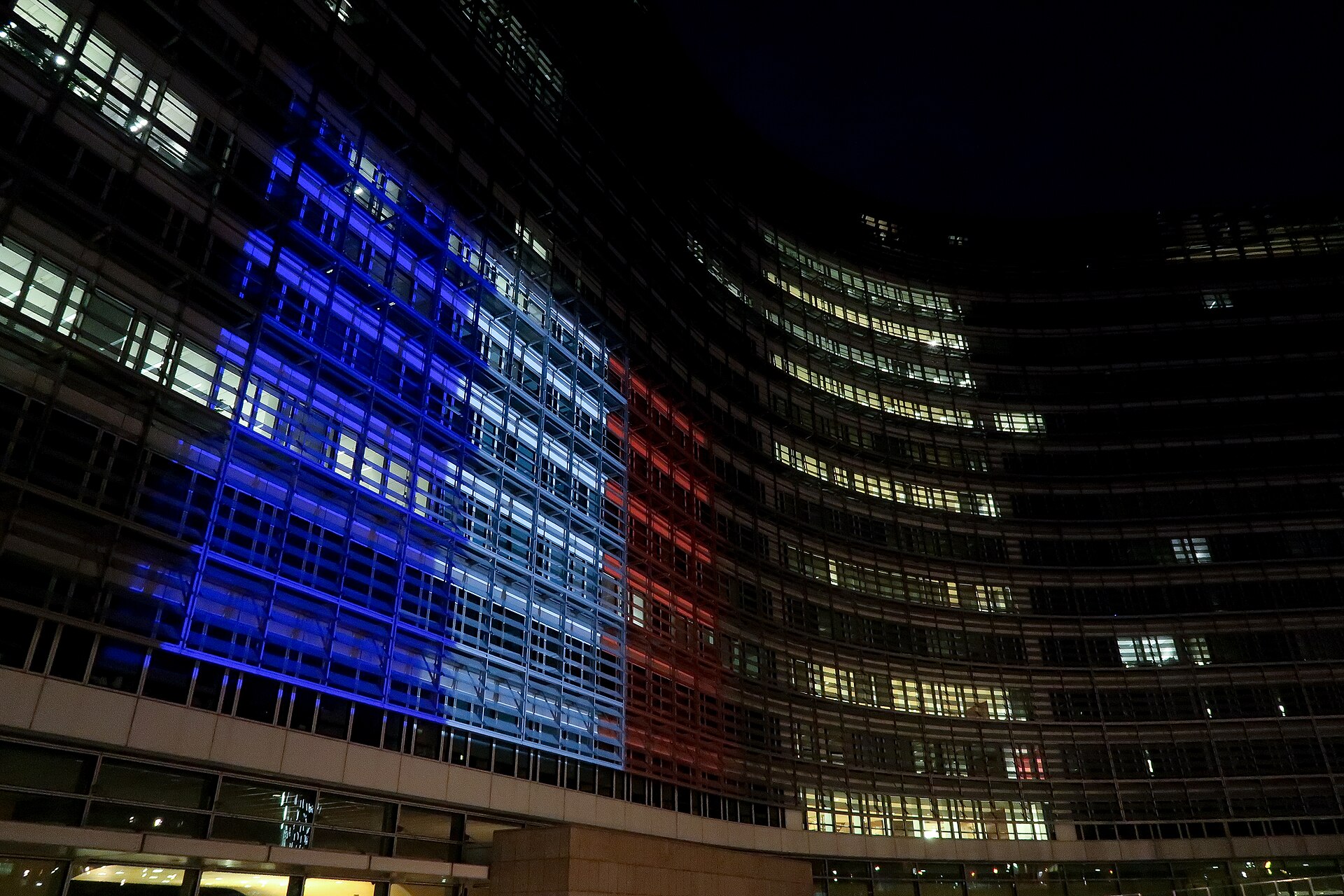
EU leaders open Ukraine and Moldova accession cluster
The Commission-Council statement says all EU member states agreed on 12 June 2026 to open the first accession negotiation cluster with Ukraine and Moldova at an Intergovernmental Conference on Monday. That cluster, known as Fundamentals, covers rule of law, democratic institutions and core rights, making it the gate through which both candidates must pass before talks can advance into policy chapters. The decision turns the formal opening of accession talks in June 2024 into a more substantive negotiating phase, after earlier blockage linked to Hungary's concerns over minority rights in Ukraine. For Kyiv, the move strengthens its long-term western anchor while Russia's war continues. For Chisinau, it reinforces a strategic EU path in a state exposed to Russian pressure. For the EU, the hard part now begins: keeping enlargement credible while protecting the Union's decision-making, budget and standards.
This matters first to EU-focused readers, Belgian voters and businesses because enlargement would eventually reshape the Union that Belgium helps fund and govern. Belgian federal ministers and diplomats will be part of every unanimous step, while Brussels-based EU staff will work through the technical screening, rule-of-law benchmarks and institutional reforms. Farmers, SMEs and public-finance watchers in Belgium have a longer-term stake because Ukrainian and Moldovan accession would affect the single market, agricultural policy, cohesion funding and EU budget negotiations.
Ukraine (EU candidate country since 2022, under full-scale Russian invasion since February 2022) is seeking EU membership as part of its western alignment. Moldova (small eastern European state between Romania and Ukraine, EU candidate since 2022) has pursued accession while facing energy, disinformation and security pressure linked to Russia. The European Commission (EU executive in Brussels) assesses candidates' reforms and drafts negotiating positions. The European Council (EU leaders' body) takes the key political enlargement decisions. Ursula von der Leyen (European Commission president since 2019) and António Costa (European Council president since 2024) issued the 12 June statement. Hungary (EU member state bordering Ukraine) had blocked progress over minority-rights concerns. Péter Magyar (Hungarian prime minister since May 2026, according to contemporaneous reporting) replaced Viktor Orbán (Hungarian premier for much of 2010-2026). Luxembourg (EU ministerial meeting venue) hosts Monday's Intergovernmental Conference.
Background
The European Council granted Ukraine and Moldova candidate status in June 2022 after Russia's full-scale invasion reshaped EU enlargement policy. The European Council decided in December 2023 to open accession negotiations, and the Council of the EU says the first Intergovernmental Conferences formally launched talks on 25 June 2024. Earlier enlargements show how slow this can be: Turkey opened accession talks in 2005 but the process is effectively frozen, while Croatia took roughly eight years from opening talks in 2005 to joining in 2013. The Fundamentals cluster reflects the post-2020 enlargement methodology, which puts rule of law first and keeps it central throughout negotiations.
The wider picture
Russia's invasion of Ukraine turned enlargement from a technocratic process into a geopolitical instrument. The EU is using accession to anchor vulnerable eastern neighbours, while also trying to avoid importing unresolved governance, security and budget problems. The same debate affects the western Balkans, where EU credibility is tested by years of slow progress.
Why now
The trigger is the 12 June 2026 agreement by all EU member states to open the first accession negotiation cluster, after earlier Hungarian blockage and ahead of Monday's Intergovernmental Conference in Luxembourg.
What to watch
Watch Monday's Intergovernmental Conference, the exact opening benchmarks for the Fundamentals cluster, and whether Hungary or any other member state attaches new conditions at later Council stages. The next important signals will be Commission assessments on rule-of-law and public-administration reforms.
Opposing perspectives
- European Commission and European Council leadership
The Commission-Council statement frames enlargement as a strategic investment in peace, security and prosperity. In this view, opening the Fundamentals cluster rewards Ukraine and Moldova for reforms under pressure and keeps the EU's geopolitical offer credible at a time of war and Russian influence operations.
- Hungarian government under Péter Magyar
Contemporaneous reporting presents Hungary's position as focused on minority rights for ethnic Hungarians in western Ukraine. The strongest version of that view is that accession talks should not advance unless Kyiv gives enforceable guarantees on language, education, cultural and political rights before the EU loses leverage.
- Ukraine and Moldova accession supporters
Kyiv and Chisinau would argue that the cluster opening converts symbolic candidate status into measurable integration. The Council's 2024 framework makes the path demanding, but it also gives reformist governments a concrete EU process to defend at home while Russia pressures both countries.
- Cautious EU member states and institutional reform advocates
The cautious frame is that enlargement must not outrun the EU's capacity to govern itself. Kovács, Petróczy and Pásztor's 2025 Council-voting study argues that a larger Union changes member-state power balances, supporting the case for institutional safeguards before accession becomes irreversible.
Sources & evidence
- France 24, "L'Union européenne annonce la reprise, lundi, les négociations d'adhésion avec l'Ukraine" · 2026-06-12
- European Commission / Directorate-General for Enlargement and Eastern Neighbourhood, statement by President von der Leye · 2026-06-12
- Associated Press, "EU agrees to launch membership talks with Ukraine next week even as war with Russia drags on" · 2026-06-12
- WELT, "Brüssel treibt Beitrittsprozess der Ukraine voran - Ungarn gibt Blockade auf" · 2026-06-03
- The Guardian, "EU summit with western Balkan leaders to reaffirm membership prospects" · 2026-06-05
- Council of the EU, "EU opens accession negotiations with Ukraine" · 2024-06-25
- Council of the EU, "EU opens accession negotiations with Moldova" · 2024-06-25
- Tímea Kovács, Dóra Gréta Petróczy and Gábor Pásztor, "The impact of the European Union's enlargement with the Western Ba · 2025-08-12