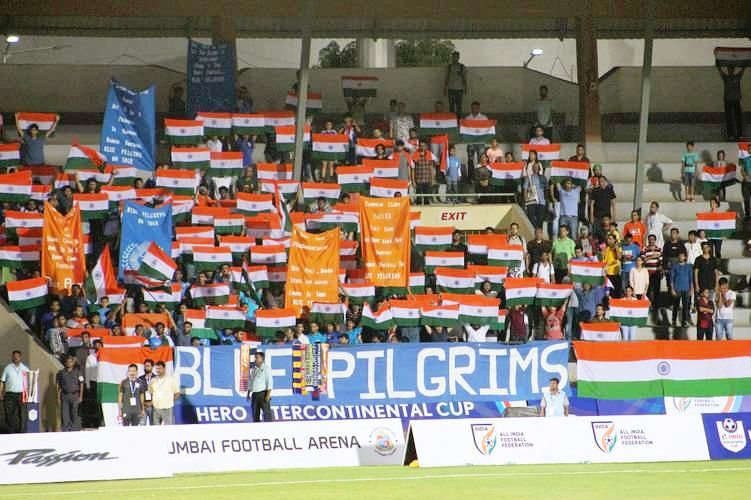
FIFA ranks India 139th as World Cup opens without it
FIFA's 11 June 2026 men's ranking lists India 139th, underlining the gap between the world's most populous country and the elite of the world's most followed sport as the 2026 World Cup begins. The All India Football Federation's own match reports show India lost 3-1 to Tajikistan on 5 June and drew 1-1 four days later, results that fit a longer pattern of underperformance despite deep amateur participation and a commercially visible domestic league. The crisis is not only technical. The Indian Super League has spent the past year battling uncertainty over commercial rights, sponsorship and governance after the old rights structure expired. For Belgium Pulse readers, the story is mainly an international football and sports-governance case: a huge market, a passionate fan base and a professional league have not yet produced a national-team pipeline capable of challenging Asia's stronger sides.
For Belgian football followers, sports-business readers and Belgium's Indian and South Asian communities, India's struggle is a reminder that population size and fan interest do not automatically create elite football. Belgium's own football model depends on dense youth pathways, club academies and export markets; India's case shows what happens when governance, league economics and national-team development pull in different directions. The story also matters to EU-facing sports investors watching whether large non-European football markets can become stable talent and media ecosystems.
All India Football Federation (India's national football governing body, founded in 1937) runs the men's national team and domestic competition structure. FIFA (the global football governing body, founded in 1904 and based in Zurich) publishes the men's world ranking and organises the World Cup. Indian Super League (India's top men's professional league, launched in 2014) is the country's highest-profile club competition. Khalid Jamil (India head coach appointed by the AIFF on 1 August 2025) is a former India midfielder and I-League-winning coach. Tajikistan (Central Asian republic whose national team faced India twice in June 2026) has become a useful benchmark for India's regional competitiveness. Football Sports Development Limited (Indian sports venture previously tied to ISL commercial operations) was central to the league's earlier rights model. City Football Group (Manchester City-linked multi-club ownership group) exited Mumbai City FC amid ISL uncertainty in late 2025.
Background
India's football history contains a sharp contrast between early promise and modern frustration. Historical FIFA World Cup records show India qualified by default for the 1950 tournament after other Asian entrants withdrew, but India did not travel to Brazil. India later finished fourth at the 1956 Melbourne Olympics, a high point from an era when the national side was more competitive in Asia. The AIFF's 2023 Vision 2047 roadmap acknowledged the need for long-term restructuring, including wider league pyramids and youth development. Yet the 2025-26 league-rights dispute and India's June 2026 results show how far implementation still has to go.
Why now
The timing comes from two triggers: the 2026 World Cup opening without India and FIFA's 11 June 2026 ranking update listing India 139th after a difficult June international window against Tajikistan.
What to watch
Watch FIFA's 20 July 2026 ranking update, the AIFF's next squad decisions under Khalid Jamil, and the final shape of the 2026-27 Indian Super League commercial and calendar model.
Opposing perspectives
- All India Football Federation leadership
The AIFF's appointment note frames Khalid Jamil as a practical domestic choice: he had worked closely with Indian players, won AIFF coach-of-the-year honours and was backed by technical-committee figures who argued Indian coaches needed a fair chance. In that reading, the immediate issue is continuity and local knowledge, not another imported reset.
- Indian Super League clubs and investors
Commercial reports on the ISL rights dispute present the clubs' strongest case as governance certainty first: a league cannot recruit players, retain sponsors or attract global capital while its rights model, calendar and commercial partner remain unsettled. City Football Group's Mumbai City exit turned that argument into a warning to future investors.
- Grassroots analytics and development community
A 2025 Indian football analytics study describes informal analysts and low-cost data communities as trying to fill gaps left by scarce infrastructure and institutional resistance. That frame suggests India's problem is not only elite coaching or league branding, but weak knowledge systems connecting grassroots talent to professional decision-making.
Sources & evidence
- Al Jazeera - Football: Why is India struggling to play the world's most popular sport? · 2026-06-13
- FIFA - FIFA/Coca-Cola Men's World Ranking · 2026-06-11
- All India Football Federation - Khalid Jamil appointed Senior Men's National Team head coach · 2025-08-01
- All India Football Federation - Tajikistan defeat Blue Tigers in first friendly · 2026-06-05
- All India Football Federation - Late penalty denies India victory in Tajikistan · 2026-06-09
- All India Football Federation - Vision 2047: The Indian Football Strategic Roadmap 2023-2047 · 2023-01-07
- The Economic Times - AIFF fails to attract bidders for Indian Super League commercial rights · 2025-11-08
- The Guardian - No games, no league and now no City Football Group: Indian football faces up to global embarrassment · 2026-01-07
- Sneha Nanavati and Nimmi Rangaswamy, Bridging Data Gaps and Building Knowledge Networks in Indian Football Analytics, ar · 2025-04-23