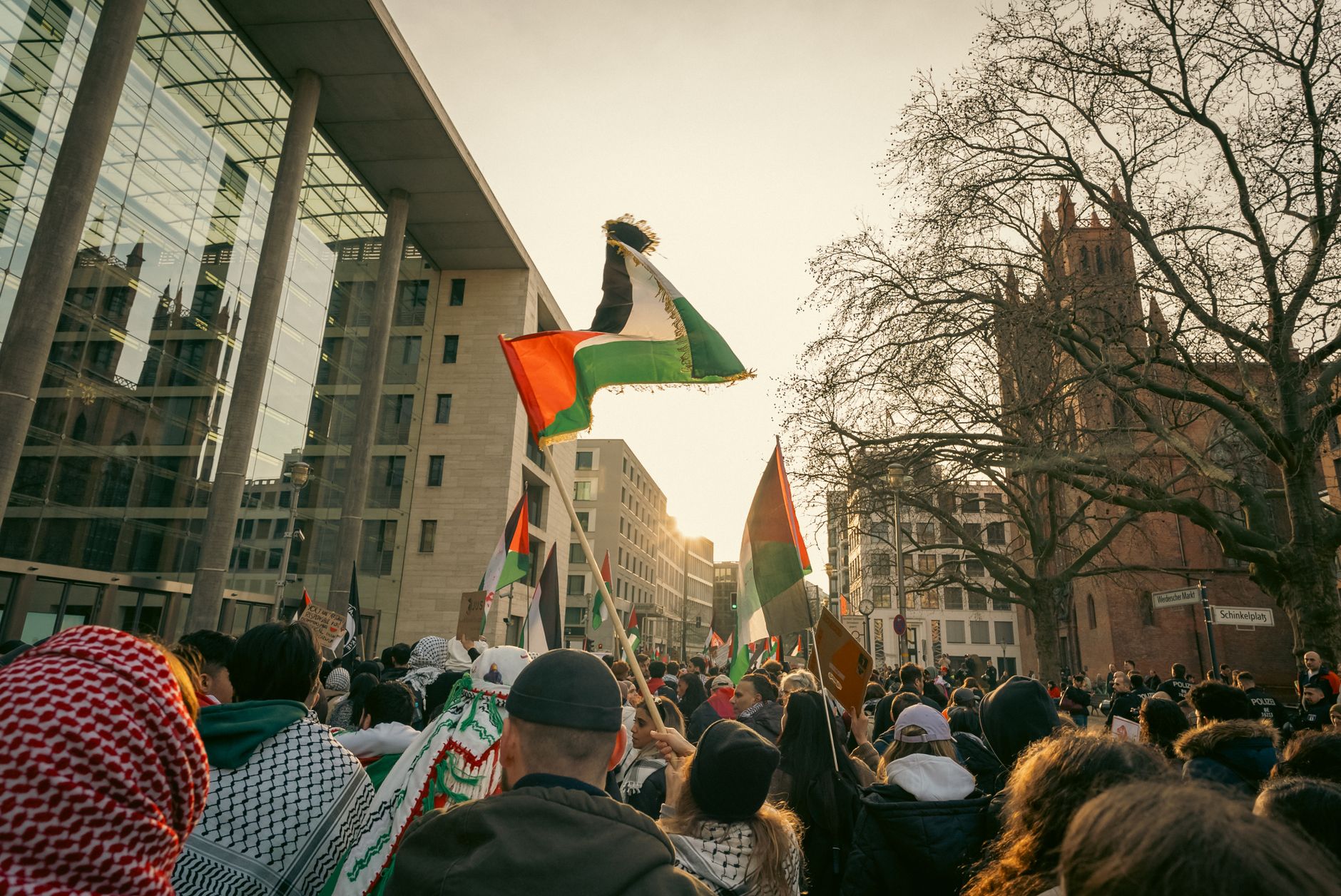
Five more arrests at an Antwerp Palestine protest put city policing under scrutiny
Belgium’s Gaza debate is again playing out in a very local setting: the streets of Antwerpen. Het Nieuwsblad reported opnieuw vijf arrestaties at a Palestine demonstration in Antwerp, saying tempers briefly rose during the protest. For Belgium-based readers, the significance is not only the arrest count. It is the recurring collision between the right to demonstrate, policing in a politically sensitive city, and Belgium’s own diplomatic positioning on Israel, Gaza and Palestinian statehood. Antwerp is not a side stage in this story. It is home to visible Jewish, Muslim, Palestinian-solidarity and international communities, governed by an N-VA-led city administration under acting mayor Els van Doesburg, while Belgium’s federal foreign policy is led by Prime Minister Bart De Wever and Foreign Minister Maxime Prévot. That makes every escalation around a Palestine protest both a local order issue and a signal of how Belgium absorbs a foreign war into domestic civic space.
For people living in Belgium, this is a practical public-space story before it is an abstract foreign-policy story. Demonstrations over Gaza are likely to continue, and the legal line matters: peaceful protest is protected, but police can intervene when public order, safety, traffic or alleged offences are at stake. For expats, EU staff and residents unfamiliar with local practice, Antwerp’s case shows that Belgian city authorities often manage Middle East tensions through municipal policing rather than national political speeches. The direct question is whether repeated arrests during Palestine protests deter disruption, calm tensions, or deepen mistrust between demonstrators and authorities.
The subject is a Palestine demonstration in Antwerpen that, according to Het Nieuwsblad, ended with vijf arrestaties palestinabetoging after tensions rose. The named Belgian stakeholders are Antwerp police, the Antwerp city authorities led by acting mayor Els van Doesburg, local pro-Palestinian organisers including the Antwerp Coalition for Palestine, Antwerp’s Jewish and Muslim communities, and federal officials who shape Belgium’s Israel-Palestine line, notably Bart De Wever and Maxime Prévot. The EU angle runs through Brussels-based institutions, especially the European External Action Service and EU foreign ministers, which have pressed Israel on humanitarian access while remaining divided on sanctions.
Background
Belgian demonstrations over Israel and Palestine have intensified since Hamas’s 7 October 2023 attack on Israel and Israel’s subsequent war in Gaza. Antwerp has seen earlier Palestine marches, including a January 2026 demonstration listed by protest trackers as drawing several hundred people. Belgium’s political context has also shifted: in 2025 the federal government moved toward conditional recognition of Palestinian statehood and announced measures against Israel, while insisting that Hamas must not govern Palestinian territories and hostages must be released. That dual framing differs from simpler pro-Israel or pro-Palestine narratives often seen in anglophone coverage.
Impact
Regional — In Antwerp, the impact is concentrated around city-centre protest routes, police deployment, community relations and the political responsibility of the N-VA-Vooruit local administration. The city’s symbolic weight is unusually high because Antwerp combines a major port, a large Jewish community, diverse migrant communities and a tradition of highly visible street politics.
Opposing perspectives
- Antwerp public-order authorities
The city and police perspective is likely to frame the issue as crowd management: protest is allowed, but officers intervene when safety, obstruction or confrontation crosses legal limits. That framing differs from an anglophone wire-style focus on Gaza diplomacy because the immediate Belgian question is whether Antwerp can keep polarised international politics from becoming local disorder.
- Pro-Palestinian organisers
Palestinian-solidarity groups frame the protests as a response to Gaza and Belgian responsibility, not as a nuisance event. Earlier Antwerp mobilisation was described around a march against “genocide”, a term organisers use to push Belgian institutions beyond humanitarian concern toward pressure on Israel. Their likely objection is that repeated arrests risk turning public-order tools into political deterrence.
- Belgian federal diplomacy
Belgium’s federal framing is more conditional than many protest slogans: Maxime Prévot and the De Wever government have linked Palestinian statehood to hostage release and Hamas being excluded from governance, while also backing sanctions or pressure on Israel. That position gives Belgium-based readers a more layered view than a simple pro- or anti-Israel binary.
- EU institutional view
The EU’s public line has focused on humanitarian access, international law and member-state unity. Kaja Kallas described an aid arrangement as meaning “more crossings open” and more aid entering Gaza. For EU staff in Belgium, the Antwerp protest is therefore a domestic reflection of a dispute already inside EU foreign-policy machinery.
Sources & evidence
- Het Nieuwsblad
- Associated Press · 2025-06-23
- The Washington Post · 2025-07-10
- Time · 2025-09-02
- The Guardian · 2026-01-22