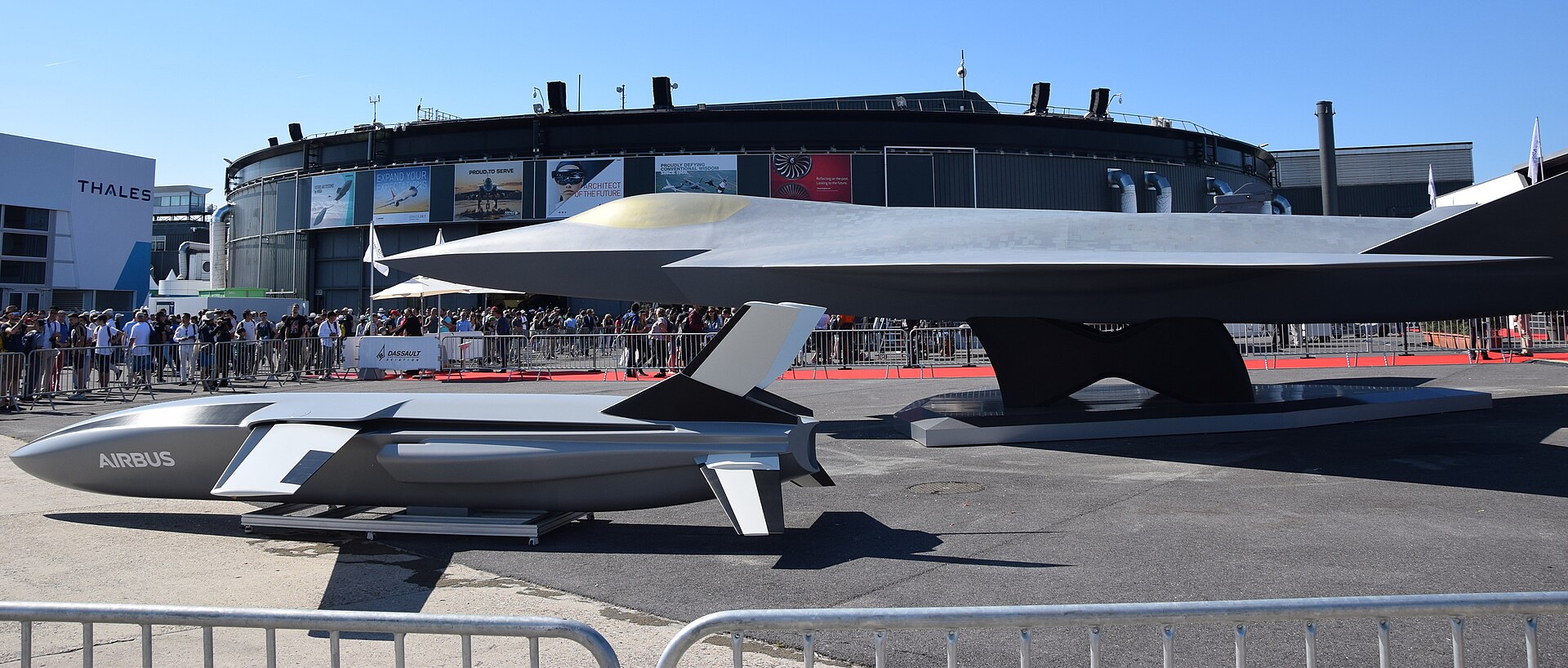
France and Germany scrap FCAS fighter project
The office of Emmanuel Macron confirmed that France and Germany are ending the fighter-aircraft core of the Future Combat Air System after Dassault Aviation and Airbus failed to settle control of the New Generation Fighter. The programme, launched politically in 2017 and later joined by Spain, was meant to field a connected sixth-generation aircraft, drones and combat cloud around 2040. Its collapse does not end European defence cooperation, but it weakens the most symbolic attempt to pool high-end air-combat technology at the moment when the European Commission says the EU must strengthen its defence industrial base and reduce dependence on external suppliers. For Belgium, which joined FCAS as an observer while buying F-35s from the United States, the lesson is direct: European strategic autonomy depends less on declarations than on workshare, procurement discipline and shared military requirements.
Belgian voters, defence workers, SMEs in aerospace supply chains and federal officials should care because Belgium sits inside the same procurement dilemma. The Belgian government has relied on the US-built F-35 for its next fighter fleet while exploring European future-air projects. The European Commission says defence readiness now requires a stronger European industrial base, so FCAS's failure narrows one route for Belgian and EU firms to join high-end air-combat technology rather than remain mainly buyers of systems designed elsewhere.
Future Combat Air System, or FCAS/SCAF (Franco-German-Spanish air-combat programme launched in 2017), was designed as a networked future air-warfare system. New Generation Fighter, or NGF (the planned sixth-generation crewed jet at the centre of FCAS), was intended to replace France's Rafale and Germany's and Spain's Eurofighter fleets around 2040. Dassault Aviation (French aircraft maker and Rafale producer) sought prime authority over the fighter design. Airbus Defence and Space (European aerospace group representing German and Spanish industrial interests in FCAS) wanted a more balanced industrial role. Indra Sistemas (Spanish defence-technology company) was Spain's national coordinator. Combat Cloud (the secure data layer linking aircraft, drones and sensors) remains a possible area for cooperation. SAFE, or Security Action for Europe (EU defence-loan instrument adopted in 2025), is meant to finance joint procurement. Global Combat Air Programme, or GCAP (UK-Italy-Japan sixth-generation fighter project launched in 2022), is the main rival European-adjacent fighter track.
Background
France and Germany launched the FCAS track in 2017, Spain joined in 2019, and Phase 1B contracts followed in 2022 to prepare demonstrators. Earlier European air projects show both the promise and limits of cooperation: the Eurofighter Typhoon tied several states together but left France outside, while France kept the Rafale national. The 2010 Lancaster House Treaties created a Franco-British defence framework, yet the later UK-led Tempest/GCAP path developed separately. The European Commission's 2024 defence industrial strategy then framed Russia's 2022 invasion of Ukraine as a reason to rebuild EU defence-industrial readiness.
The wider picture
The collapse lands during a wider reassessment of US reliability, Russia deterrence and European industrial capacity. The European Commission's defence strategy links readiness to Russia's war against Ukraine, while NATO allies still rely heavily on US nuclear deterrence, command infrastructure and advanced aircraft. FCAS shows that autonomy is not only a budget question; it is also a governance and trust problem.
Why now
The story is timely because France and Germany have now ended the shared fighter core after company mediation failed and political pressure could not settle the Dassault-Airbus dispute over leadership, workshare and technology control.
What to watch
Watch whether France, Germany and Spain preserve FCAS work on drones, Combat Cloud and sensors; whether Belgium clarifies its observer role; and whether EU defence-loan rules steer future projects toward genuinely shared European procurement rather than parallel national tracks.
Impact
Regional — At EU level, the failure undercuts a flagship example of the European Commission's push for collaborative and European defence investment. At Belgian federal level, it affects Defence and industry policy because Belgium had attached itself to FCAS as an observer while planning its fighter transition around the F-35. Brussels is affected institutionally rather than locally: EU and NATO headquarters will remain central to the policy debate, but no Brussels regional service or commune faces a distinct operational change.
Opposing perspectives
- French defence-industrial camp (Dassault Aviation)
Dassault Aviation's position, as reflected in the dispute over prime authority, is that a sixth-generation fighter needs a clear design architect and protection of core intellectual property. This camp would argue that splitting authority for political balance risks producing a slower, compromised aircraft and weakening France's existing Rafale-based know-how.
- German and Spanish industrial camp (Airbus Defence and Space)
Airbus Defence and Space's position is that a trinational programme cannot be credible if the central fighter work is dominated by one national champion. This camp would argue that European autonomy requires shared technology, workshare and production capacity, otherwise partner governments are asked to finance a project without adequate industrial return.
- European Commission defence-policy camp
The European Commission's EDIS framing argues that the wider lesson is not to abandon cooperation but to make it more collaborative, European and resilient. From this view, FCAS failed as an industrial-governance problem, while instruments such as SAFE and EDIP remain tools to push member states toward common procurement.
- Capability-first security analysts
Analysts cited in the research argue that Europe's immediate need may be less a prestige fighter for the 2040s than scalable air defence, drones, ammunition, secure communications and command systems. This view treats the FCAS collapse as damaging symbolically, but not necessarily decisive for near-term deterrence.
Sources & evidence
- Al Jazeera - France-Germany jet plans crash: Can Europe end reliance on US for security? · 2026-06-12
- Al Jazeera / Reuters - France and Germany scrap fighter jet in hit to European defence cooperation · 2026-06-08
- The Guardian - France and Germany abandon joint project to build European fighter jet · 2026-06-08
- Le Monde - FCAS: Learning from the failure of the French-German next-generation fighter jet · 2026-06-10
- Airbus - Future Combat Air System FCAS
- European Commission - EDIS, our common defence industrial strategy · 2024-03-05
- European Commission - White Paper for European Defence and Readiness 2030 press material · 2025-03-19
- d'Artis Kancs, European Defence Readiness: A Cold War 2.0 scenario analysis, 2024, arXiv · 2024-12-28