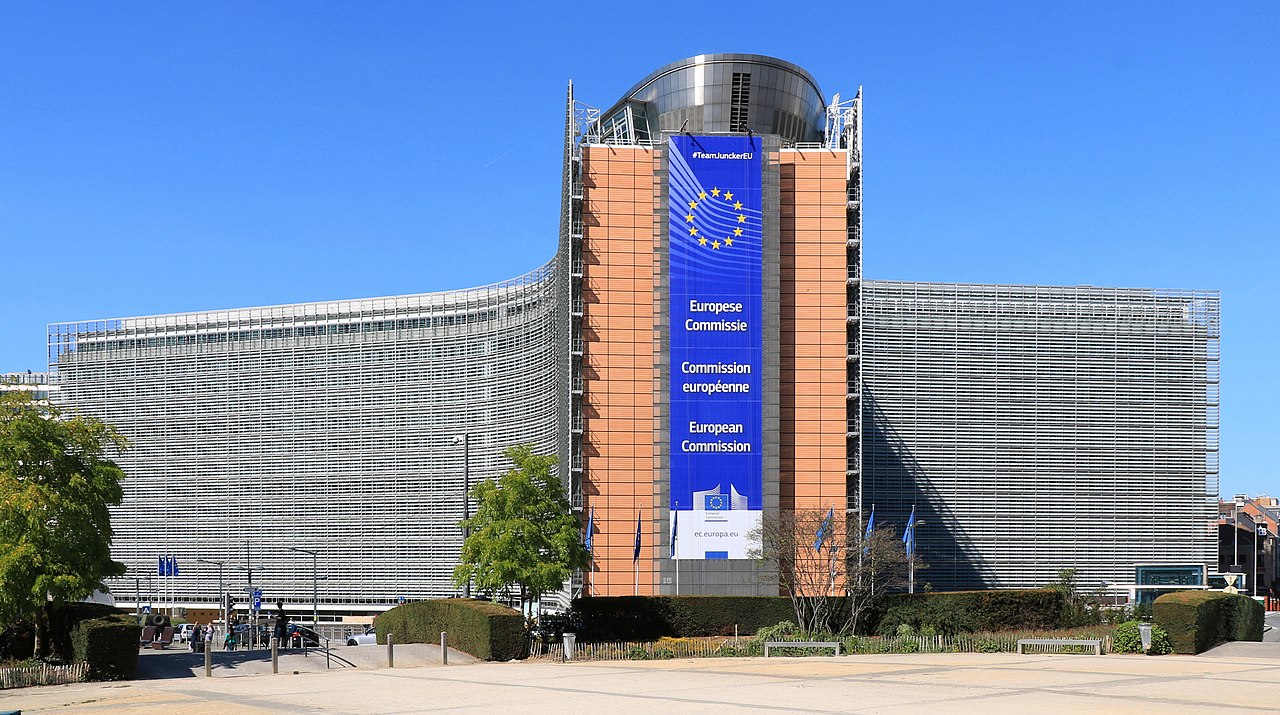
G7 leaders pledge air-defence support for Ukraine before Brussels talks
G7 leaders used their Évian summit to promise stronger backing for Ukraine as President Volodymyr Zelenskyy moved on to Brussels for talks with EU leaders. The G7 statement says the group will increase deliveries of air-defence capacity, additional systems, interceptors and long-range capabilities, and is ready to consider licences that would let Ukraine expand military production. Zelenskyy said the summit produced new commitments on defence, energy resilience and pressure on Russia. The centre of the story is not a single weapons transfer but a shift in the support model: from drawing down allies' stocks toward helping Ukraine produce more of what it needs. For Belgium, the impact runs through EU and NATO policy made in Brussels, Belgian defence choices and the wider question of how European governments finance Ukraine support while rebuilding their own military-industrial base.
Belgian voters, defence workers, businesses and public finances are touched indirectly because Ukraine support is now tied to Europe's own rearmament choices. The G7 statement makes air defence, long-range capability and licensed production the priority; those choices feed into EU and NATO procurement debates held in Brussels. For Belgian residents, the practical stake is whether European governments can protect Ukraine without weakening their own readiness, stretching budgets or fragmenting sanctions policy against Russia.
Volodymyr Zelenskyy (Ukraine's president since 2019) is seeking military, energy and diplomatic support while Russia's full-scale invasion continues. The G7 (United States, Canada, France, Germany, Italy, Japan, United Kingdom and the EU as participant) coordinates economic and security policy among major advanced economies. Évian-les-Bains (French town on Lake Geneva) hosted the 15-17 June 2026 G7 summit. The European Council (EU institution chaired by António Costa) brings national leaders together in Brussels. The European Commission (EU executive led by Ursula von der Leyen) manages enlargement and sanctions proposals. Friedrich Merz (German chancellor) framed licensed production as a way to ease supply shortages. Emmanuel Macron (French president and G7 host) presented the summit as renewed Western alignment. Donald Trump (US president) matters because US-controlled technology and sanctions policy shape what Ukraine can receive or produce.
Background
Russia launched its full-scale invasion of Ukraine on 24 February 2022, turning military aid into a long-term test of Western industrial capacity. The European Council granted Ukraine EU candidate status in June 2022 and agreed in December 2023 to open accession negotiations. The EU formally opened accession negotiations with Ukraine in June 2024, while the first negotiation areas remained politically sensitive. Earlier support relied heavily on existing allied stocks, including air-defence missiles; the G7's 2026 language points toward production licences and industrial scaling as the next phase.
The wider picture
The G7 pledge signals that Ukraine's backers see industrial capacity as a strategic front in the war. Russia is betting on endurance, production depth and Western fatigue; Ukraine's supporters are trying to answer with sanctions, air defence, long-range capability and licensed manufacturing. The US role remains pivotal because many advanced systems involve American technology, patents or export-control decisions.
Why now
The trigger is the 15-17 June 2026 G7 summit in Évian and Zelenskyy's immediate move to Brussels. The G7 statement turned Ukraine's request for air defence and production rights into a leaders' commitment, while EU follow-up talks offered the next venue for turning that language into deliverables.
What to watch
Watch the Brussels meetings and the Ukraine Defense Contact Group for named air-defence systems, interceptor quantities, financing totals, licence approvals and sanctions proposals. Also watch whether EU leaders link military support to Ukraine's accession track, and whether any Belgian or EU-based firms are later named in production arrangements.
Impact
Regional — The EU level is central because Brussels institutions coordinate sanctions, enlargement talks and parts of Ukraine financing. Belgium's federal level is affected through defence policy, budget choices and NATO coordination, while Brussels-Capital is the diplomatic stage for Zelenskyy's follow-up meetings with EU leaders. Flanders, Wallonia and Brussels would feel any industrial spillover differently only if future production contracts involve regional defence or aerospace firms; the current G7 pledge does not identify such Belgian contracts.
Opposing perspectives
- G7 governments
The G7 statement frames the decision as a necessary escalation of support, arguing that Ukraine's battlefield resilience should be reinforced with air defence, long-range capability, energy help and sanctions pressure on Russia. In this view, licensed production is not mission creep but a way to make support more sustainable.
- Ukraine government
Zelenskyy's position is that new air-defence and energy-resilience commitments are urgent because Russian strikes continue to target cities, infrastructure and cultural sites. Kyiv's strongest case is that production licences would reduce dependence on slow political cycles and give Ukraine a more predictable supply base.
- European diplomacy voices represented by Giorgia Meloni
Giorgia Meloni's call for a single EU envoy reflects a concern that multiple European channels with Russia could blur responsibility and weaken leverage. The strongest version of that argument is that unity requires clearer diplomatic architecture, not only more weapons and sanctions.
Sources & evidence
- Euronews, L'info du jour | 18 juin 2026 - Matin · 2026-06-18
- G7 Évian 2026, Déclaration des chefs d'Etat et de gouvernement du G7 sur les questions géopolitiques · 2026-06-17
- Associated Press, Zelenskyy says G7 leaders pledge more vital help for Ukraine against Russia · 2026-06-17
- The Guardian, Ukraine war briefing: Allies give nod for Kyiv to reproduce their air-defence missiles · 2026-06-18
- The Guardian, Macron hails US alignment with G7's shared commitment on Ukraine · 2026-06-17
- Kiel Institute for the World Economy, Ukraine Support Tracker, June 2026 update · 2026-06-04