Gazans smoke molokhia leaves as tobacco disappears
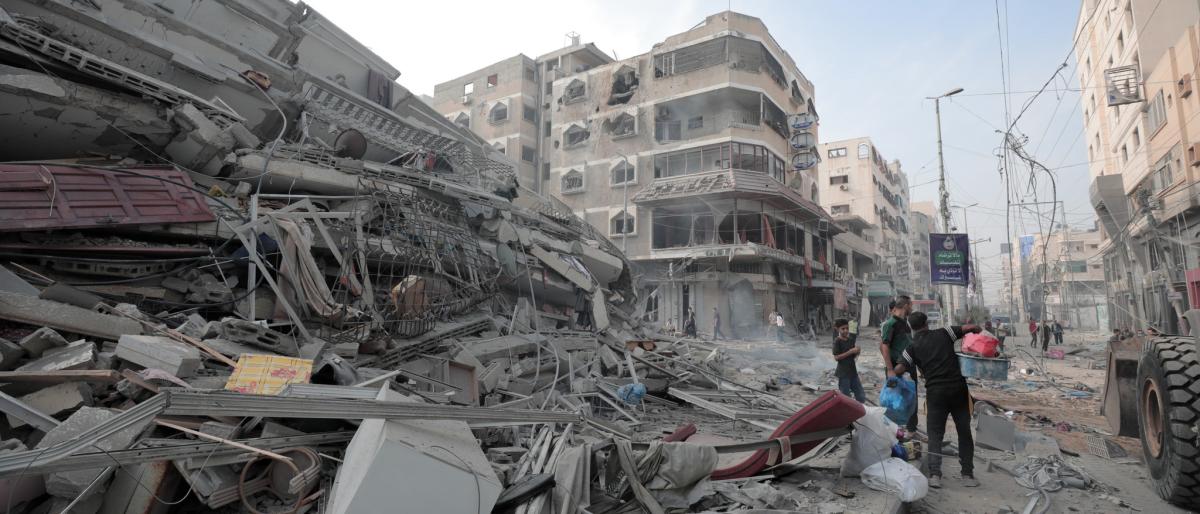
Interviews in the lead report describe some Gaza residents drying molokhia leaves, rolling them in paper and smoking them as tobacco has become scarce and unaffordable under wartime restrictions and market breakdown. The practice is a small but revealing signal of Gaza’s wider deprivation: people are improvising not only food, shelter and water access, but also coping habits normally supplied by regulated consumer markets. OCHA’s 5 June situation report says Gaza’s supply chains remain unpredictable, with prices far above pre-October 2023 levels and cargo entry narrowed by crossing closures and screening delays. The health concern is straightforward: WHO states that all forms of tobacco use are harmful and that there is no safe level of exposure to smoke, while a 2011 IJERPH review found tobacco smoke contains thousands of chemicals and identified hazardous components linked to cancer, cardiovascular and respiratory disease. Molokhia cigarettes should therefore be read as a public-health warning inside a humanitarian crisis, not as a novelty.
For Belgium-based readers, the story matters chiefly as a humanitarian and public-health marker in a conflict that Belgian citizens, aid NGOs, universities, Jewish and Palestinian communities, voters and EU institutions already follow closely. European Commission figures state that Belgium is among EU Member States involved in Gaza-related medical evacuations through the EU Civil Protection Mechanism. The molokhia-cigarette detail is not about Belgian smokers; it shows how scarcity distorts everyday behaviour when normal markets, health services and aid routes fail.
Molokhia (leafy jute mallow widely cooked in Palestinian, Egyptian and Levantine cuisine) is being used in the lead report as an improvised smoking material rather than food. The Gaza Strip (coastal Palestinian territory under Israeli and Egyptian movement and goods restrictions since Hamas’s 2007 takeover) is the setting. Hamas (Palestinian Islamist movement that attacked Israel on 7 October 2023 and governs de facto in Gaza) remains central to Israel’s stated security rationale for restrictions. Israel (state controlling most Gaza access points and airspace) regulates cargo through crossings including Kerem Shalom (Israeli-controlled goods crossing into southern Gaza) and Zikim (northern Gaza crossing cited by OCHA as closed from 24 May 2026). OCHA (UN humanitarian coordination office) tracks access and supply constraints. WHO (UN health agency) sets global tobacco and smoke-risk guidance. DG ECHO (European Commission humanitarian-aid department) funds EU relief operations, currently led politically by Belgian Commissioner Hadja Lahbib.
Background
Israel tightened Gaza’s blockade after Hamas took control of the strip in 2007, while Egypt also restricted Rafah access. After Hamas’s 7 October 2023 attack on Israel, Israeli military operations and entry limits pushed Gaza into a prolonged humanitarian emergency. OCHA’s 5 June 2026 update says Zikim had been closed since 24 May and Kerem Shalom was the only approved cargo crossing as of 4 June. Illicit tobacco has appeared before as a war-economy signal: the Israeli Justice Ministry accused Bezalel Zini and others in February 2026 of smuggling cigarette cartons into Gaza, an allegation his lawyers denied.
The wider picture
Molokhia cigarettes are a minor object inside a larger geopolitical contest over Gaza’s blockade, Israel’s security policy, Hamas’s control, UN access and European diplomatic leverage. Tobacco scarcity also shows how restricted goods become political economy: ordinary commodities can turn into contraband, revenue sources, bargaining chips and evidence in arguments about whether restrictions protect security or deepen civilian harm.
Why now
The lead is timely because it appears after months of continued shortages and market distortion. OCHA’s 5 June situation report says Zikim remained closed, Kerem Shalom was the only approved cargo crossing as of 4 June, and prices were still far above pre-war levels.
What to watch
Watch whether Zikim reopens, whether Kerem Shalom screening delays ease, whether commercial truckloads shift toward essential items, and whether OCHA or health-cluster updates report respiratory illness, smoke exposure or further resort to improvised products. EU funding and medical-evacuation updates will show how Brussels responds to the wider health burden.
Opposing perspectives
- UN humanitarian agencies
OCHA’s 5 June situation report frames Gaza’s market distortions as a consequence of restricted, fragile and underfunded humanitarian access. In that reading, molokhia cigarettes are not a consumer-choice story but a symptom of civilians adapting to collapsed supply chains, weak purchasing power, damaged services and constrained entry of basic goods.
- Israeli security authorities
The Israeli Justice Ministry accused a smuggling network in February 2026 of moving cigarettes and other goods into Gaza and alleged such trade benefited Hamas. This frame treats tobacco scarcity and high cigarette prices partly as a security-economy problem: restricted goods can become lucrative contraband in wartime, and uncontrolled flows may strengthen armed actors.
- Public-health authorities
WHO states that all forms of tobacco use are harmful and that there is no safe level of exposure to smoke. From this frame, replacing tobacco with a plant leaf does not remove the core danger of combustion, inhaled particulates and toxic smoke exposure, especially in overcrowded conditions where second-hand exposure is hard to avoid.
Sources & evidence
- Al Jazeera - Molokhia cigarettes: Gaza’s toxic alternative to tobacco · 2026-06-13
- OCHA oPt - Humanitarian Situation Report | 5 June 2026 · 2026-06-06
- European Commission DG ECHO - Palestine country page
- WHO - Tobacco fact sheet · 2025-06-25
- Talhout, Schulz, Florek, Van Benthem, Wester and Opperhuizen, Hazardous Compounds in Tobacco Smoke, International Journa · 2011-02-23
- The Guardian - Shin Bet chief's brother charged with assisting enemy over cigarette smuggling in Gaza · 2026-02-05