Gulf states weigh security reset as Iran talks edge forward
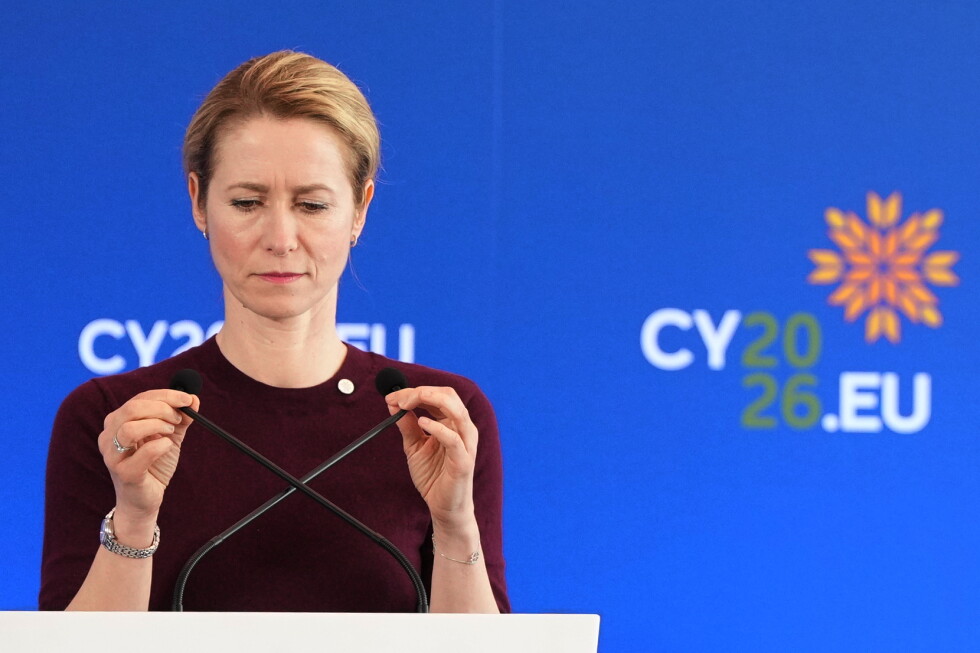
Gulf governments are likely to reassess their security model if Washington and Tehran turn current ceasefire diplomacy into a durable settlement. The lead issue is not a formal treaty yet, but a strategic lesson: the Gulf Cooperation Council states relied for decades on a US-centred security umbrella, yet the Iran war put Gulf cities, energy facilities and shipping routes within the line of fire. European Union foreign policy chief Kaja Kallas said securing freedom of navigation through the Strait of Hormuz after the war would require more ships and possibly an expanded EU naval mission. UNCTAD's rapid assessment says the strait carries around a quarter of global seaborne oil trade plus significant LNG and fertilizer flows, making any new Gulf security architecture a global economic question. For Belgium, the relevance is indirect but real: energy prices, shipping costs, EU diplomacy and maritime-security decisions all pass through Brussels-facing institutions and markets.
Belgian households, logistics firms, farmers and energy-intensive businesses feel Gulf instability through fuel, gas, fertilizer and freight prices rather than through battlefield geography. UNCTAD's rapid assessment says higher energy, fertilizer, transport and insurance costs can feed food prices and household pressure. EU institution staff, Belgian diplomats and defence officials also have a direct policy stake because the European Union is weighing whether its maritime-security mission should do more around Hormuz after hostilities end.
The Gulf Cooperation Council (regional bloc founded in 1981 by Bahrain, Kuwait, Oman, Qatar, Saudi Arabia and the United Arab Emirates) is the main Gulf Arab forum in this story. The Strait of Hormuz (narrow waterway between Iran, Oman and the UAE) is a critical route for Gulf energy exports. EUNAVFOR Operation Aspides (EU naval mission launched in 2024 under the Common Security and Defence Policy) protects commercial shipping from Red Sea attacks and could be adapted. Kaja Kallas (EU foreign policy chief since 2024) leads the bloc's external security diplomacy. UNCTAD (UN Trade and Development, Geneva-based UN body) analyses trade and development shocks. The Hormuz Peace Initiative (Iranian proposal announced in 2019) sought a regional security framework involving Gulf states and Iran. Pakistan (South Asian nuclear-armed state) has acted as a mediator in parts of the 2026 diplomacy.
Background
Gulf security has repeatedly swung between US protection, regional accommodation and crisis management. During the 1980s Tanker War, the United States escorted Kuwaiti tankers through Gulf waters under Operation Earnest Will. In 2019, Iran proposed the Hormuz Peace Initiative, but Gulf Arab trust remained limited. In March 2023, China brokered the Saudi-Iran restoration of diplomatic relations, showing Gulf states were already diversifying diplomacy before the 2026 war. The current debate revives those precedents under more acute conditions: attacks, disrupted navigation and uncertainty over whether Washington's guarantees reduce or import risk.
The wider picture
The war highlights a broader shift from US-dominated Gulf security toward a more crowded order involving regional diplomacy, China-brokered detente, Pakistani mediation, European maritime deployments and Gulf self-defence. Gulf states want US protection but also want fewer incentives for Iran to treat US-hosting neighbours as legitimate targets. That tension will shape any post-war security design.
Why now
The trigger is the reported movement in US-Iran diplomacy and the prospect of a post-war settlement. As hostilities edge toward a possible deal, Gulf governments and EU officials are moving from immediate crisis response to the harder question of who secures Gulf waters afterward.
What to watch
Watch for a signed US-Iran text, verified reopening steps in the Strait of Hormuz, EU foreign-minister decisions on Operation Aspides, and any Gulf Cooperation Council statement on regional security talks with Iran. Insurance rates and tanker traffic will be the practical signals that markets believe security is improving.
Impact
Regional — The EU level is the clearest institutional channel: the European External Action Service describes Operation Aspides as an EU defensive maritime-security operation, and Kaja Kallas has linked any post-war Hormuz role to more European vessels. Belgium's federal level is touched through foreign, defence and energy-security policy, while Flanders has a practical exposure through the Port of Antwerp-Bruges and Zeebrugge's gas and logistics role. Wallonia and Brussels are affected less directly, mainly through consumer prices, business costs and EU policymaking in Brussels.
Opposing perspectives
- EU foreign-policy officials
Kaja Kallas's public line frames Hormuz as a freedom-of-navigation problem that Europe cannot leave entirely to Washington. The strongest version of this view is that EU ships, mine-clearing capacity and possible insurance support would protect trade without making Europe a combatant in the Iran war.
- Gulf Arab security establishments
The Gulf Cooperation Council states can argue that the war exposed the limits of outsourced security: US bases may deter some threats, but they can also make host states targets. Their strongest case is for a hybrid model: keep US ties, expand local defence industries and reopen channels to Tehran.
- Iranian regional-security advocates
Supporters of a regional framework can point back to the 2019 Hormuz Peace Initiative and argue that durable Gulf security cannot be imported from outside powers. The hard counterweight is credibility: missile and drone attacks on neighbouring Gulf states make any non-aggression formula dependent on changed Iranian behaviour.
Sources & evidence
- Al Jazeera - How the Gulf will manage collective security after the Iran war ends · 2026-06-12
- Associated Press - EU envoy seeks more vessels to secure Hormuz navigation once the war in Iran ends · 2026-05-28
- European External Action Service - EUNAVFOR Operation Aspides · 2025-11-20
- UNCTAD - Strait of Hormuz disruptions: Implications for global trade and development · 2026-03-10
- The Guardian - Oil prices plummet as Trump claims he is close to US-Iran deal · 2026-06-12
- The Guardian - European leaders welcome US-Iran ceasefire · 2026-04-08