How can newcomers learn to feel proud of Brussels, not just live in it?
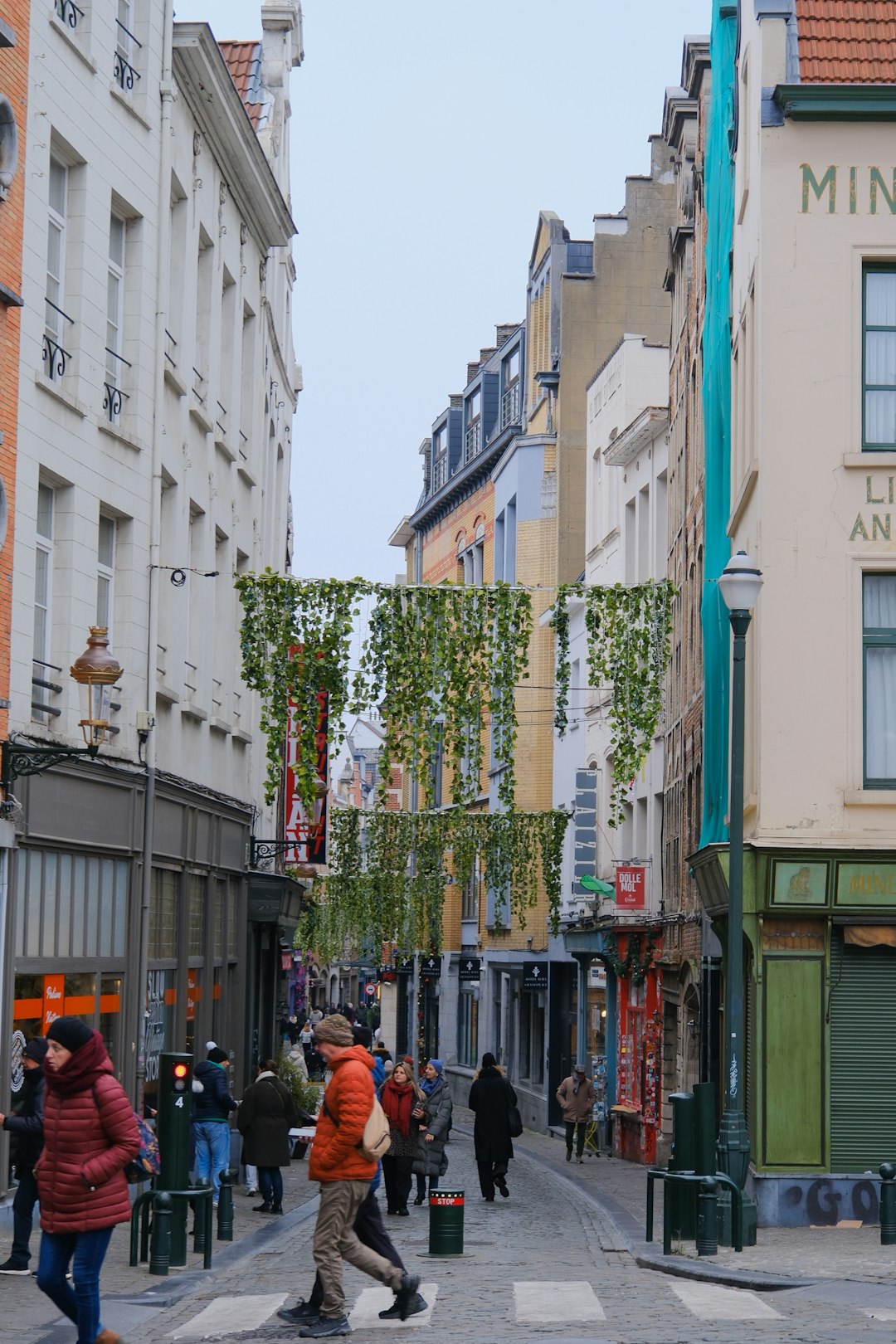
The practical takeaway: if you want Brussels to feel less like an administrative posting and more like home, start smaller than “Belgium”. Learn your commune or gemeente, use both official languages when you can, follow one local media outlet, and build routines around neighbourhood places rather than only EU-quarter or expat circuits. A recent BRUZZ visit to the Brussels figure Red Le Rouge, published under the Dutch headline “Op bezoek bij Red Le Rouge: ‘Mensen moeten trots zijn dat ze van Brussel zijn’”, puts a useful question to anyone living here: what does it mean to be proud of Brussels when the city is so multilingual, mobile and administratively fragmented? For newcomers, that pride rarely begins with slogans. It begins with knowing where you actually live. Brussels is not one municipality but 19 communes/gemeenten: Ville de Bruxelles/Stad Brussel, Ixelles/Elsene, Saint-Gilles/Sint-Gillis, Schaerbeek/Schaarbeek, Molenbeek-Saint-Jean/Sint-Jans-Molenbeek, Etterbeek, Uccle/Ukkel and the rest. Your commune is where you register, collect documents, deal with parking permits, school information, local recycling rules and many cultural activities. The Brussels-Capital Region is the regional authority above them; the federal state handles matters such as residence law and identity documents; language communities shape education and culture. A simple first step is to learn the bilingual names around you. Rue Haute is also Hoogstraat; Place Flagey is Eugène Flageyplein; the canal runs through districts where French, Dutch, Arabic, Spanish, Romanian, Polish, Turkish and English may all be heard in a short walk. You do not need perfect Dutch or French to participate, but you do need enough awareness to understand why a form, school, cultural centre or commune counter may operate in one or both official regional languages. Brussels is legally bilingual in French and Dutch, while daily life is far more multilingual. For an expat or EU-institution worker, a practical “Brussels belonging” checklist looks like this: 1. Confirm your local administration. Use your commune/gemeente website for registration appointments, population service hours, parking rules, waste calendars and local events. Do not assume that a rule in Ixelles/Elsene is identical to one in Woluwe-Saint-Pierre/Sint-Pieters-Woluwe. 2. Subscribe locally. Pick one neighbourhood or city source: BRUZZ in Dutch, BX1 in French, Bruzz International, The Brussels Times, or your commune newsletter. This helps you move beyond national clichés about Brussels and understand local debates about mobility, housing, nightlife, policing, public works and culture. 3. Use official portals for life admin. For regional information, start with be.brussels. For City of Brussels services, use brussels.be. For federal residence, identity and nationality questions, use belgium.be and the relevant FPS/FOD pages rather than social-media advice. 4. Learn the cultural map. Try a Dutch-speaking community centre such as GC De Markten, a French-speaking centre culturel, a neighbourhood market such as Marché du Midi/Zuidmarkt, a museum night, a local football match, or a concert at Ancienne Belgique. Brussels pride is often hyperlocal: Marolles/Marollen, Matongé, Dansaert, Saint-Boniface/Sint-Bonifatius, Cureghem/Kuregem, Flagey and Schaerbeek each feel different. 5. Practise polite bilingual habits. A “bonjour” will work almost everywhere; “goeiedag” is noticed in Dutch-speaking spaces; “merci” and “dank u” both travel well. In official dealings, check whether a service is offered in French, Dutch or both before assuming English will be available. The broader point is that Brussels identity is not a single tribe. It is layered: municipal, regional, Belgian, European, migrant, linguistic and professional. That can feel confusing, especially for people who arrive for a two-year posting and then stay for a decade. It can also be liberating. You do not have to become a textbook Bruxellois or Brusselaar overnight. You can become attached through repeated use: the tram line you know by heart, the baker who remembers your order, the commune counter you finally understand, the square where your children play, the football ground or cultural venue where the city feels shared. There are tensions. Long-term residents may be wary of expat bubbles that raise rents and consume the city without learning it. International workers may feel Brussels is opaque, bureaucratic and linguistically intimidating. Dutch-speaking Brussels institutions often argue that the city’s bilingual status needs active protection, while many residents experience French as the practical lingua franca and English as a working compromise. All of these experiences can be true at once. That is why the Red Le Rouge line matters as a lifestyle prompt rather than a news event. “Mensen moeten trots zijn dat ze van Brussel zijn” is not only a statement for people born here. It is a challenge to residents who use Brussels but never quite join it. The most realistic route to pride is practical: know your commune, learn the names, show up outside your professional bubble, and treat Brussels as a lived city rather than a temporary backdrop.
Brussels is easy to use and hard to read. Many international residents know the EU Quarter, airport train and commune paperwork before they understand the city’s neighbourhoods, languages or local loyalties. A practical route into Brussels identity helps newcomers navigate daily life, avoid administrative mistakes, and participate more respectfully in the city they share with long-term residents.
The subject is Brussels civic identity for newcomers, using BRUZZ’s profile of Red Le Rouge and the quote “Mensen moeten trots zijn dat ze van Brussel zijn” as the cultural hook. The article explains how expatriates, EU staff and internationally mobile residents can connect with Brussels through its 19 communes/gemeenten, bilingual institutions, neighbourhood cultures and official services.
Background
Brussels grew from a historically Dutch-speaking city into a predominantly French-speaking, officially bilingual capital region with strong international functions. Since the post-war expansion of European and NATO institutions, it has also become a major destination for diplomats, EU staff, international workers and migrants. That history explains why belonging in Brussels is often layered rather than tied to one language or origin.
Impact
Regional — The impact is Brussels-specific. The advice concerns the Brussels-Capital Region, its 19 municipalities, bilingual French-Dutch administration, local media ecosystem and neighbourhood cultural infrastructure.
Opposing perspectives
- Long-term Brussels residents
Many long-term residents welcome newcomers who learn the city’s neighbourhoods, shops, languages and local customs, but they can be sceptical of international residents who treat Brussels as a temporary professional platform while contributing to housing pressure and rarely engaging beyond work or expat circles.
- International workers and EU staff
Many internationally mobile residents want to participate more locally but find Brussels difficult to decode: 19 communes, bilingual administration, different school networks, fragmented mobility rules and uneven English-language service can make the city feel less accessible than its international reputation suggests.
- Dutch-speaking Brussels institutions
Dutch-speaking cultural and community organisations often see Brussels pride as inseparable from protecting the city’s bilingual character. Their concern is that practical reliance on French and English can make Dutch less visible in a region where it has official status and deep historical roots.
- French-speaking and multilingual residents
Many residents experience French as the everyday common language and English as a useful bridge in international settings. For them, Brussels identity is less about strict bilingual balance than about making a dense, diverse city workable for people with many origins and home languages.
Sources & evidence
- BRUZZ — Op bezoek bij Red Le Rouge: ‘Mensen moeten trots zijn dat ze van Brussel zijn’ · 2026-06-03
- be.brussels — Official portal of the Brussels-Capital Region
- City of Brussels — Official municipal portal
- Belgium.be — Official Belgian federal portal
- Statbel — Structure of the population · 2025-06-11
- visit.brussels — Official tourism and neighbourhood information