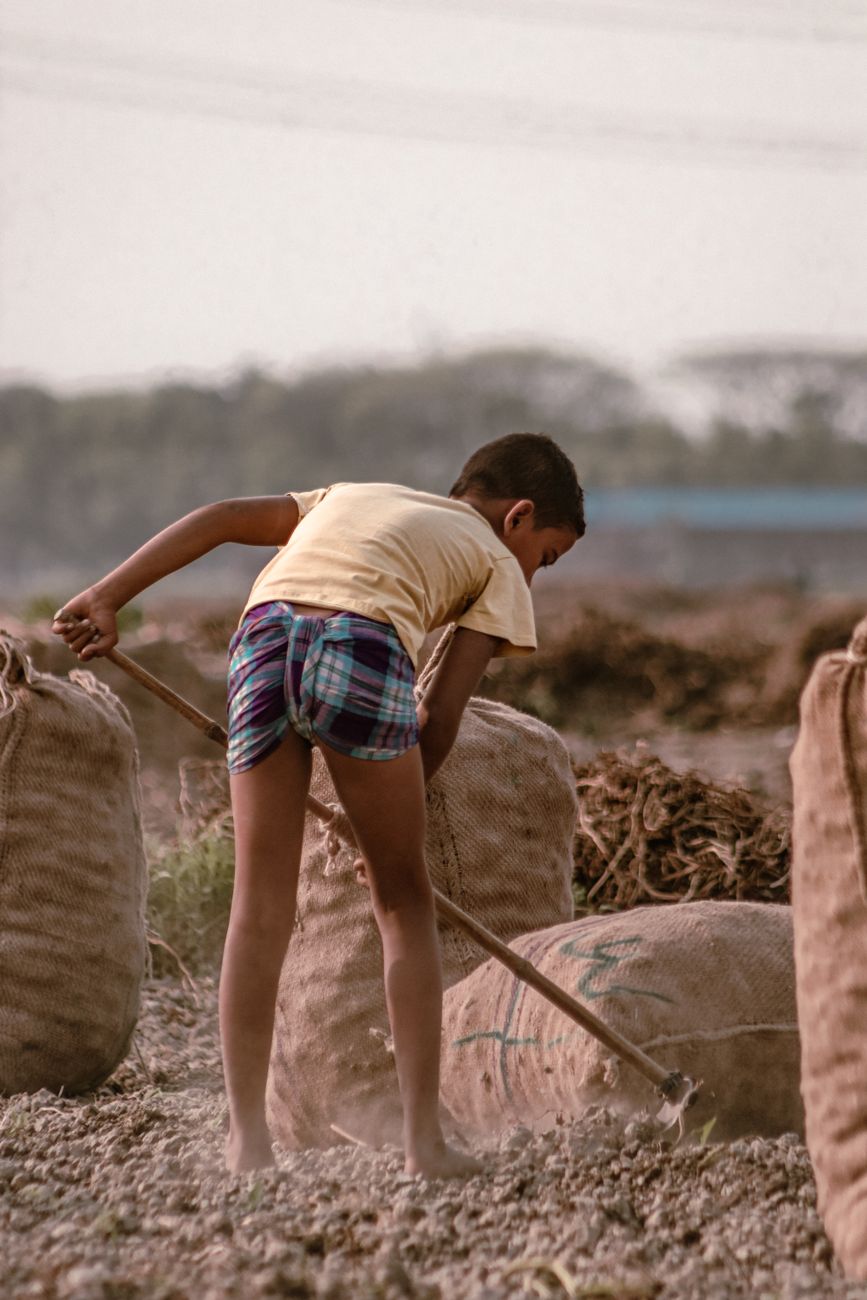
ILO and UNICEF count 138 million children in labour worldwide
The International Labour Organization and UNICEF estimate that 138 million children were in child labour in 2024, including 54 million in hazardous work, after the world missed the UN target to eliminate child labour by 2025. The ILO-UNICEF figures show a fall from the 160 million children counted in 2020, but the report states that progress is still too slow and concentrated unevenly across regions. Agriculture remains the largest sector, with the ILO-UNICEF figures putting 61 percent of cases in farms, fisheries, forestry and livestock. Services account for 27 percent and industry for 13 percent. For Belgium Pulse readers, the main link is not domestic child labour but supply-chain responsibility: EU rules on forced-labour products and corporate due diligence are moving the issue from aid policy into customs, procurement and business compliance.
Belgian consumers, importers, retailers, chocolate and food businesses, clothing sellers, public buyers and investors are touched through global supply chains rather than local workplaces. The ILO-UNICEF estimates place most child labour in agriculture, a sector tied to everyday goods sold in Belgium, from cocoa and coffee to textiles and mined inputs. The European Commission says EU due-diligence rules will require the largest companies to address human-rights impacts in global value chains, while the EU forced-labour ban will add a market-access tool.
The International Labour Organization (UN agency founded in 1919 to set labour standards) and UNICEF (UN children's agency created in 1946) produce the global child-labour estimates used by governments and campaigners. World Day Against Child Labour (ILO awareness day observed annually on 12 June since 2002) is the hook for the new figures. UN Sustainable Development Goal Target 8.7 (the 2015 target on forced labour, modern slavery and child labour) set 2025 as the deadline for ending child labour in all forms. Sub-Saharan Africa (the region south of the Sahara, excluding North Africa) remains the largest regional burden in the ILO-UNICEF account. Ghana and Nigeria are West African economies cited in the lead item as examples of agricultural, mining, fishing and domestic-work exposure. The EU Corporate Sustainability Due Diligence Directive (Directive 2024/1760, in force since 2024 and later amended) and the EU Forced Labour Regulation (Regulation 2024/3015, applying fully from December 2027) are the main EU policy channels relevant to Belgian companies and consumers.
Background
ILO Convention No. 138 on minimum age was adopted in 1973, and ILO Convention No. 182 on the worst forms of child labour was adopted in 1999 and reached universal ratification in 2020. The UN's 2015 Sustainable Development Goals made 2025 the deadline for ending child labour in all forms. ILO-UNICEF figures recorded a reversal in 2020, when child labour rose to 160 million for the first time in two decades. The latest ILO-UNICEF figures indicate improvement since then, but not fast enough to meet the missed 2025 deadline.
The wider picture
Child labour risk is tied to global supply chains for food, textiles, minerals and consumer goods, where production often sits in poorer, climate-exposed or conflict-affected regions while consumption happens in richer markets. EU rules can raise labour standards through market access, but they also test relations with exporting countries that may view compliance demands as costly or unevenly shared.
Why now
World Day Against Child Labour on 12 June brought renewed attention to the latest ILO-UNICEF estimates and to the missed UN 2025 deadline for eliminating child labour. The timing also matters because EU supply-chain rules are moving from adoption into implementation planning.
What to watch
Watch for the European Commission's CSDDD guidance due by July 2027, national implementation work by EU member states, and the full application of the EU forced-labour product ban in December 2027. The next ILO-UNICEF global estimates will indicate whether the decline from 2020 has accelerated or stalled.
Opposing perspectives
- ILO and UNICEF
The ILO-UNICEF report frames the latest figures as proof that policy can reduce child labour, but only if governments protect education, social protection and decent work for adults. Its strongest argument is that the fall from 2020 shows progress is possible, while the missed 2025 deadline shows voluntary momentum is insufficient.
- European Commission
The European Commission's due-diligence framing argues that large companies operating in the EU should identify and address human-rights harms in global value chains while avoiding disproportionate burdens on smaller suppliers. In that view, child-labour prevention is partly a market-governance problem, not only a development-aid issue.
- Supply-chain researchers (Hurt et al.)
A 2023 network study by Jan Hurt and co-authors estimates that indirect supply-chain links make child and forced-labour exposure difficult to isolate firm by firm. Their strongest caution is that due-diligence regimes focused only on individual buyer-supplier links may miss how dense global production networks actually transmit risk.
Sources & evidence
- Al Jazeera - One in 17 children is working: Here are the industries driving child labour · 2026-06-12
- Times of India - World misses 2025 target to end child labour: Report · 2025-06-12
- Economic Times - 138 million child laborers in 2024; world misses target to eliminate child labour by 2025 · 2025-06-11
- European Commission - Corporate sustainability due diligence
- EUR-Lex - Directive (EU) 2024/1760 on corporate sustainability due diligence · 2024-07-05
- EUR-Lex - Regulation (EU) 2024/3015 on prohibiting products made with forced labour · 2024-12-12
- Jan Hurt et al. (2023), Supply Chain Due Diligence Risk Assessment for the EU, arXiv · 2023-11-27
- Axios - UN: Worldwide child labor jumps for first time in 2 decades · 2021-06-10