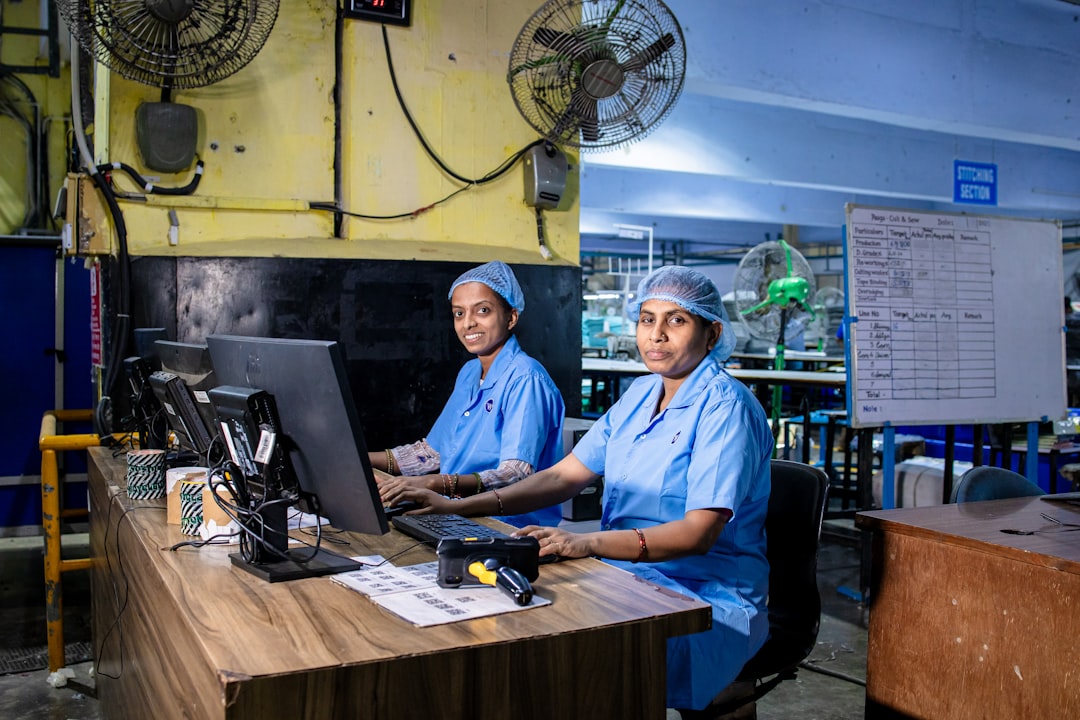
Indian data workers train robots as AI firms seek real-world labour
A new photo-led report on Indian workers training AI robots points to a wider shift in the automation economy: the next generation of machines needs human labour before it can replace or reorganise it. The lead report documents workers in India generating training data for AI-enabled robots. Separate reporting on AI data work in India shows that annotators and moderators already perform low-visibility tasks for global technology supply chains, while Business Insider's reporting on Instawork shows robotics companies paying gig workers to record, label and support real-world tasks. The International Labour Organization's 2023 working paper argues that generative AI is more likely to augment many occupations than fully automate them, but it also stresses job-quality risks. For Europe, the European Commission's AI Act framework matters because AI used in employment and worker management can fall under high-risk rules, while general-purpose model providers face transparency obligations.
For Belgian workers, unions, SMEs and public agencies buying AI tools, this story is a reminder that automation is not immaterial: it depends on human data labour, often outside Europe. The European Commission's AI Act framework makes this relevant to EU-based employers because AI used in recruitment, education, worker management and some product-safety contexts faces stricter obligations. Belgian businesses considering robotics should watch both productivity claims and labour-supply-chain questions, including consent, privacy, training quality and worker protection.
India (the world's most populous country and a major IT-services and business-process outsourcing hub) is central to global AI data work. Al Jazeera (Qatar-based international broadcaster founded in 1996) published the visual lead on workers training robots. Instawork (San Francisco gig-work platform founded in 2015) is a useful comparator because it has built robotics data services around hourly workers. Instacore (Instawork's wearable camera system announced in 2026) records work tasks for robotics training. The International Labour Organization (United Nations labour agency founded in 1919) researches work standards and AI's labour-market effects. The European Commission (EU executive headquartered in Brussels) oversees EU AI policy. The AI Act (EU Regulation 2024/1689, in force since 2024) sets risk-based rules for AI systems in the EU. Ding Wang, Shantanu Prabhat and Nithya Sambasivan (human-computer interaction researchers) studied Indian data annotation work in a 2022 paper.
Background
AI's hidden workforce predates the current robot boom. Amazon Mechanical Turk popularised online microwork in 2005, and image-labelling firms later supplied datasets for autonomous vehicles and computer vision. Wang, Prabhat and Sambasivan's 2022 study of Indian annotation work found that annotators' work practices were shaped by clients and managers above them, not by worker autonomy. The ILO's 2023 working paper then framed generative AI mainly as an augmentation shock, while warning that job quality and fair transitions would depend on policy choices. Robotics adds a physical layer: machines need data about movement, objects, workplaces and human improvisation.
The wider picture
Physical AI is becoming another front in the competition between US, Chinese, Indian and European technology ecosystems. Countries and firms that control data, chips, robotics talent and workplace deployment channels will shape productivity gains. India's role is not only as a software market; it is also a labour and data infrastructure for systems that may later compete globally.
Why now
The lead is timely because AI developers are moving from text-based models toward robots that need real-world training data. The European regulatory clock also matters: the Commission says the AI Act is moving through phased application, with full applicability due on 2 August 2026 and later deadlines for some high-risk systems.
What to watch
Watch for vendor disclosures on how robotics training data is collected, whether workers can opt in meaningfully, and how EU buyers document compliance. In Europe, the next practical test is how national authorities and the European AI Office interpret AI Act duties for employment tools, robotics products and general-purpose model providers.
Opposing perspectives
- AI labour researchers
Wang, Prabhat and Sambasivan argue that data annotation should not be treated as a neutral technical input. Their 2022 study frames Indian annotation as work shaped by organisational power, client demands and limited worker voice, making welfare, career pathways and participation central to AI quality.
- Robotics data platforms
Instawork's executives argue that robotics data demand can create new work rather than simply erase existing jobs. The company's account presents gig workers as trainers, technicians and field support staff who help robots learn from complex real workplaces before deployment.
- International Labour Organization
The ILO working paper argues that the dominant near-term effect of generative AI may be augmentation rather than full automation, but says policy should focus on job quality, social dialogue and fair transitions because the distribution of benefits is not automatic.
Sources & evidence
- Al Jazeera - India’s workers are training AI robots to take their jobs · 2026-06-11
- The Guardian - India’s female workers watching hours of abusive content to train AI · 2026-02-05
- Business Insider - Voracious demand for robotics training data is transforming gig work · 2026-04-16
- European Commission - AI Act · 2026-05-11
- International Labour Organization - Generative AI and Jobs: A global analysis of potential effects on job quantity and q · 2023-08-21
- Ding Wang, Shantanu Prabhat and Nithya Sambasivan - Whose AI Dream? In search of the aspiration in data annotation, 2022 · 2022-03-21