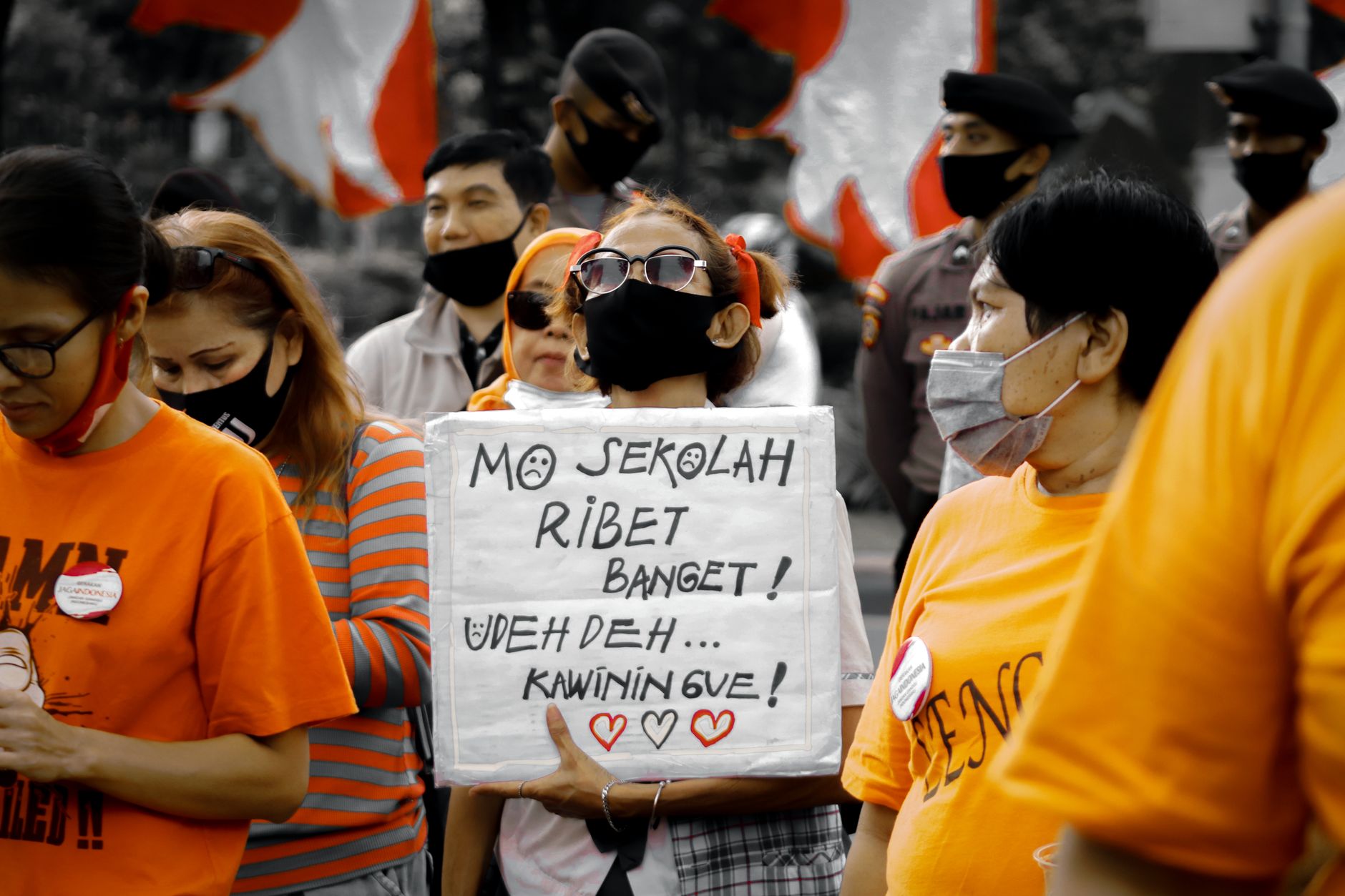
Indonesian students challenge Prabowo over fuel prices and spending
Indonesian student groups rallied in Jakarta on 12 June, pressing President Prabowo Subianto’s government to lower fuel and food prices, curb flagship welfare spending and limit military influence in civilian affairs. Student organisers described the protest as a response to pressure on household costs after a fuel-price increase, a weakening rupiah and concern that major programmes are absorbing fiscal room. Indonesian authorities deployed thousands of police and soldiers around central Jakarta as demonstrators tried to reach the Hotel Indonesia traffic circle. The dispute is not only a street protest: it tests whether Prabowo can defend large social programmes while markets, students and parts of civil society question budget discipline. For Europe, the relevance is indirect but real. The European Commission says EU-Indonesia goods trade reached €28.9 billion in 2025, so prolonged instability in Southeast Asia’s largest economy would matter for trade, supply chains and the EU-Indonesia CEPA ratification climate.
For Belgium Pulse readers, this is mainly an international economy and governance story. Belgian importers, exporters and SMEs dealing with Indonesia sit inside a wider EU trade relationship that the European Commission values at €28.9 billion in goods in 2025. Consumers may see only indirect effects, through energy, food and commodity supply chains, while policy-engaged readers should watch whether unrest complicates CEPA ratification. Students in Belgium also have a familiar lens: youth movements are acting as fiscal and democratic watchdogs.
Prabowo Subianto (Indonesian president since 2024 and former defence minister) made free meals and stronger state intervention central to his governing programme. Jakarta (Indonesia’s capital and main protest centre) is the seat of the presidential palace and national parliament. Hotel Indonesia traffic circle (central Jakarta landmark and frequent rally point) was the students’ intended gathering area. Bank Indonesia (the country’s central bank, founded in 1953) is responsible for monetary policy and rupiah stability. The rupiah (Indonesia’s national currency) has become a visible marker of market confidence. Free Nutritious Meals (Prabowo’s flagship school-meals and maternal nutrition programme, launched nationally in 2025) is defended as anti-malnutrition policy but criticised over cost and governance. The National Nutrition Agency (Indonesian body created to run nutrition programmes) oversees that scheme. The EU-Indonesia Comprehensive Economic Partnership Agreement, or CEPA (trade and investment deal finalised in 2025 but still awaiting adoption or ratification), frames the European stake.
Background
Indonesia’s student movements have repeatedly acted as a pressure valve when economic stress meets concerns over authoritarian drift. In May 1998, student-led demonstrations helped force President Suharto to resign after the Asian financial crisis devastated the rupiah and household living standards. In September 2019, students mobilised against legal changes they said weakened anti-corruption safeguards. The current protests also draw on that memory, but the immediate trigger is different: Prabowo faces a fiscal squeeze from costly welfare promises, higher fuel costs and currency pressure rather than a single constitutional rupture.
The wider picture
The protests sit inside a wider shock from Middle East conflict, energy-price pressure and tighter financial conditions for emerging markets. The World Bank says these pressures are weakening 2026 global growth and limiting fiscal room in developing economies. Indonesia’s challenge is therefore partly domestic governance and partly exposure to global energy, currency and investor-risk cycles.
Why now
The immediate trigger is the collision of higher fuel and food costs, rupiah weakness and criticism of Prabowo’s large welfare programmes. The 12 June rally followed a week in which Bank Indonesia moved to stabilise the currency, making economic management the central political issue.
What to watch
Watch whether student organisers call further rallies, whether the government revises fuel or welfare-policy implementation, and whether Bank Indonesia signals more currency-defence measures. For EU readers, the concrete signal is whether CEPA adoption or ratification proceeds smoothly despite Indonesia’s domestic pressure.
Opposing perspectives
- Indonesian student organisers
Student organisers argue that the government is asking households to absorb higher fuel and food costs while protecting expensive flagship programmes. Their strongest case is that welfare spending must be targeted, transparent and subordinate to immediate affordability pressures, and that military involvement in civilian affairs weakens democratic accountability.
- Prabowo Subianto government
The government’s strongest defence is that Free Nutritious Meals is a long-term social investment aimed at malnutrition, children and pregnant women, not a discretionary prestige project. In that frame, fiscal pressure requires better implementation and oversight, not abandoning a programme designed to build human capital.
- Market and investor constituency
Investors’ strongest concern is that currency weakness, interventionist policy and costly programmes may narrow Indonesia’s policy room just as external shocks raise energy and borrowing costs. The Bank Indonesia rate move signals an attempt to defend stability, but markets may look for fiscal discipline as well as monetary action.
Sources & evidence
- Al Jazeera - Indonesian students protest gov’t policies amid economic strain · 2026-06-12
- Associated Press - Indonesian students protest government policies as economic pressures grow · 2026-06-12
- Financial Times - Foreign investors sell Indonesia as Prabowo faces backlash · 2026-06-12
- The Wall Street Journal - Bank Indonesia Surprises With Rate Hike to Stem Rupiah Bleeding · 2026-06-09
- European Commission - EU trade relations with Indonesia
- World Bank - Global Economic Prospects, June 2026: Navigating a Cloudy Outlook · 2026-06-11