Iraqi militias pledge to hand weapons to Baghdad
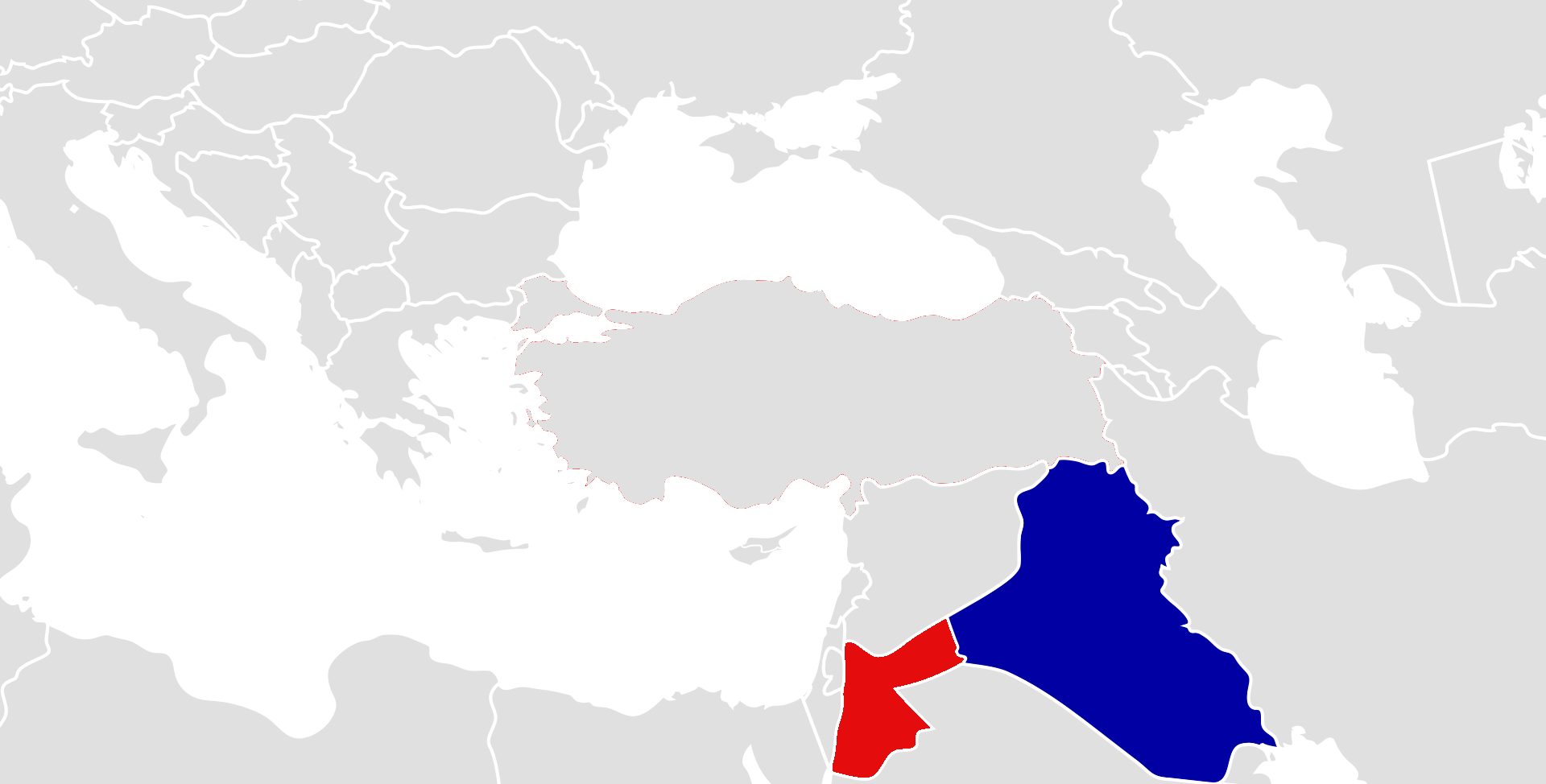
Asaib Ahl al-Haq and the Imam Ali Brigades said they would start placing weapons under Iraqi state authority, giving Prime Minister Ali al-Zaidi an early test of his pledge to restrict armed power to official forces. The move matters because these factions are not marginal actors: they sit inside the Popular Mobilization Forces, a state-backed umbrella created during the war against Islamic State, while several groups have also kept independent chains of command. Kataib Hezbollah and Harakat al-Nujaba have not accepted full disarmament and have linked their stance to Iraqi sovereignty and the presence of foreign forces. The immediate question is whether Baghdad can turn declarations into verifiable command, inventory and accountability. For Europe, the issue is not only Iraqi domestic politics; it affects regional security, energy risk and the credibility of EU-backed security-sector reform in Iraq.
For Belgian readers, this is a Middle East security story with indirect but real consequences: regional escalation can affect energy markets, migration pressure, diplomatic security and European missions. The EU Advisory Mission in Iraq is built around security-sector reform, so Baghdad's ability to control armed groups tests a policy area funded and politically backed by EU member states. Belgian diplomats, defence planners, energy-sensitive businesses and voters following Europe's external-security commitments all have a stake in whether Iraq stabilises or remains a venue for US-Iran confrontation.
Asaib Ahl al-Haq (Iraqi Shia armed and political movement founded after the 2003 US-led invasion) is one of the most powerful Iran-aligned factions. The Imam Ali Brigades (Iraqi Shia militia also known as Kataib al-Imam Ali) emerged during the fight against Islamic State. Ali al-Zaidi (Iraq's prime minister in 2026) has made state control of weapons a central governing pledge. The Popular Mobilization Forces (Iraq's state-backed paramilitary umbrella formed in 2014) brought many Shia militias into an official framework. Kataib Hezbollah (Iran-aligned Iraqi militia designated by the United States in 2009) rejects full surrender of arms. Harakat al-Nujaba (Iraqi Shia armed faction with close Iran links) takes a similar sovereignty-based line. The Coordination Framework (dominant Shia political alliance in Iraq's parliament) backs much of the current government. Muqtada al-Sadr (Iraqi Shia cleric and political leader) controls the Saraya al-Salam network.
Background
Carnegie's 2017 paper says the Popular Mobilization Forces grew after Islamic State seized Mosul and large parts of Iraq in 2014, when state security forces collapsed and Shia religious authority Ali al-Sistani called for volunteers to defend the country. Iraq's parliament then gave the PMF formal status in 2016, but Carnegie's analysis described a force split among factions loyal to Ali Khamenei, Ali al-Sistani and Muqtada al-Sadr. AP's 2024 background report noted that some PMF factions later attacked US forces while remaining nominally within Iraq's security apparatus.
The wider picture
Iraq remains one of the main arenas where US-Iran rivalry becomes operational rather than abstract. Iran-aligned factions give Tehran depth and deterrence; Washington sees them as a threat to personnel and regional partners. Baghdad's challenge is to avoid becoming a proxy battlefield while rebuilding enough state authority to keep armed actors from setting foreign policy by force.
Why now
The trigger is the public commitment by Asaib Ahl al-Haq and the Imam Ali Brigades to begin placing weapons under state authority, following al-Zaidi's recent pledge to make state control of arms a core government test.
What to watch
Watch for verifiable inventories, command orders from Baghdad, budget changes affecting PMF factions, and any shift by Kataib Hezbollah or Harakat al-Nujaba. The most important signal will be whether heavy weapons and operational decisions actually move under the prime minister's chain of command.
Opposing perspectives
- Iraqi government / Ali al-Zaidi
Ali al-Zaidi's position is that Iraq cannot function as a sovereign state while major armed groups retain autonomous weapons and command. His pledge to restrict weapons to state forces frames disarmament as institution-building, not an anti-Shia campaign, and gives Baghdad a way to reassure Washington without openly breaking with the Coordination Framework.
- Asaib Ahl al-Haq and Imam Ali Brigades
The factions that announced compliance present the move as a controlled transition into state authority, not capitulation. Asaib Ahl al-Haq's committee and the Imam Ali Brigades' state-sovereignty language allow them to claim they are preserving their wartime legacy while accepting that weapons should now serve official institutions.
- Kataib Hezbollah and Harakat al-Nujaba
Kataib Hezbollah's statement treats full disarmament as premature while foreign forces remain in Iraq. This camp argues that armed resistance is part of national sovereignty and that coordination with the Popular Mobilization Forces is acceptable, but surrendering independent capability would weaken Iraq against external pressure.
- Security researchers (Carnegie / Chatham House / LSE)
The strongest sceptical reading is that Iraq's militias are too embedded in politics, budgets and security institutions for a quick weapons handover to change real power. Carnegie's structural analysis and later expert assessments point to the same problem: group-level integration can preserve divided loyalties unless command, payroll and accountability are rebuilt.
Sources & evidence
- Al Jazeera - Iraq's paramilitary groups say they will disarm. Will that ever happen? · 2026-06-12
- Associated Press - Iraq's Iran-backed militias to place weapons under state control · 2026-06-02
- Financial Times - Iraq's new leader pledges to rein in militias · 2026-05-15
- Associated Press - A look at the Iraqi government's relationship with armed groups that are clashing with US forces · 2024-02-08
- Renad Mansour and Faleh A. Jabar, The Popular Mobilization Forces and Iraq's Future, Carnegie Middle East Center, 2017 · 2017-04-28