Israel holds south Lebanon buffer zone as gas dispute returns
Israel's expanding buffer zone in southern Lebanon has revived a question that the 2022 Israel-Lebanon maritime deal was meant to quiet: whether security control on land can reshape access to offshore gas. Israeli officials describe the zone as a defensive measure against Hezbollah fire and infiltration, while Lebanon's government rejects any Israeli military presence on its territory. The energy angle is plausible but not proven: Lebanon's latest offshore push centres on Block 8, where TotalEnergies said its consortium planned a 1,200-square-kilometre 3D seismic survey, and on earlier claims around Qana and Karish settled in 2022. The core issue is therefore less a confirmed gas seizure than a dangerous overlap between military occupation, unresolved land-border demarcation and fragile Eastern Mediterranean energy diplomacy. For Europe, including Belgium, it matters because gas diversification, maritime law and Middle East escalation now sit in the same policy file.
Belgian readers are touched through Europe's energy-security and diplomacy channels, not through a direct domestic impact. Belgian consumers and SMEs have already seen how Middle East and Russian-supply shocks can feed into European gas prices. EU institution staff and policy watchers in Brussels will also track whether a security zone undermines a US-brokered maritime settlement that helped diversify East Mediterranean gas options. For Belgian voters, the issue connects foreign policy, international law and energy resilience.
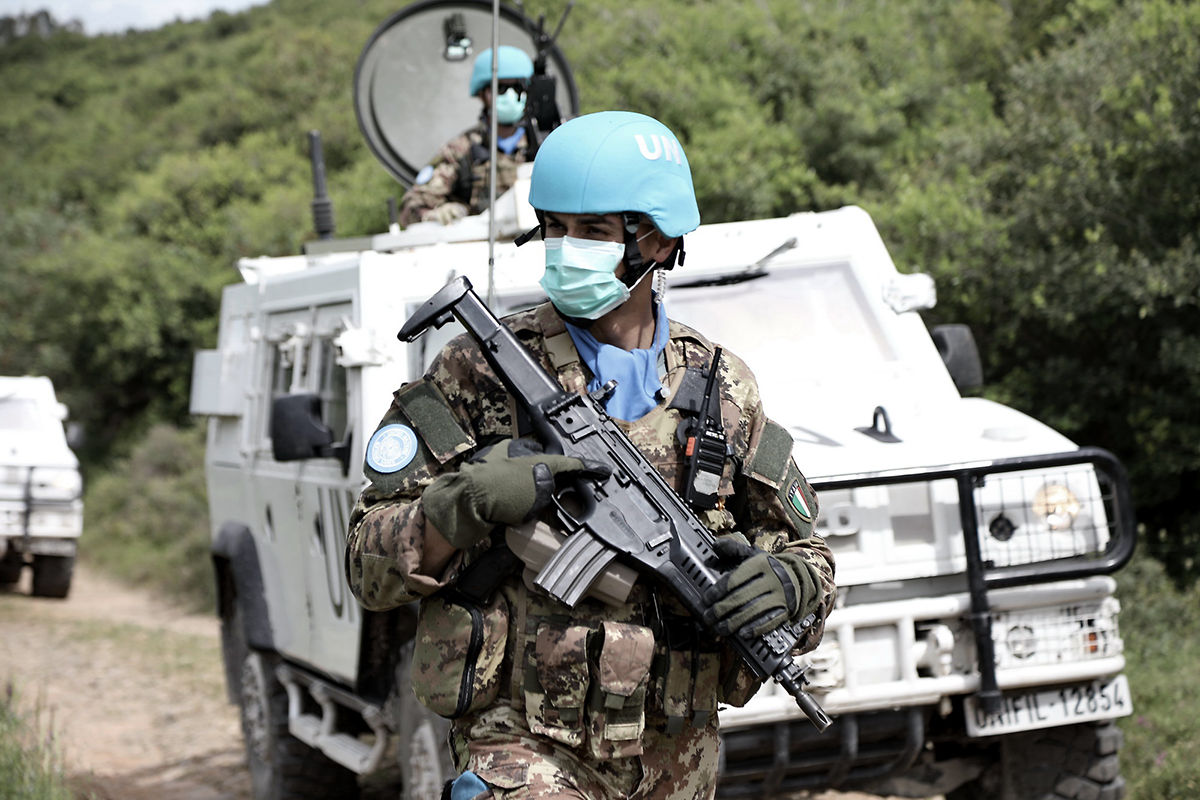
Israel Katz (Israeli defence minister in 2026) has presented the buffer zone as a security measure against Hezbollah. Benjamin Netanyahu (Israel's prime minister) has backed a broader defensive belt in south Lebanon. Hezbollah (Lebanese Shia armed movement and political party, founded in the 1980s) has fought Israel and retains major influence in southern Lebanon. The Litani River (south Lebanon river about 30 kilometres north of the Israeli border at the coast) is a key reference line in UN security arrangements. UNIFIL (UN Interim Force in Lebanon, deployed since 1978) monitors the Israel-Lebanon frontier. TotalEnergies (French energy major), Eni (Italian energy company) and QatarEnergy (Qatar's state energy company) form Lebanon's main offshore exploration consortium. Block 8 (Lebanese offshore exploration area near the Israeli maritime boundary) is the latest exploration target. Qana and Karish (Eastern Mediterranean gas prospects/fields) were central to the 2022 maritime dispute.
Background
The current dispute sits on top of older security and maritime precedents. Israel occupied parts of southern Lebanon from 1982 until its withdrawal in 2000. UN Security Council Resolution 1701, adopted on 11 August 2006, called for Israeli withdrawal, Lebanese state authority in the south and no armed groups other than Lebanon's army and UNIFIL south of the Litani. The maritime track moved separately: Israel and Lebanon finalised a US-mediated boundary agreement on 27 October 2022, assigning Karish to Israel and enabling Lebanese exploration around Qana. The present buffer zone risks blurring those two files again.
The wider picture
The buffer zone sits at the intersection of the Israel-Hezbollah conflict, Lebanon's weak state capacity, Iran-linked regional pressure and Europe's search for non-Russian gas. Gas does not need to be the cause of the military move to become strategically relevant: control over territory, investor confidence and maritime enforcement can all reshape who benefits from Eastern Mediterranean resources.
Why now
The issue is timely because Israel's 2026 buffer-zone policy now overlaps with Lebanon's renewed Block 8 exploration push and the still-fragile 2022 maritime settlement. The immediate trigger is renewed scrutiny of whether military control in southern Lebanon could affect access to nearby offshore gas prospects.
What to watch
Watch for Israeli statements on the duration and map of the buffer zone, Lebanese appeals at the UN, UNIFIL access reports, and any TotalEnergies-Eni-QatarEnergy update on the Block 8 seismic survey. A change in any of those would show whether this remains a security dispute or becomes an energy-investment dispute.
Opposing perspectives
- Israeli government / security establishment
Israel Katz's March position argues that Israel cannot allow Hezbollah forces, anti-tank teams or cross-border infiltration routes to remain close to northern Israeli communities. In this frame, the buffer zone is temporary coercive security geography: withdrawal would follow only when Lebanon proves that Hezbollah cannot reconstitute military infrastructure south of the Litani.
- Lebanese government / sovereignty camp
Lebanon's government frames the zone as a violation of sovereignty and of the logic behind UN Security Council Resolution 1701. Its strongest argument is that Israeli military control, even when presented as defensive, weakens the Lebanese state, displaces civilians and risks converting an internationally monitored border problem into a renewed occupation.
- Energy-security analysts
A Columbia Center on Global Energy Policy report found that Eastern Mediterranean gas can help Europe mainly in the medium term, but only if political conflicts and infrastructure limits are managed. From this view, the buffer zone is less proof of a gas grab than another reason investors may treat Lebanese offshore exploration as legally and politically fragile.
- Hezbollah and local resistance constituencies
Hezbollah and aligned local voices frame Israeli control as occupation that validates armed resistance. Their strongest argument is that a buffer zone, especially near land and maritime resources, turns security language into territorial pressure and makes Lebanese disarmament politically impossible unless Israel first withdraws.
Sources & evidence
- Al Jazeera - Is Israel's buffer zone inside Lebanon an attempt to grab gas reserves? · 2026-06-12
- Associated Press - Lebanon signs gas exploration deal with international consortium amid economic crisis · 2026-01-09
- The Guardian - Israel says it is expanding buffer zone in Lebanon · 2026-03-26
- Le Monde - In Lebanon, Israel establishes an uninhabited buffer zone behind a yellow line · 2026-04-23
- United Nations Security Council - Resolution 1701 (2006) · 2006-08-11
- United Nations Treaty Collection - Israel-Lebanon maritime boundary agreement text · 2022-10-27
- Shangyou Nie and Robin Mills, Eastern Mediterranean Deepwater Gas to Europe: Not Too Little, But Perhaps Too Late, Colum · 2023-03-21
- AP - UN Resolution 1701 is at the heart of the Israel-Hezbollah ceasefire. What is it? · 2024-11-26