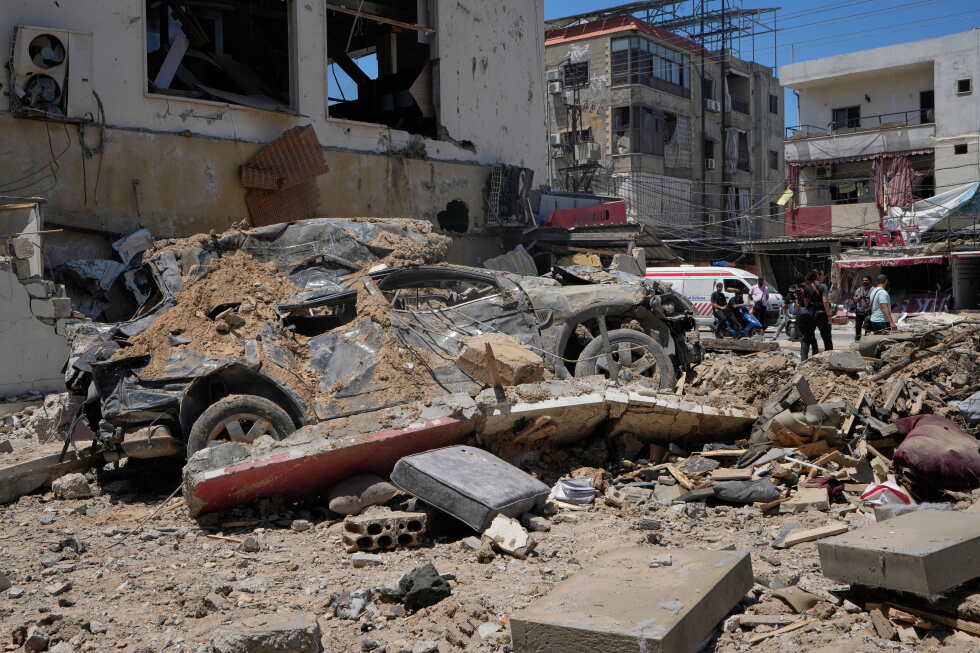
Israel orders southern Lebanon evacuations after accusing Hezbollah
Israel's military said Hezbollah violated the April ceasefire and issued evacuation orders for 29 towns in southern Lebanon, turning a fragile truce into another test of whether Lebanon's state institutions, Hezbollah and Israel can contain the war. The orders followed a week of intensified Israeli strikes and Hezbollah attacks, with Israeli forces also operating near Kfar Tebnit and Nabatiyeh. Lebanese officials said Israeli strikes have caused civilian casualties and damaged infrastructure, while Israel says it is targeting Hezbollah military positions and preventing the group from rebuilding capabilities near the border. The immediate story is the civilian displacement risk in southern Lebanon; the broader issue is whether the US-backed ceasefire framework can survive without Hezbollah's full participation and without a mutually accepted mechanism for enforcing UN Security Council Resolution 1701.
For Belgian readers, this is primarily an international security and humanitarian story, not a domestic one. It matters to Belgian citizens and residents with family in Lebanon or Israel, to aid organisations working from Belgium, to federal officials following consular risk, and to EU policy staff in Brussels managing sanctions, humanitarian funding and diplomatic messaging. A renewed Israel-Hezbollah war also affects Belgian voters and businesses indirectly through energy prices, regional instability and pressure on Europe's already strained Middle East diplomacy.
Hezbollah (Lebanese Shia political and armed movement founded in the 1980s, backed by Iran) remains the central non-state actor in the conflict. Southern Lebanon (the border region south of the Litani River) is where UN Security Council Resolution 1701 says only Lebanese state forces and UNIFIL should operate militarily. UNIFIL (United Nations Interim Force in Lebanon, deployed since 1978) monitors the Blue Line between Lebanon and Israel. Kfar Tebnit (village near Nabatiyeh in southern Lebanon) sits close to contested Israeli ground movements. Nabatiyeh (major southern Lebanese city and governorate centre) has repeatedly been hit during the latest escalation. The Litani River (a strategic river north of the Israeli border) is the reference line in ceasefire and disarmament arrangements. The Israel Defense Forces (Israel's military) says it is acting against Hezbollah threats. The European Union (Belgium's main diplomatic framework for Middle East policy) has backed de-escalation and humanitarian access.
Background
UN Security Council Resolution 1701 ended the 2006 Israel-Hezbollah war on 11 August 2006 and called for Hezbollah and other armed groups to stay out of southern Lebanon while Israeli forces withdrew. The same unresolved bargain returned after the November 2024 Israel-Lebanon ceasefire, which was meant to move Hezbollah north of the Litani River and restore Lebanese state control. A new 10-day ceasefire was announced on 16 April 2026 after weeks of fighting, but Hezbollah was not a direct signatory. That structural gap has allowed each side to frame later attacks as defensive enforcement rather than ceasefire collapse.
The wider picture
The escalation sits inside the wider Israel-Iran confrontation because Hezbollah is Iran's most important Lebanese ally and Israel sees the group as part of a regional threat network. US diplomacy is trying to prevent Lebanon from becoming the front that unravels broader regional de-escalation, while Europe has limited hard leverage but a strong interest in preventing another displacement and reconstruction crisis.
Why now
The trigger is Israel's accusation that Hezbollah breached the April ceasefire, followed by evacuation orders for 29 southern Lebanese towns. The orders come after several days of strikes, drone attacks and ground movements that had already weakened confidence in the truce.
What to watch
Watch whether Israeli forces expand operations beyond targeted strikes, whether Hezbollah fires deeper into Israel, whether Lebanon's army stays deployed in contested villages, and whether Washington announces another ceasefire meeting or enforcement mechanism. Any UNIFIL incident would sharply raise diplomatic pressure.
Opposing perspectives
- Israel Defense Forces
Israel's military frames the evacuation orders as a protective warning before operations against Hezbollah positions. Its strongest argument is that Hezbollah's presence and attacks south of the Litani River violate the ceasefire architecture and Resolution 1701, leaving Israel to act before northern Israeli communities face renewed rocket or drone fire.
- Hezbollah
Hezbollah frames its attacks as retaliation for Israeli strikes, ground movements and continued military presence inside Lebanon. Its strongest argument is that a ceasefire cannot be enforced only against Lebanese armed actors while Israel keeps operating in Lebanese territory and issuing mass displacement orders to civilians.
- Lebanese state institutions
Lebanese officials' strongest frame is sovereignty: both Hezbollah's independent military decisions and Israel's operations weaken the state's claim to control war and peace. The Lebanese position depends on strengthening the army and diplomacy while avoiding a confrontation that the state may not be able to contain.
- European Union diplomacy
The EU's likely frame is containment and humanitarian access. Its strongest argument is that the priority is stopping escalation, protecting civilians and preserving a UN-based framework, because a wider Israel-Hezbollah-Iran conflict would deepen displacement, destabilise Lebanon and complicate European crisis management.
Sources & evidence
- Al Jazeera - Israel accuses Hezbollah of ceasefire violation, issues displacement orders · 2026-06-14
- AP - Lebanese army withdraws from southern village after Israeli troops advance nearby · 2026-06-14
- The Guardian - Middle East crisis live, 14 June 2026 · 2026-06-14
- The Washington Post - 10-day ceasefire in Lebanon begins as Israel agrees to U.S.-backed deal · 2026-04-16
- UN Security Council Resolution 1701 · 2006-08-11
- CSIS - Seth G. Jones, The Coming Conflict with Hezbollah · 2024-03-21