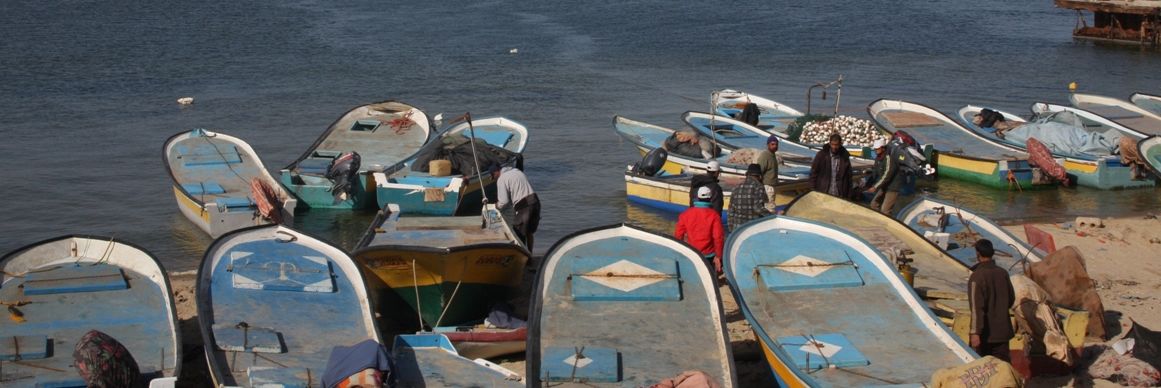
Israeli forces kill Gaza teenage fisherman at sea
Footage released with the report shows a teenage Palestinian fisherman in Gaza shortly before Israeli forces killed him at sea, placing a single death inside the longer dispute over Israel's maritime restrictions on the enclave. The boy's identity and the precise circumstances of the shooting could not be independently corroborated from official Israeli, Palestinian or UN records available at publication time, so the central claim should remain attributed to the footage and the original report. The case nevertheless fits a documented pattern: Gaza's coastal waters have long been treated as a restricted security zone by Israel, while Palestinian fishermen and rights groups describe the sea as one of the last available livelihoods in a territory where the wider economy has collapsed. For Europe and Belgium, the incident adds pressure to an already live debate over arms controls, EU-Israel trade privileges and the practical meaning of civilian protection in Gaza.
For Belgian readers, this is not only a distant battlefield story. It feeds directly into debates voters, civil-society groups, ports, customs authorities and federal officials already face over arms transit, settlement-product restrictions, recognition of Palestine and Belgium's obligations under international law. EU institution staff and policy-focused residents in Brussels will read it against the bloc's unresolved question: whether civilian deaths in Gaza should trigger harder consequences in EU-Israel trade, research and diplomatic ties.
Gaza (Palestinian coastal enclave under Israeli-Egyptian movement restrictions since 2007) is the setting for the reported killing. Israeli forces (Israel's military and naval units operating around Gaza) enforce Israel's maritime closure and fishing limits. The Gaza fishing community (families working from small boats along Gaza's Mediterranean coast) has historically depended on nearshore waters for income and food. Hamas (Palestinian Islamist movement that has governed Gaza since 2007 and led the 7 October 2023 attacks on Israel) remains Israel's stated security rationale for tight controls. The European Union (27-state bloc headquartered largely in Brussels) has debated whether Israel's conduct in Gaza breaches human-rights clauses in EU-Israel relations. Belgium (EU and NATO member state hosting major EU institutions in Brussels) has faced domestic legal and political pressure over arms, trade and recognition policy related to Gaza.
Background
Israel's naval restrictions on Gaza intensified after Hamas took control of the enclave in 2007. The sea has since been both a security boundary and an economic pressure point. The 31 May 2010 Mavi Marmara raid, in which Israeli commandos killed activists aboard a Gaza-bound flotilla, made the blockade a major international legal dispute. Earlier fishing incidents were also documented: in May 2017, B'Tselem said an Israeli naval vessel fired at Gaza fishermen, killing one. UN and development agencies have repeatedly linked movement restrictions, war damage and access limits to Gaza's economic collapse.
The wider picture
The killing is part of a larger contest over Gaza's post-war order, Israel's security doctrine, Palestinian civilian survival and Western credibility on humanitarian law. For the EU, Gaza has become a test of whether a rules-based foreign policy can survive divisions among member states, US pressure, Israeli security claims and public anger across European societies.
Why now
The story is timely because new footage has surfaced of the teenager shortly before the reported killing, renewing attention on maritime incidents that often receive less scrutiny than airstrikes or land operations in Gaza.
What to watch
Watch for confirmation from Gaza health authorities, Israeli military statements, video verification by rights groups, and any EU or Belgian parliamentary reaction tying the incident to wider measures on Israel policy.
Impact
Regional — The effect is split mainly between the EU and Belgium's federal level. EU institutions in Brussels are responsible for any changes to EU-Israel association, trade or research arrangements, while Belgian federal authorities handle recognition policy, arms-transit controls, sanctions implementation and litigation risk. Flanders, Wallonia and Brussels may be touched politically through parliaments, ports, universities or public procurement debates, but the immediate competence sits with federal foreign policy and EU external action rather than a distinct regional service.
Opposing perspectives
- Israeli security establishment
Israel's security framing argues that maritime controls around Gaza are part of preventing weapons smuggling and attacks by Hamas or other armed groups. From this view, naval forces operate in a live conflict environment where small vessels can pose security risks, and any lethal incident should be judged against operational warnings, rules of engagement and the threat assessment available to soldiers at sea.
- Palestinian fishing families and rights groups
Palestinian fishing families and rights groups frame the sea as a civilian livelihood space that has been progressively narrowed by blockade, war and live fire. Their strongest argument is that fishermen are being forced to choose between hunger on land and danger offshore, while accountability mechanisms rarely produce transparent findings after Palestinian civilian deaths.
- EU institutions and member-state governments
EU policymakers face a narrower institutional question: whether repeated civilian-harm incidents in Gaza require practical consequences in trade, research, arms controls or sanctions. This constituency's strongest argument is that declarations about international humanitarian law lose credibility if EU-Israel privileges continue unchanged while civilian protection keeps deteriorating.
Sources & evidence
- Al Jazeera, Video shows Gaza teen fisherman before Israeli forces killed him at sea · 2026-06-11
- Le Monde, Nearly 1,000 dead in Gaza since start of ceasefire illusion · 2026-06-10
- The Guardian, Gaza jobs crisis leaves people struggling to afford basics · 2026-02-16
- The Guardian, Gaza economy would take 350 years to return to pre-conflict level, UN says · 2024-10-22
- El Pais, Belgian court reopens Gaza case over Belgium's alleged failure to act · 2026-03-30
- Le Monde, European Commission proposes suspending Israel's trade advantages · 2025-09-17
- UNCTAD, Report on UNCTAD assistance to the Palestinian people: Developments in the economy of the Occupied Palestinian T · 2024-09-12
- Douglas Guilfoyle, The Mavi Marmara Incident and Blockade in Armed Conflict, British Yearbook of International Law, 2011 · 2011-01-01
- B'Tselem, Israeli navy vessel fires at Gaza fishermen, killing one as his boat fled · 2017-06-22