Israeli strikes destroy central Gaza homes despite truce
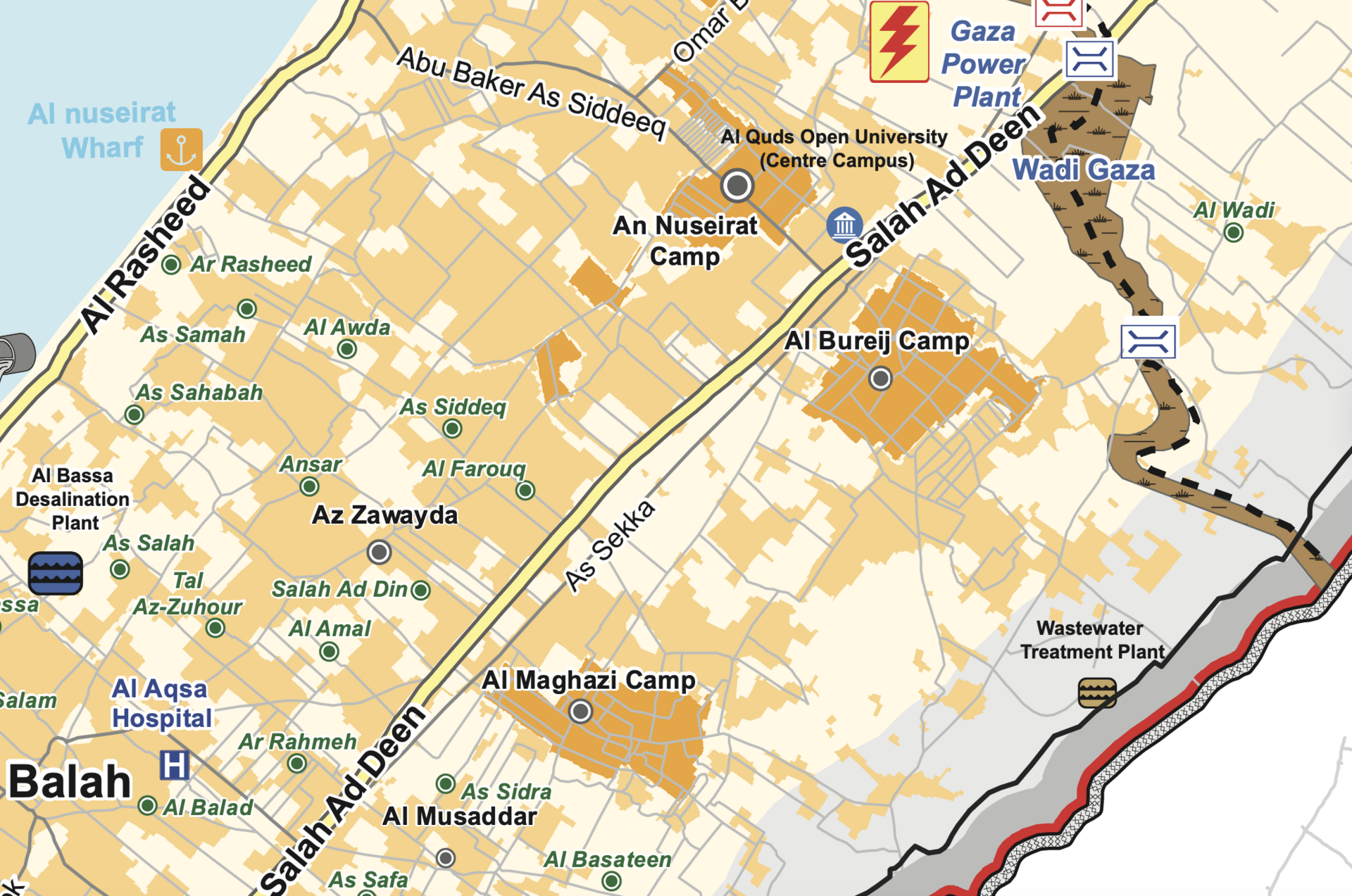
Israeli strikes hit Maghazi and Deir al-Balah in central Gaza on 12 June, with residents saying evacuation orders preceded attacks that left homes flattened and displaced families searching rubble for possessions. Residents said 10 to 15 homes in Maghazi were no longer habitable, while people in Deir al-Balah tried to recover usable items from collapsed buildings. The Israeli military has not publicly detailed the specific central Gaza strikes reviewed for this brief. The episode fits a wider pattern since the October 2025 Gaza ceasefire: Gaza's Health Ministry says Israeli operations have killed hundreds of Palestinians since the truce began, while Israel says its strikes respond to ceasefire violations or threats to troops. Nickolay Mladenov, the diplomat overseeing the US-backed plan, said the deadlock over Hamas disarmament has frozen reconstruction and Israeli withdrawal, leaving Gaza's civilians trapped between ceasefire diplomacy and continuing violence.
For Belgian readers, the Gaza strikes matter mainly as an international and EU policy story, not a local one. Belgium's federal government has tied its Palestine policy to hostage releases, Hamas's exclusion from governance and respect for international humanitarian law. Belgian voters, NGOs, universities, Jewish and Muslim communities, and diplomats in Brussels are watching whether the ceasefire framework can still support reconstruction, aid access and a two-state outcome. The EU's divided Israel policy also runs through Brussels institutions that shape Belgium's diplomatic room for manoeuvre.
Maghazi (a Palestinian refugee camp in central Gaza, established in 1949 in the Deir al-Balah Governorate) has repeatedly sheltered displaced families during the war. Deir al-Balah (a central Gaza city and governorate on the coastal road) became a major displacement and aid hub as fighting moved across the territory. The Gaza Strip (a 365-square-kilometre Palestinian coastal enclave) has been under severe wartime destruction since the Hamas-led 7 October 2023 attacks on Israel and Israel's military campaign that followed. Hamas (the Palestinian Islamist movement governing Gaza before and during the war) remains central to ceasefire talks because the US-backed plan requires its disarmament. Nickolay Mladenov (a Bulgarian former UN Middle East envoy now overseeing the Gaza ceasefire framework) has become the public face of the stalled implementation process. United Nations Security Council Resolution 2803 (adopted on 17 November 2025) endorsed the Gaza peace plan and authorized an International Stabilization Force.
Background
The Gaza war began after Hamas-led attacks in southern Israel on 7 October 2023, in which Israeli authorities say about 1,200 people were killed and 251 were taken hostage. A first temporary pause started on 24 November 2023 and collapsed on 1 December 2023 after hostage-prisoner exchanges. The current ceasefire began on 10 October 2025 after a US-backed plan and was later endorsed by United Nations Security Council Resolution 2803 on 17 November 2025. The plan linked Israeli withdrawals, Hamas disarmament, transitional Palestinian governance, an international stabilization force and reconstruction, but implementation has stalled.
The wider picture
Gaza remains a test of US leverage, Israeli security doctrine, Hamas's survival strategy and European credibility on international law. The ceasefire framework depends on a sequence few actors trust: Hamas must disarm, Israel must withdraw, international forces must deploy and donors must fund reconstruction. Each new strike makes that sequence politically harder.
Why now
The 12 June images are timely because they show fresh damage during a truce that is supposed to remain in force. They follow weeks of reporting that the ceasefire has stalled, Israeli operations have continued and reconstruction has not meaningfully begun.
What to watch
Watch for an Israeli military explanation of the 12 June central Gaza strikes, Gaza hospital or civil-defence casualty updates, UN humanitarian access reports, and any Board of Peace or mediator statement on whether reconstruction and withdrawal talks can restart.
Impact
Regional — The effects split between Belgium's federal level and the EU level. Belgium's federal government handles recognition, sanctions, arms-export positions and consular policy, while EU institutions and member states determine whether broader tools such as the EU-Israel Association Agreement, settlement trade measures or humanitarian funding rules change. Flanders, Wallonia and Brussels may feel the issue through protests, universities and community relations, but those are political and social spillovers rather than distinct regional policy competences in this specific event.
Opposing perspectives
- Israel's military and government
Israel's position, reflected in military statements on recent Gaza strikes, is that operations target militants or threats to Israeli troops and respond to ceasefire violations. This frame treats continuing fire as enforcement of a fragile truce rather than abandonment of it, and places responsibility on Hamas for operating in civilian areas and refusing disarmament.
- Palestinian civilians and humanitarian agencies
Residents and humanitarian agencies frame the same pattern as a ceasefire that exists largely on paper for civilians. Their strongest argument is that evacuation orders, repeated displacement, destroyed homes and blocked reconstruction make the truce meaningless for families who cannot return, rebuild or recover basic possessions.
- US-backed ceasefire monitors
Nickolay Mladenov's frame is institutional: the ceasefire has prevented a return to full-scale war, but the plan cannot move from emergency pause to reconstruction while Hamas disarmament, Israeli withdrawal and transitional governance remain locked together. This view sees the central failure as implementation paralysis.
- Belgian and pro-sanctions EU voices
Belgian and other pro-sanctions EU voices argue that repeated civilian harm and stalled reconstruction test Europe's credibility on international law. Their case is that diplomatic concern is insufficient if the EU-Israel relationship, settlement trade and arms-related measures remain largely intact despite continuing violence.
Sources & evidence
- Euronews video lead: À Gaza, de nouvelles frappes israéliennes ravivent la détresse des déplacés · 2026-06-12
- AP: Board of Peace envoy Mladenov says ceasefire hinges on Hamas' disarmament · 2026-05-13
- AP: A Palestinian woman and a young girl were killed in an Israeli airstrike in Gaza, officials say · 2026-05-25
- Le Monde: Nearly 1,000 dead in Gaza since start of ceasefire illusion · 2026-06-10
- United Nations Security Council Resolution 2803 (2025) · 2025-11-17
- UN Meetings Coverage: Security Council Authorizes International Stabilization Force in Gaza, Adopting Resolution 2803 (2 · 2025-11-17
- The Guardian: EU foreign ministers reject proposal to suspend association agreement with Israel · 2026-04-21