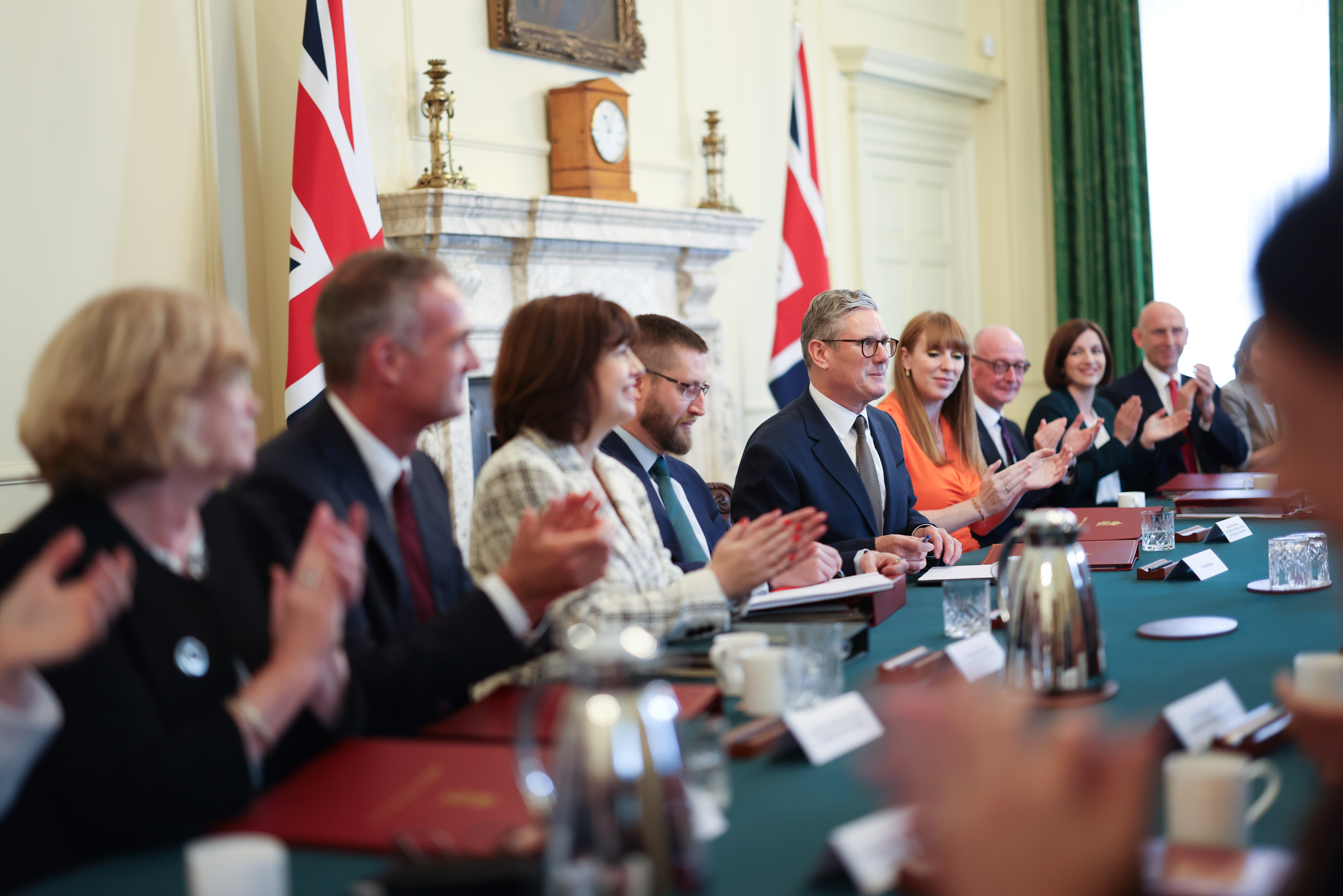
Keir Starmer resigns as UK Prime Minister after less than two years in office
Keir Starmer announced his resignation as UK Prime Minister and Labour Party leader on Monday, less than two years after leading Labour to its biggest election victory since 1997. Andy Burnham, the Manchester Mayor whose Makerfield by-election triumph last week precipitated the crisis, is the frontrunner to succeed him.
The resignation marks a seismic shift in British politics and introduces significant uncertainty into UK-EU relations. For Belgium and the wider EU, the departure of a pro-European leader who personally negotiated a new EU-UK trade reset with Brussels raises urgent questions about whether his successor will honour that agenda.
Keir Starmer (born 1962) served as UK Prime Minister from July 2024 to June 2026. A former human rights barrister and Director of Public Prosecutions, he led Labour from its worst defeat since 1935 to landslide victory in 2024.
Background
1962 — Keir Starmer born 2 September in Southwark, London. Named after Keir Hardie, Labour''s first parliamentary leader. 2008–2013 — Director of Public Prosecutions and Head of the Crown Prosecution Service. Oversaw phone-hacking prosecutions. 2014 — Appointed KCB (Knight Commander of the Bath). 2015 — Elected MP for Holborn and St Pancras, London. April 2020 — Elected Labour Party leader (56.2% first round) after Jeremy Corbyn''s 2019 catastrophe. July 2024 — Labour wins 411 seats, majority of 174. Starmer enters Downing Street. October 2024 — Chancellor Reeves budget criticised for tax rises and winter fuel allowance cuts. Approval erodes sharply. May 2025 — Labour suffers major local election losses. Health Secretary Wes Streeting resigns with leadership ambitions. Summer 2025 — Disability benefits cuts scaled back after a major backbench revolt — the third major U-turn of Starmer''s tenure. September 2025 — Deputy PM Angela Rayner resigns amid a tax controversy. 2025–2026 — Net satisfaction falls to -66 (Ipsos). Reform UK under Nigel Farage capitalises on anti-establishment sentiment. 18 June 2026 — Andy Burnham wins the Makerfield by-election with over 50% of the vote, defeating Reform UK. 22 June 2026 — Starmer resigns outside 10 Downing Street: "Every decision I have taken has been about putting the country I love first. That is why I will resign as leader of the Labour Party."
The wider picture
Starmer''s resignation arrives at a delicate moment in UK-EU relations. His government negotiated a reset deal with Brussels — the most significant UK-EU realignment since Brexit — agreed personally with Commission President Ursula von der Leyen. Brussels is watching Andy Burnham''s European positioning carefully. EU sources cited by Le Soir describe a ''reassessment'' of the planned UK-EU summit timing, with European officials preferring to wait until a new Labour leader is confirmed before proceeding.
Why now
The immediate trigger was Andy Burnham''s Makerfield by-election victory on 18 June. The North West England seat was a bellwether test of whether a Labour candidate running with Burnham''s endorsement — and explicitly distancing from Starmer — could defeat Reform UK. He won over 50%. Within 96 hours, enough Labour MPs had privately confirmed they would not back Starmer in a confidence vote to make his position untenable. Home Secretary Mahmood and Foreign Secretary Cooper had already opened discussions about a transition timeline.
What to watch
1. The Labour leadership race: Andy Burnham (56) is frontrunner; nominations open 9 July, winner expected September. Wes Streeting, Angela Eagle, and Yvette Cooper may also stand. 2. Reform UK: Nigel Farage will attempt to frame Labour''s transition as proof that mainstream politics cannot deliver. 3. The EU-UK summit: under reassessment — Brussels will wait for the new leader to publicly reaffirm the reset agenda before scheduling. 4. The parliamentary programme: Starmer remains PM in caretaker mode; no major legislation expected until autumn.
Impact
Regional — Belgium sits at the heart of the EU institutions that negotiated the post-Brexit reset deal with Starmer. The estimated 30,000 British nationals living in Belgium and 25,000 Belgian nationals in the UK face renewed uncertainty over bilateral agreements on professional qualifications recognition, still in negotiation.
Opposing perspectives
Home Secretary Shabana Mahmood praised Starmer for bringing Labour from the brink, back to power. Labour MP Afzal Khan said he leaves with a proud legacy including the EU reset, rail renationalisation, and Great British Energy.
Former Labour leader Jeremy Corbyn — expelled from the party by Starmer — said he abandoned those in need and facilitated genocide in Gaza through his equivocal stance on arms sales to Israel.
Professor John Curtice (Strathclyde): He did not define what he believed in. Professor Anand Menon (Kings College): Labour misunderstood the problem of the country — the need for bold economic reform.
Starmers departure marks Britains seventh prime minister in just over a decade — an unprecedented sequence that has compounded European concern about UK governance stability.
Sources & evidence
- Sky News Politics · 2026-06-23
- The Guardian — UK Politics · 2026-06-23
- BBC Politics · 2026-06-23