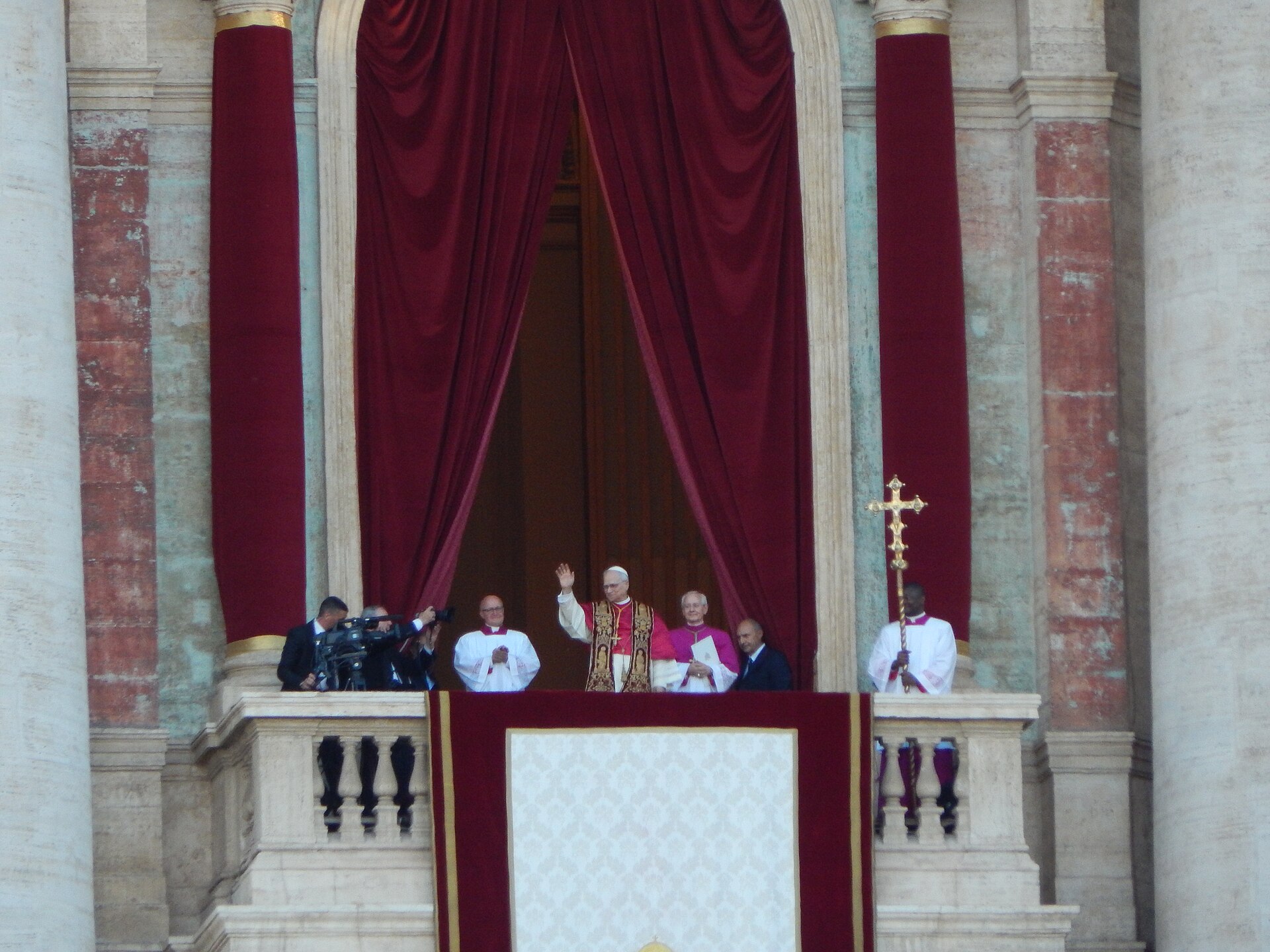
King Felipe VI lends Pope Leo XIV a jet after Tenerife flight fault
Pope Leo XIV left Tenerife for Rome on Friday after a technical fault grounded the Iberia charter scheduled to end his week-long Spain visit. The Iberia pilot said an engine failed to start after the pope had boarded, and King Felipe VI then offered his Falcon aircraft, allowing Leo and part of his delegation to depart more than three hours late. The disruption was a rare operational hitch for a papal trip, but it also capped a journey designed around a larger message: the Holy See itinerary placed the Canary Islands at the end of the visit, after meetings with migrant-support organisations in Gran Canaria and Tenerife. In Tenerife, Leo used the Atlantic migration route to press European leaders on reception, integration and human dignity just as the European Commission's new Migration and Asylum Pact rules entered application across the EU.
For Belgium Pulse readers, the aircraft fault is secondary to the setting: a papal appeal on migration delivered on the same day the European Commission says EU asylum rules entered application. Belgian asylum services, reception operators, municipalities hosting newcomers, migrant communities, churches and NGOs will feel the policy environment shaped in Brussels. Catholic readers may also read Leo's trip as a signal that the Vatican intends to keep migration at the centre of European public debate.
Pope Leo XIV (head of the Catholic Church, elected in 2025) used his Spain visit to underline migration as a moral issue. King Felipe VI (Spain's monarch since 2014) hosted the papal farewell and provided the replacement aircraft. Iberia (Spain's flag-carrier airline) operated the charter that developed the fault. Tenerife Norte-Los Rodeos International Airport (airport serving northern Tenerife) was the departure point. The Canary Islands (Spanish Atlantic archipelago close to north-west Africa) are a major EU arrival point for sea crossings. Las Raices Center (migrant reception site in Tenerife housed in former military facilities) was on the Holy See itinerary. Sagrada Familia (Barcelona basilica designed by Antoni Gaudi, still a major Catholic and cultural landmark) formed the cultural centrepiece of the trip. The EU Migration and Asylum Pact (EU asylum-law overhaul adopted in 2024) began applying on 12 June 2026.
Background
Papal travel normally follows a settled protocol: the Italian carrier brings the pope outbound, while the host country's airline often handles the return leg. AP's Vatican correspondent recalled that St. John Paul II faced weather-related diversions in 1986, when a return from India landed in Naples, and in 1988, when bad weather forced a stop in South Africa en route to Lesotho. The Holy See itinerary shows Leo's Spain visit was the first papal trip to the country since Benedict XVI's 2011 visit for World Youth Day in Madrid.
The wider picture
Migration has become a central test of European cohesion, external-border control and relations with countries of origin and transit. The Commission frames the Pact as common management after years of division; rights groups and some policy analysts warn that outsourcing returns or compressing procedures can shift responsibility beyond EU territory while preserving political pressure inside Europe.
Why now
The story is timely because the papal charter fault occurred on 12 June 2026, the final day of Leo XIV's Spain visit, and because the European Commission says the EU's new migration and asylum rules entered application in June 2026.
What to watch
Watch whether the Vatican continues using European trips to challenge migration policy, how Spain handles Canary Islands arrivals over the summer crossing season, and whether the Commission reports gaps as member states implement screening, Eurodac, border procedures and solidarity tools after the Pact's start date.
Opposing perspectives
- Vatican / Pope Leo XIV
The Vatican frame, reflected in Leo's Tenerife remarks and the Holy See itinerary, treats migration primarily as a question of human dignity and pastoral responsibility. From that view, the Canary Islands were not a symbolic backdrop but the moral centre of the trip: Europe should judge policy by how it protects people after dangerous journeys.
- European Commission / DG Migration and Home Affairs
The European Commission frames the Migration and Asylum Pact as a common system that combines secure external borders, faster procedures, solidarity and safeguards. Its policy page argues that no EU country should be left alone under pressure, a direct answer to frontline-state complaints after the 2015 crisis.
- Human rights organisations (Human Rights Watch / International Rescue Committee)
Human rights organisations cited in the reporting argue that the pact risks rushing asylum decisions, expanding border detention and weakening access to protection. Their strongest case is that efficiency without robust legal safeguards can leave vulnerable applicants with less time, less clarity and less support when the consequences are life-changing.
- GMF migration-policy analysis
The GMF analysis argues that the pact partly responds to genuine coordination failures but leaves first-entry states carrying much of the burden. It reads the package as a pragmatic, security-oriented compromise that may encourage further outsourcing unless monitoring keeps border procedures within EU and international law.
Sources & evidence
- Le Soir · 2026-06-12
- AP News · 2026-06-12
- The Guardian · 2026-06-12
- Holy See Press Office · 2026-05-06
- European Commission, DG Migration and Home Affairs · 2024-05-21
- Alberto Tagliapietra, Outsourcing Responsibility: The EU's New Pact on Migration and Asylum, German Marshall Fund, 2024 · 2024-02-21