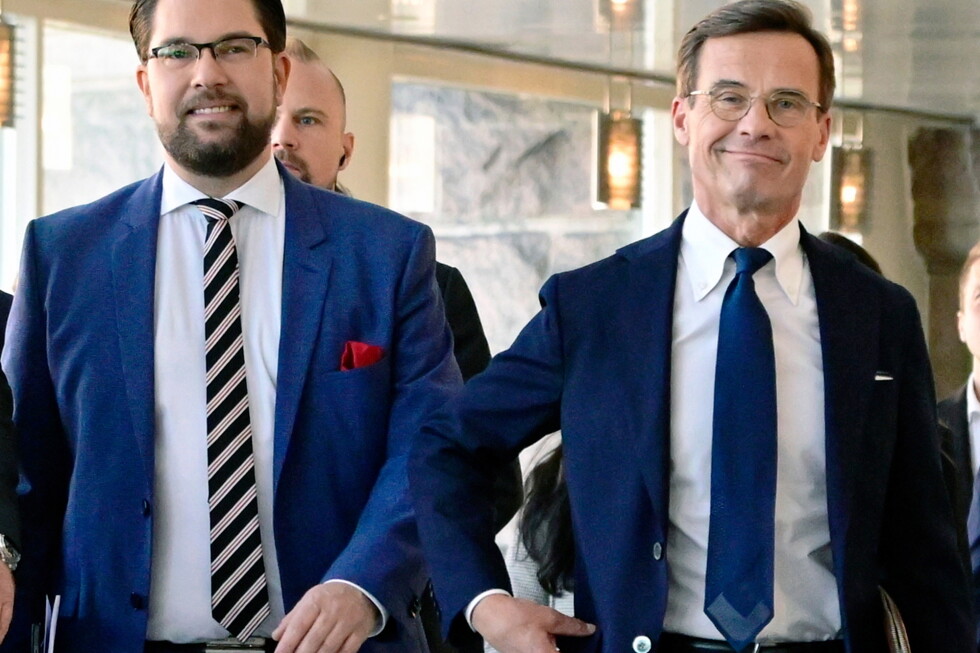
Kristersson opens Sweden’s cabinet door to the Sweden Democrats
Sweden’s election campaign has turned the Sweden Democrats from external kingmaker into a possible governing party. Prime Minister Ulf Kristersson has said his centre-right bloc would include the Sweden Democrats in a future cabinet if it wins the 13 September 2026 election, while the Liberals have dropped their last formal objection to serving alongside them. Sweden’s election authority figures show the party became the country’s second-largest force in 2022, taking 20.5 percent and 73 Riksdag seats, and it has since shaped migration and justice policy through the Tidö Agreement without holding ministries. The shift matters beyond Stockholm because Sweden is now both an EU member state and, according to the Swedish government, a NATO ally since March 2024. For Europe, the Swedish case is another test of how far mainstream conservative parties can cooperate with nationalist right parties without surrendering policy control.
Belgian voters, party strategists and public officials are watching a European pattern with direct relevance to debates around cordon sanitaire politics, migration policy and coalition formation. The Swedish case is not Belgium’s model, but it shows how a once-isolated nationalist party can gain policy leverage before entering cabinet. EU institution staff and Belgium-based diplomats also have a stake because a future Swedish cabinet including the Sweden Democrats would sit in EU Council debates on migration, rule of law, climate and security.
The Sweden Democrats (Sverigedemokraterna, founded in 1988) are a nationalist, anti-immigration Swedish party that Sweden’s election authority figures show became the second-largest Riksdag party in 2022. Jimmie Åkesson (party leader since 2005) has overseen the party’s long move from isolation to national influence. Ulf Kristersson (Moderate Party leader and Swedish prime minister since 2022) heads the current minority government. The Moderate Party, Christian Democrats and Liberals are the centre-right parties governing with Sweden Democrat parliamentary support under the Tidö Agreement. Simona Mohamsson (Liberal leader and education and integration minister) has removed her party’s previous barrier to Sweden Democrat ministers. The Riksdag (Sweden’s 349-seat parliament) chooses the prime minister after elections. The Tidö Agreement (2022 governing deal named after Tidö Castle) gives the Sweden Democrats policy influence while keeping them outside the current cabinet. NATO (the North Atlantic Treaty Organization, headquartered in Brussels) admitted Sweden in 2024.
Background
Sweden’s postwar party system long treated the Sweden Democrats as outside normal coalition bargaining. Election records show the party entered the Riksdag in 2010 with 20 seats, then grew to 62 seats in 2018 and 73 seats in 2022. The 2022 Tidö Agreement changed the governing formula: the Moderates, Christian Democrats and Liberals entered cabinet while the Sweden Democrats supplied parliamentary support and gained structured policy influence. The comparison for Belgian readers is not exact, but Belgium’s cordon sanitaire around Vlaams Belang shows why the Swedish breach of a political taboo has European resonance.
The wider picture
Sweden’s NATO accession changed the strategic weight of its domestic politics. Brussels now deals with Sweden not only as an EU member but also as a NATO ally on Baltic security, resilience and Russia policy. The Sweden Democrats have moved away from earlier NATO scepticism, but their rise still tests alliance politics in an era of nationalist-right growth.
Why now
The issue is timely because Sweden’s 13 September 2026 election is approaching and Kristersson has opened the door to Sweden Democrat cabinet posts after years in which the party influenced policy from outside government.
What to watch
Watch Swedish polling through summer 2026, the Liberals’ survival near the parliamentary threshold, and any right-bloc agreement on which ministries the Sweden Democrats could claim. Migration and integration portfolios are the clearest signals.
Opposing perspectives
- Centre-right governing bloc (Moderates / Christian Democrats / Liberals)
The centre-right case is that voters should get a stable majority government if the right wins. Kristersson has said the Sweden Democrats already carry major policy weight, so cabinet inclusion would make responsibility clearer rather than leaving influence outside formal ministerial accountability.
- Sweden Democrats
The Sweden Democrats’ strongest argument is democratic proportionality: Sweden’s election authority figures show they became the second-largest party in 2022, so excluding them from ministries while relying on their votes treats their electorate as second-class participants in government formation.
- Swedish opposition parties and liberal defectors
Opponents argue that cabinet entry would normalise a party with a far-right past and shift migration, media, climate and civil-society policy further right. Their warning is institutional rather than only ideological: the more the government depends on the Sweden Democrats, the harder it becomes to contain their agenda.
Sources & evidence
- Al Jazeera - How Sweden’s far right went from political pariah to powerbroker · 2026-06-18
- Associated Press - Swedish prime minister says he'll let a hard-right party enter a future government · 2026-04-01
- The Guardian - Swedish PM offers deal that could see far-right allowed into government · 2026-04-01
- Le Monde - Sweden's conservatives are now normalizing the far right · 2026-05-06
- Government Offices of Sweden - General elections and referendums · 2015-03-11
- Government Offices of Sweden - Sweden in NATO
- Damião et al. 2026 - Cross-National Evidence of Disproportionate Media Visibility for the Radical Right in the 2024 Euro · 2026-01-09