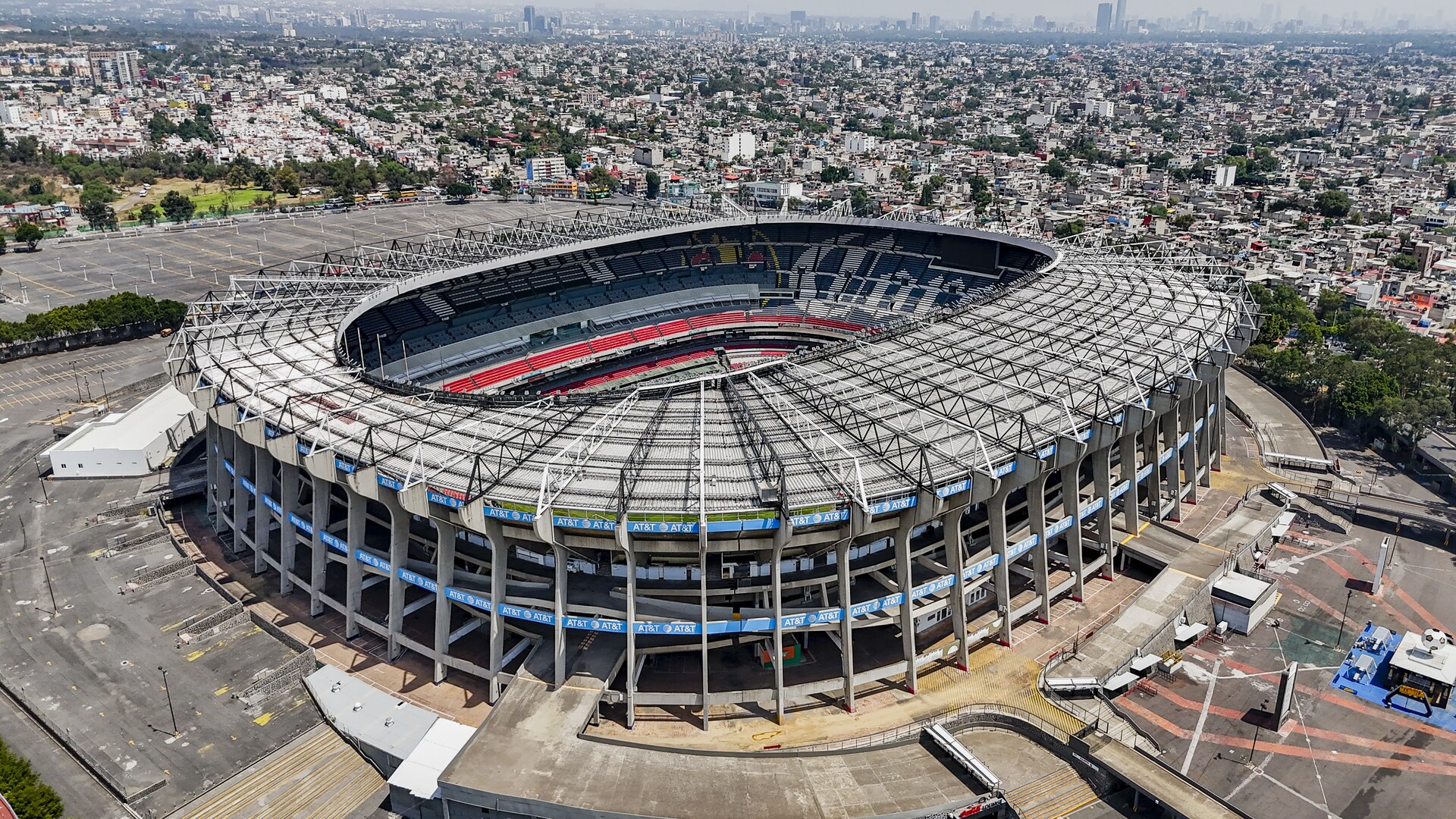
Mexico City police stop stadium clashes at World Cup opener
Mexico City security officials said clashes outside Estadio Azteca, now branded Estadio Banorte for the tournament, were brought under control before Mexico's 2026 World Cup opener against South Africa. The unrest unfolded near the stadium perimeter as several protest groups converged on the area and a smaller group of hooded people threw objects at police, according to security authorities cited in multiple reports. FIFA's official schedule placed the opening match in Mexico City on 11 June, and the game went ahead as planned, with Mexico beating South Africa 2-0. The incident matters beyond football because the first 48-team World Cup is also a stress test for how host cities manage protest, ticket exclusion, policing and image-making. For Belgian readers, it is an early signal of the security and rights environment surrounding a tournament Belgium enters on 15 June.
For Belgian football fans, travelling supporters and families watching the Red Devils, the Mexico City clashes are an early reminder that the 2026 World Cup is not only a sports calendar. It is a long, multi-country event with different policing, ticketing and protest environments across North America. Belgian tour operators, broadcasters, public authorities advising travellers and supporters planning trips to Seattle, Los Angeles or Vancouver will read this as a practical signal: monitor local security guidance, transport closures and protest zones, not just kick-off times.
Estadio Azteca, commercially branded Estadio Banorte for 2026, is Mexico City's historic football stadium and a World Cup venue in 1970, 1986 and 2026. FIFA (world football's governing body, founded in 1904) runs the World Cup and sets tournament requirements for host cities. Mexico City (Mexico's capital and largest metropolitan area) is one of 16 host cities across Canada, Mexico and the United States. Claudia Sheinbaum (president of Mexico since 2024 and former Mexico City mayor) is the national leader overseeing Mexico's tournament role. Clara Brugada (Mexico City head of government since 2024) manages the capital's local administration. The Zócalo (Mexico City's central square) hosted a FIFA fan event. CNTE (a dissident Mexican teachers' union) has been among the groups protesting around the tournament. Belgium's Red Devils (Belgium's men's national football team) begin their Group G campaign in the same World Cup cycle.
Background
FIFA's official schedule made the 2026 tournament the first men's World Cup with 48 teams and three host countries, expanding the logistical footprint far beyond previous editions. Estadio Azteca has symbolic weight because it staged World Cup finals in 1970 and 1986. South Africa's 2010 World Cup opened with South Africa against Mexico, making the 2026 opener a deliberate historical echo. Research by Bent Flyvbjerg, Alexander Budzier and Daniel Lunn on Olympic mega-events found that fixed deadlines and political prestige can magnify planning risks, a useful comparison for why host-city security and cost pressures become visible at opening moments.
Why now
The clashes happened on 11 June 2026 because the World Cup opened at Estadio Azteca that day, drawing spectators, police, protesters and global media to the same controlled perimeter.
What to watch
Watch whether Mexico City changes access rules for later Estadio Azteca matches, whether protest groups return to fan zones, and whether FIFA or local authorities publish fuller figures on injuries, arrests and crowd-control measures.
Opposing perspectives
- Mexico City security authorities
Mexico City security officials said the priority was to keep ticketed spectators, residents and emergency access moving while preventing a smaller violent group from breaching the stadium perimeter. In this frame, road closures, access controls and rapid dispersal were not image management but basic crowd safety around a high-risk opening event.
- Human-rights organisations
Human-rights organisations argue that the 2026 World Cup magnifies risks to peaceful assembly, local communities and visiting fans when host governments treat protest as a security problem. Their strongest concern is that mega-event policing can blur the line between protecting spectators and suppressing visible dissent.
- Mexico's protesting social groups
Social groups around the Mexico City demonstrations frame the World Cup as a rare global stage for domestic grievances, including labour demands and disappearances. Their argument is that the event's celebratory image should not push unresolved social crises out of view just because foreign fans and broadcasters have arrived.
Sources & evidence
- Al Jazeera - Protesters clash with police during World Cup opening match · 2026-06-12
- The Guardian - Petrol bombs and bricks hurled at Mexican police during pre-match unrest at Azteca · 2026-06-11
- El Pais - Bloqueos, manifestaciones y operativos en el Estadio Azteca durante la inauguracion del Mundial en Ciudad de M · 2026-06-11
- El Pais - El balon rueda en Mexico y da pie a una gran fiesta · 2026-06-12
- FIFA - FIFA World Cup 26 match schedule · 2024-02-04
- Amnesty International - Humanity Must Win: Defending Rights, Tackling Repression at the 2026 FIFA World Cup · 2026-06-10
- Bent Flyvbjerg, Alexander Budzier and Daniel Lunn, Regression to the Tail: Why the Olympics Blow Up, 2020 · 2020-09-28
- Euronews FR