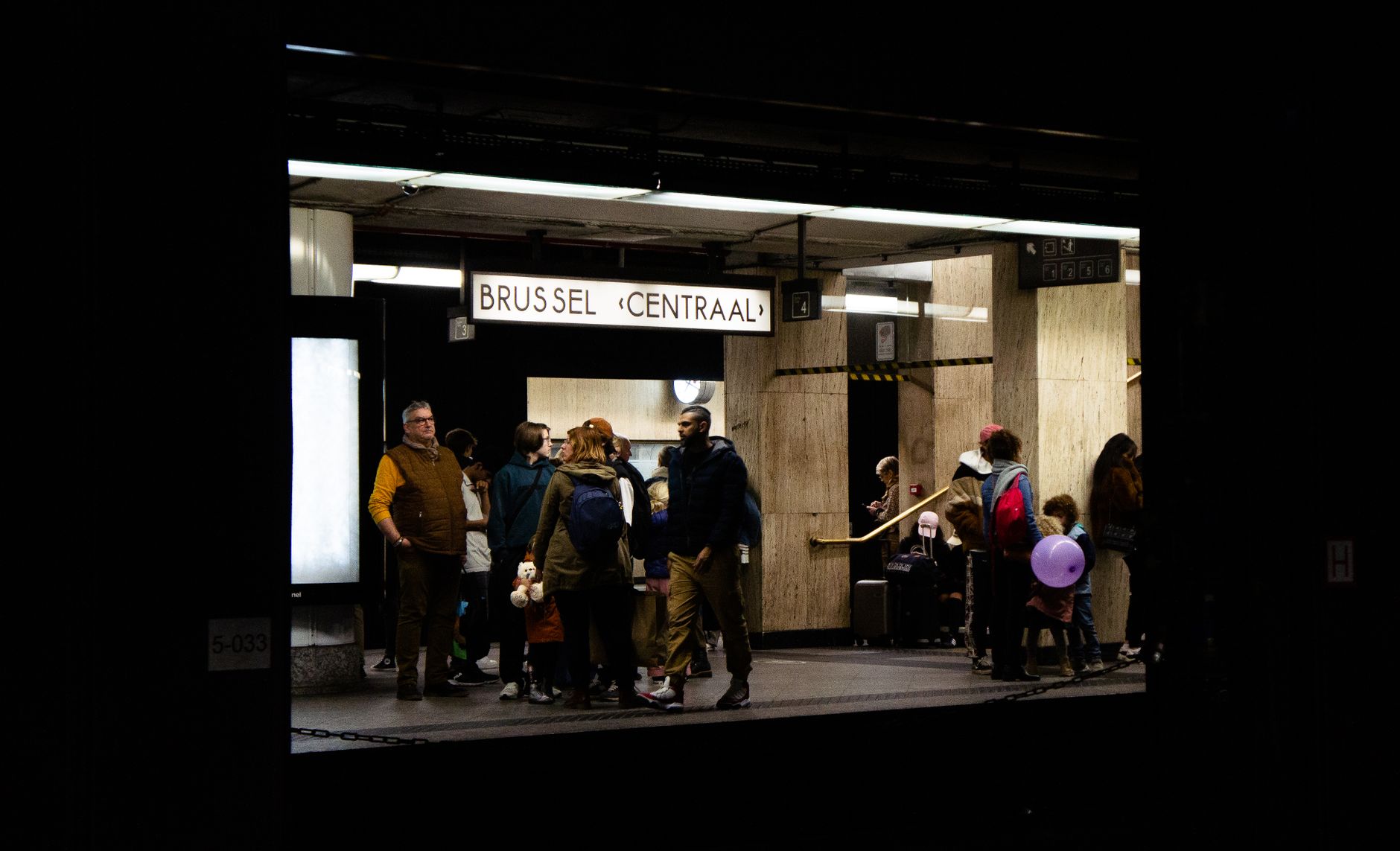
Police around Brussels Central: what should commuters, visitors and residents do?
A visible police presence near Brussels Central station should usually be read first as an instruction to stay calm, check official travel channels, and follow directions on the ground. La Libre reported on 6 June 2026 that police were present in number near Gare Centrale/Centraal Station in Brussels as a preventive measure. For people living in or visiting Brussels, the practical takeaway is simple: do not assume the station is closed unless SNCB/NMBS, STIB/MIVB or police say so; build in extra time around Carrefour de l'Europe, Cantersteen/Kantersteen and Mont des Arts; and keep emergency numbers clear in your phone. In Belgium, call 101 for urgent police assistance and 112 for ambulance or fire emergencies, while official safety information may come through BE-Alert, the National Crisis Centre, the police zone Brussels Capital-Ixelles, SNCB/NMBS or STIB/MIVB. The station sits in the City of Brussels commune, or Ville de Bruxelles/Stad Brussel, so announcements, street signs and police instructions may appear in French and Dutch. For expats, tourists and daily commuters, the safest routine is to treat preventive policing as a mobility and situational-awareness issue rather than as proof of danger: check apps, avoid filming close-up police operations, keep bags with you, and choose another hub such as Brussels-North, Brussels-Midi, De Brouckere, Parc/Park or Arts-Loi/Kunst-Wet if access is temporarily slowed.
Brussels Central is a daily transfer point for commuters, office workers, tourists, students and people visiting the Grand-Place, Mont des Arts, Bozar, the Royal Library, the federal ministries and nearby shopping streets. Even a preventive police presence can slow pedestrian flows, alter bus stops, create confusion for non-French or non-Dutch speakers, and make visitors wonder whether it is safe to continue their journey. The useful response is not panic but preparation: verify information through official channels, allow extra time, keep routes flexible and understand which Belgian authority handles which kind of alert.
The subject is the practical meaning of a substantial preventive police presence around Brussels Central station, one of the capital's busiest rail and metro nodes. The named entities are Gare de Bruxelles-Central/Brussel-Centraal, SNCB/NMBS, STIB/MIVB, the police zone Brussels Capital-Ixelles, the City of Brussels commune/gemeente, the National Crisis Centre, BE-Alert and OCAM/OCAD, Belgium's threat-analysis body. The article is not primarily about a criminal case or a confirmed threat; it is a service guide for people who may encounter extra police near a transport hub and need to know what to do next.
Background
Brussels transport hubs have become highly managed public spaces since the 2010s, shaped by counter-terrorism policy, crowd management, homelessness, nightlife, tourism, protest activity and ordinary urban crime prevention. Brussels Central also carries historical sensitivity because of the attempted attack at the station in June 2017, although a preventive deployment today should not be equated with a confirmed terrorism alert. Belgium's post-2015 security model relies on local police zones, federal police, OCAM/OCAD threat analysis, the National Crisis Centre and transport operators sharing roles rather than one single public-facing authority controlling every operational detail.
Impact
Regional — The impact is local to central Brussels, especially the City of Brussels around Carrefour de l'Europe/Europakruispunt, Rue de la Putterie/Putterijstraat, Cantersteen/Kantersteen, Rue des Colonies/Kolonienstraat and Mont des Arts/Kunstberg. The wider Brussels-Capital Region is affected only if train, metro or bus flows are diverted.
Opposing perspectives
- Commuters and local businesses
Daily users of Brussels Central, nearby shops, hotels and offices generally want visible safety measures to be predictable and proportionate. Extra police can reassure people when the reason is clear, but unexplained cordons, blocked pavements or diverted buses can also create anxiety, missed connections and reduced footfall around Mont des Arts and the Grand-Place area.
- Police and public-safety authorities
Local and federal security services tend to defend preventive deployment as a normal tool for managing crowded places, demonstrations, events, suspicious behaviour or transport pressure before a situation escalates. From this perspective, visible officers near a station are not necessarily a sign that danger has materialised; they can be part of deterrence, crowd control and rapid response.
- Civil-liberties and anti-profiling organisations
Rights groups and anti-discrimination organisations often accept the need for safety at transport hubs but warn that preventive policing can feel unequal if checks are perceived as targeting young people, racialised residents, homeless people or migrants. Their concern is not only the presence of police but the transparency, proportionality and accountability of the measures used.