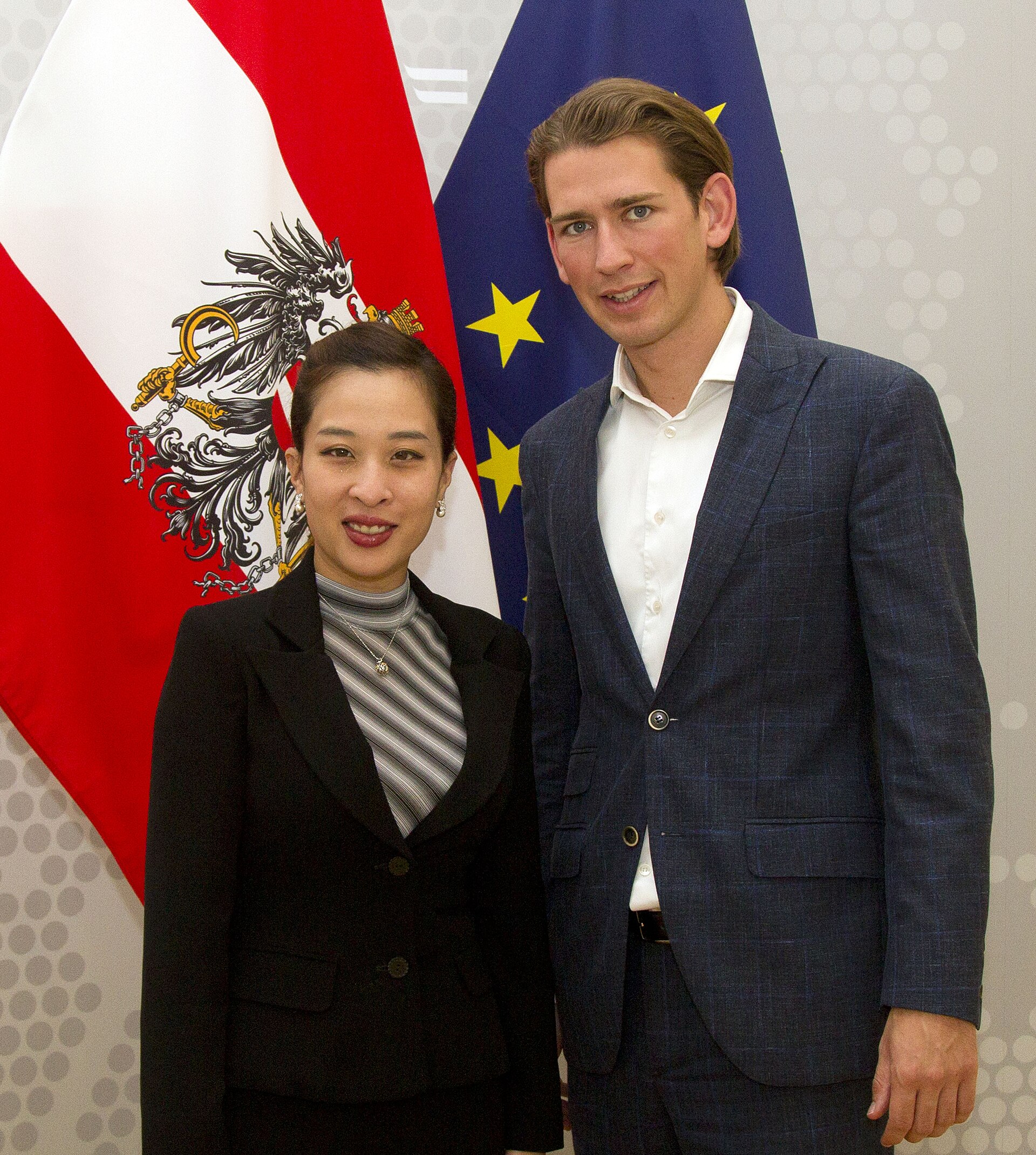
Princess Bajrakitiyabha dies as Thailand weighs royal succession
Thailand's Bureau of the Royal Household announced that Princess Bajrakitiyabha Mahidol, the eldest child of King Maha Vajiralongkorn, died in a Bangkok hospital on June 11, 2026, at 47 after more than three years of treatment following her December 2022 collapse. The palace had previously attributed her illness to a mycoplasma infection and later medical complications, while Thai Prime Minister Anutin Charnvirakul used a televised tribute to present her legal and humanitarian work as a national legacy. Her death matters beyond royal mourning because she had been one of the monarchy's most internationally visible figures: a lawyer, former prosecutor, former ambassador to Austria and UN criminal-justice advocate. It also narrows an already opaque succession picture. Thailand's succession framework gives priority to male heirs, but the king has not publicly named a crown prince, leaving attention on Prince Dipangkorn Rasmijoti and the palace's next signals.
For Belgium Pulse readers, this is mainly an international governance story. Belgian travellers, Thai residents in Belgium, Brussels-based diplomats and EU-ASEAN policy watchers follow Thailand as a major Southeast Asian partner and tourism destination. The direct Belgian impact is limited, but the death removes a visible royal figure associated with legal reform and places renewed attention on a succession system that is central to Thailand's political stability. EU institutions and Belgian foreign-policy readers will watch for any effect on Thailand's domestic balance and external posture.
Princess Bajrakitiyabha Mahidol (Thai royal, lawyer and diplomat, 1978-2026) was King Maha Vajiralongkorn's eldest child and was widely discussed as a possible future royal figure. King Maha Vajiralongkorn (Thailand's monarch since 2016, also Rama X) succeeded King Bhumibol Adulyadej after a 2016 transition. Bureau of the Royal Household (Thai palace office) issues official royal announcements and funeral notices. King Chulalongkorn Memorial Hospital (Bangkok hospital run by the Thai Red Cross Society) treated the princess after her 2022 collapse. Princess Soamsawali (Thai princess and Vajiralongkorn's former wife) is Bajrakitiyabha's mother. Prince Dipangkorn Rasmijoti (born 2005) is Vajiralongkorn's youngest child and the presumed male heir. UN Office on Drugs and Crime (UN agency on crime prevention and justice) appointed Bajrakitiyabha a goodwill ambassador in 2017. Bangkok Rules (UN General Assembly standards adopted in 2010) cover women prisoners and non-custodial measures for women offenders.
Background
Thailand's monarchy has repeatedly shaped national politics, but succession is unusually constrained by law and taboo. The 1924 Palace Law of Succession, as summarized in legal reference material, prioritises male-line succession while later constitutional provisions allow a princess to be proposed in defined circumstances. King Bhumibol Adulyadej died on October 13, 2016, and Vajiralongkorn accepted the throne on December 1, 2016, after a mourning interval. Since 2020, public debate over monarchy reform and royal defamation prosecutions has made open discussion of succession especially sensitive inside Thailand.
The wider picture
Thailand is a US treaty ally, an ASEAN member and an important partner for Europe in Southeast Asia. The monarchy remains one of the country's central institutions, so succession uncertainty is watched not because it automatically creates crisis, but because Thai politics has long combined royal authority, military influence, courts and elected governments. External partners will be cautious and protocol-driven.
Why now
The story is timely because the Bureau of the Royal Household announced the princess's death on June 12, 2026, after more than three years of hospital treatment following her December 2022 collapse.
What to watch
Watch palace announcements on funeral rites, public mourning, Prince Dipangkorn Rasmijoti's ceremonial visibility and any formal language from King Vajiralongkorn or Thai state institutions about future royal duties. Silence would also be a signal.
Opposing perspectives
- Thai government / royal establishment
Prime Minister Anutin Charnvirakul's televised tribute frames Bajrakitiyabha primarily as a figure of public service: a legal scholar, diplomat and advocate whose work on justice and equality should be remembered as part of Thailand's national legacy, not only through the succession lens.
- Monarchy analysts and international observers
Analysts cited in international coverage frame the death as a succession event because Bajrakitiyabha's legal training, royal status and public profile made her a plausible stabilising figure. This view argues that the unresolved heir question now becomes more visible, even if the palace avoids open discussion.
Sources & evidence
- Al Jazeera - Thai Princess Bajrakitiyabha dies after years in coma · 2026-06-12
- Associated Press - Thai Princess Bajrakitiyabha, who was known for her legal work, dies at 47 · 2026-06-12
- The Guardian - Thailand's Princess Bajrakitiyabha dies aged 47 after years in a coma · 2026-06-12
- People - Thailand's Princess Bajrakitiyabha Dies at 47 After 3 Years in a Coma · 2026-06-12
- United Nations General Assembly Resolution 65/229 - Bangkok Rules · 2010-12-21
- Pavin Chachavalpongpun, Rama X: The Thai Monarchy under King Vajiralongkorn, Yale University Press, 2023 · 2023-01-01