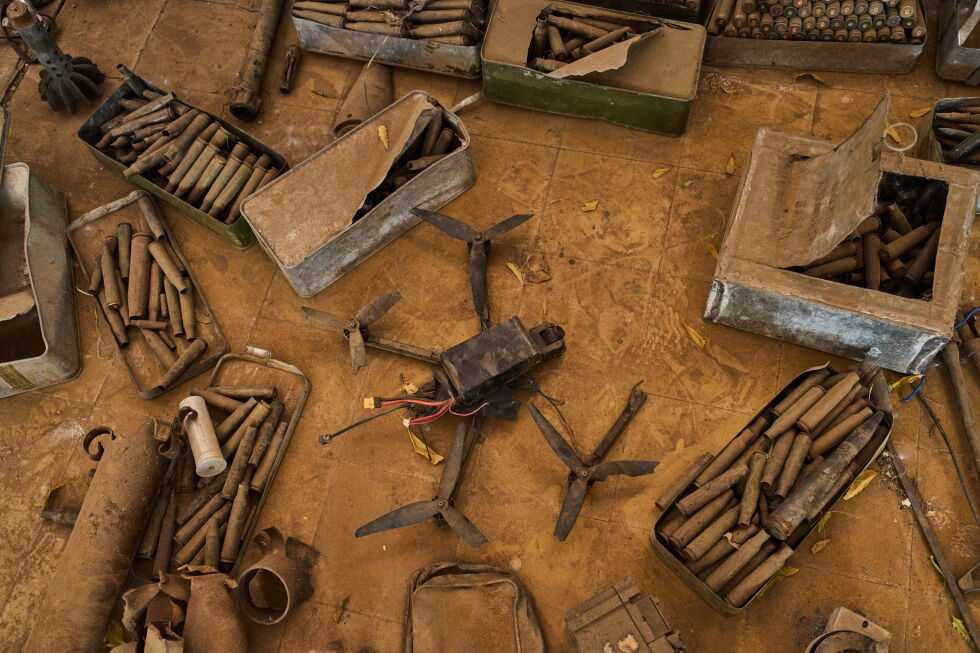
Rapid Support Forces drones strike El-Obeid in Sudan's Kordofan
Sudan's Rapid Support Forces are accused of carrying out overnight drone strikes on El-Obeid, a strategic army-held city in North Kordofan. Health officials at El-Obed Hospital said at least 15 people were killed and more than 10 wounded; the Emergency Lawyers monitoring group said the toll could rise as drones were still flying over the city. The strikes reportedly hit areas near the Sudanese army's 5th Infantry Division, homes, a funeral gathering, a gas station and a food truck entering the city. The attack fits a wider 2026 pattern in which both Sudan's army and the RSF have used drones across Kordofan and Darfur, often in or near civilian areas. For EU and Belgian readers, the immediate issue is not a direct Belgian casualty link but the pressure on European humanitarian policy, sanctions and aid access in what the European Commission describes as the world's largest humanitarian crisis.
For Belgium Pulse readers, this is primarily an international war story with an EU policy edge. Belgian taxpayers contribute through the EU budget, and the European Commission says the EU has allocated €162 million for Sudan inside its wider 2026 crisis response. Belgian NGOs, aid workers, diplomats and Sudanese communities in Belgium are affected by deteriorating access, sanctions debates and refugee pressures. The attack also matters to EU institution staff in Brussels because Sudan is a live test of humanitarian access and civilian-protection policy.
El-Obeid (capital of North Kordofan state and a major route hub between central Sudan, Darfur and Kordofan) has changed military significance as front lines shifted west of Khartoum. North Kordofan (central-western Sudanese state) sits between army-held areas and RSF-influenced routes toward Darfur. The Rapid Support Forces, or RSF (Sudanese paramilitary group led by Mohamed Hamdan Dagalo and at war with the army since April 2023), controls parts of Darfur and Kordofan. The Sudanese Armed Forces, or SAF (Sudan's regular army led by Abdel Fattah al-Burhan), holds much of the north, east and centre. Emergency Lawyers (Sudanese legal and rights monitoring group) tracks attacks and civilian harm. Sudan Doctors Network (medical monitoring group) compiles casualty information from health workers. Mercy Corps (international humanitarian NGO founded in 1979) operates in crisis settings. DG ECHO (European Commission humanitarian aid department) manages EU emergency support, including Sudan funding.
Background
Sudan's current war began in April 2023 after the army and the RSF split over command and integration arrangements. Kordofan became more exposed after the army recaptured parts of Khartoum while the RSF and allied forces kept leverage in Darfur and western routes. Earlier 2026 incidents show the pattern: AP reported in March that drone attacks in Kordofan had killed at least 77 people in populated areas, while health and aid groups cited strikes on hospitals, markets and convoys. The European Commission's Sudan page says heavy weapons and drone attacks in crowded areas have had devastating civilian effects and can amount to war crimes.
The wider picture
Sudan's war has become a regionalised conflict involving rival armed forces, contested supply routes, gold and oil areas, Red Sea access and allegations of foreign weapons support. The spread of drones makes external supply chains more consequential because relatively small systems can disrupt cities, aid convoys and infrastructure. For the EU, Sudan sits at the intersection of African security, migration pressure, humanitarian law and Gulf diplomacy.
Why now
The story is timely because the latest strikes hit El-Obeid overnight on 10-11 June 2026 and local monitors warned that drones were still active. It also follows months of drone incidents across Kordofan and Darfur, making this attack part of an accelerating battlefield pattern.
What to watch
Watch for updated hospital tolls, statements from the RSF or Sudanese army, changes to school and market openings in El-Obeid, and any EU or UN move linking the strike to sanctions, arms-flow scrutiny or humanitarian-access demands. The most concrete near-term signal is whether food and medical convoys can keep entering North Kordofan.
Opposing perspectives
- Humanitarian monitors (Emergency Lawyers / Sudan Doctors Network)
Emergency Lawyers and Sudan Doctors Network frame the El-Obeid strikes as part of a civilian-protection crisis, not only a battlefield episode. Their strongest argument is that reported hits on homes, a funeral, a gas station and a food truck point to a pattern in which urban life, rescue activity and aid supply become targets or collateral damage.
- EU humanitarian authorities (DG ECHO)
DG ECHO frames Sudan as a system-wide access and protection emergency. Its Sudan page argues that the conflict has created the world's largest humanitarian crisis and that attacks on healthcare, energy infrastructure and crowded areas require both aid funding and pressure on parties to respect international humanitarian law.
Sources & evidence
- Al Jazeera - Drone strikes on central Sudanese city kill up to 23: NGO · 2026-06-11
- Associated Press - Sudanese paramilitary drone strikes kill at least 15 people in central region, officials say · 2026-06-11
- European Commission DG ECHO - Sudan country page · 2026-04-15
- The Guardian - Two drone strikes on civilian targets kill 28 people in Sudan · 2026-03-26
- Le Monde - El-Daein Hospital in Darfur was deliberately struck by Sudanese army · 2026-03-27
- EUR-Lex - Council Decision (CFSP) 2026/254 concerning restrictive measures in view of activities undermining the stabili · 2026-01-29
- The Guardian - More than £1bn pledged for Sudan as humanitarian crisis deepens · 2026-04-15