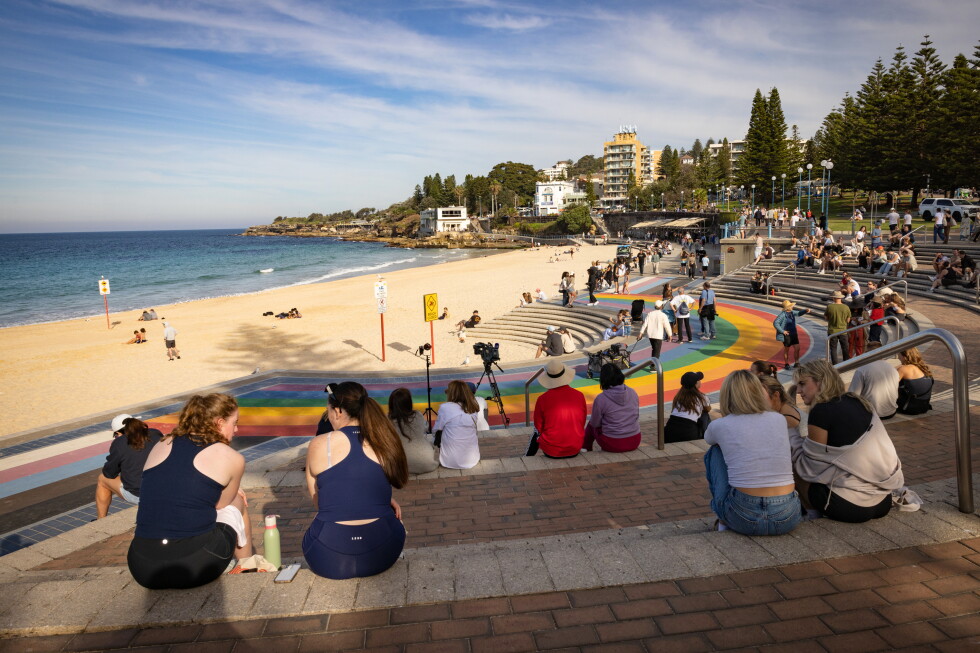
Shark seriously injures swimmer off Sydney’s Coogee Beach
NSW Police said a 35-year-old woman suffered serious arm and leg injuries after a shark bit her while she was swimming about 30 metres off Coogee Beach in Sydney on Saturday morning. Emergency responders and bystanders pulled her from the water and treated her at the beach before she was taken to hospital in critical condition. Surf Life Saving NSW said beaches from Bondi to Maroubra were closed for at least 24 hours while aerial surveillance checked the coast. Randwick Council said the shark was believed to be 3 to 4 metres long, while later agency reporting identified it as a white shark. The incident is the latest in a run of severe Australian shark encounters, but Taronga Conservation Society Australia’s shark database still frames such bites as rare against the scale of coastal use.
For Belgian readers, the direct relevance is travel and risk awareness rather than Belgian policy. Australia remains a common destination for tourists, students, working-holiday travellers and Belgian residents visiting family or business contacts. FPS Foreign Affairs tells Belgians travelling in Australia to consult official travel advice and register via Travellers Online so it can inform and support them during emergencies. The Coogee case is a reminder that beach conditions, local closures and lifeguard instructions matter even at heavily used urban beaches.
Coogee Beach (a popular ocean beach in Sydney’s eastern suburbs, in the Randwick local government area) is a regular swimming spot for residents and visitors. Randwick Council (the local authority for Coogee and nearby beaches such as Clovelly and Maroubra) manages beach closures with lifesaving services. NSW Police (the state police force for New South Wales) gave the first official account of the swimmer’s injuries. NSW Ambulance (the state emergency medical service) treated and transported the woman. Surf Life Saving NSW (the volunteer and professional water-safety organisation covering New South Wales beaches) coordinated surveillance and closure information. Taronga Conservation Society Australia (operator of the Australian Shark-Incident Database with Flinders University and NSW fisheries authorities) maintains Australia’s main shark-bite record. Coogee Surf Life Saving Club (founded in 1907) is one of Australia’s older lifesaving clubs.
Background
Taronga Conservation Society Australia says its Australian Shark-Incident Database has been maintained since 1984 and includes more than 1,100 investigated shark-bite cases dating back to 1791. A 2022 Scientific Data paper by Madeline Riley and co-authors described 1,196 Australian shark-bite records from 1791 to 2022 and found Australia’s annual average rose from nine bites in 1990-2000 to 22 in 2010-2020. The same paper cautioned that drivers remain debated, including coastal population growth, water-based recreation, changing water conditions and reporting bias. Sydney’s last fatal open-ocean beach attack before the recent cluster was at Little Bay in February 2022.
Why now
The trigger is the Saturday morning shark bite at Coogee Beach, which left a swimmer critically injured and forced immediate closures along a busy stretch of Sydney’s eastern coastline.
What to watch
Watch for updates from NSW Police, NSW Ambulance, Surf Life Saving NSW and Randwick Council on the victim’s condition, the duration of beach closures, surveillance results and any confirmed identification of the shark species.
Opposing perspectives
- Local beach-safety authorities (Surf Life Saving NSW / Randwick Council)
Surf Life Saving NSW and Randwick Council frame the immediate issue as operational public safety: close beaches, run aerial surveillance and wait for conditions to be assessed before swimmers return. Their strongest argument is that rapid rescue and conservative closures are the practical response when the shark’s location, species and behaviour are still being assessed.
- Shark researchers (Taronga Conservation Society Australia / Scientific Data)
Taronga Conservation Society Australia and the Scientific Data paper frame shark bites as a low-frequency but data-sensitive risk that should be managed through evidence rather than panic. Their strongest argument is that mitigation choices should reflect activity, species, location, season and environmental conditions, while recognising sharks’ ecological role and the uncertainty around long-term drivers.
- Belgian consular authorities (FPS Foreign Affairs)
FPS Foreign Affairs frames the relevance for Belgians abroad through preparedness rather than destination alarm. Its travel pages urge Belgian travellers to consult official advice, take precautions and register via Travellers Online so consular services can inform or support them during emergencies, including accidents or local crises.
Sources & evidence
- Sky News · 2026-06-13
- Associated Press · 2026-06-13
- The Guardian Australia · 2026-06-13
- The Australian · 2026-06-13
- Taronga Conservation Society Australia - Australian Shark Incident Database
- Madeline Riley, Phoebe Meagher, Charlie Huveneers, Jacob Leto, Victor M. Peddemors, David Slip, John West and Corey J. A · 2022-07-06
- Embassy of Belgium in Australia - Travelling in Australia, New Zealand and the Pacific · 2023-07-27