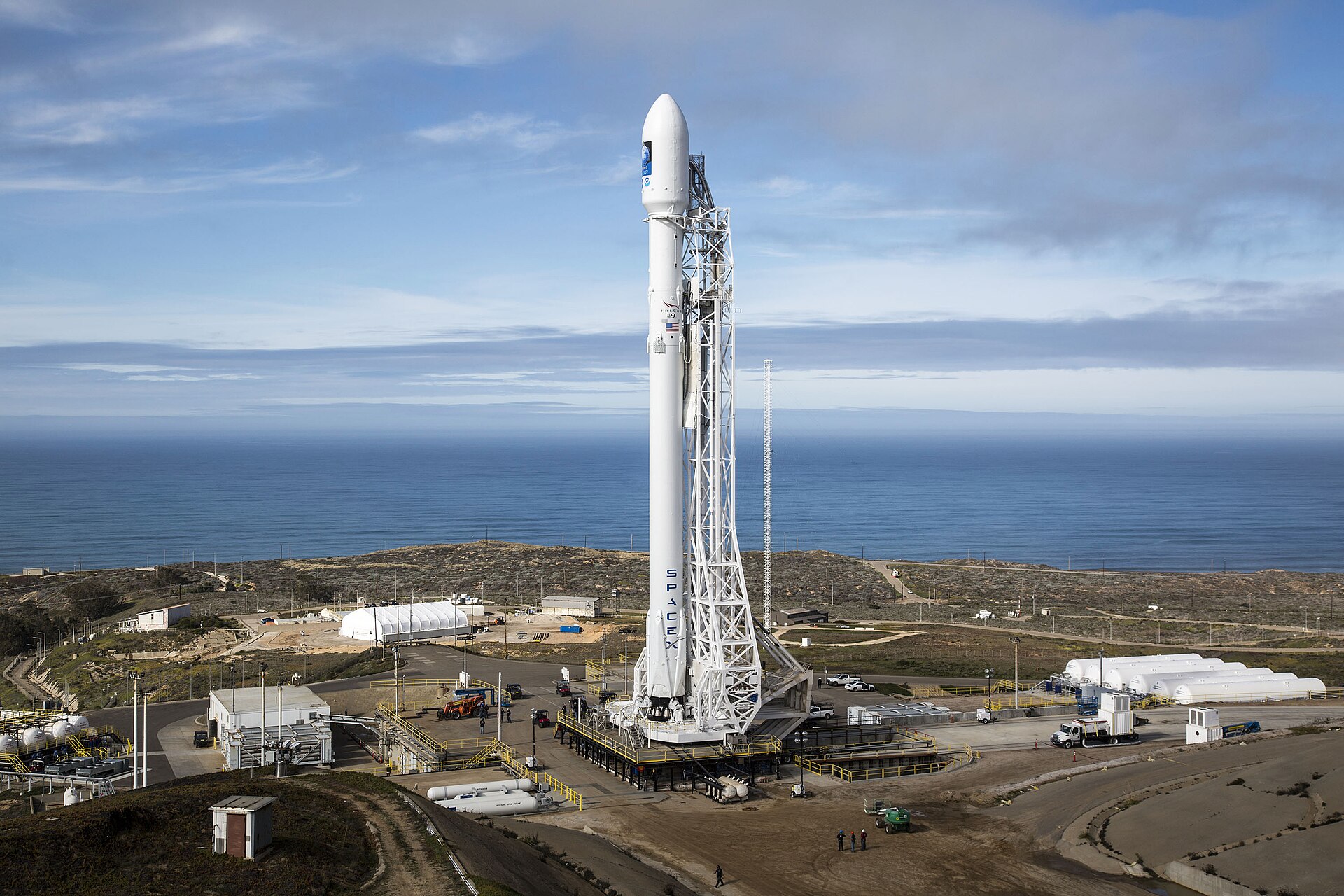
SpaceX prices record IPO as Musk nears trillionaire mark
SpaceX announced that it priced 555,555,555 Class A shares at $135 each, putting its initial public offering at roughly $75 billion and setting trading for June 12 on Nasdaq under the ticker SPCX. Wealth trackers cited in market coverage put Elon Musk within reach of a personal fortune measured at $1 trillion, mostly because his SpaceX and Tesla holdings are being repriced by public markets. The immediate story is not only personal wealth: SpaceX is becoming a public-market proxy for satellite internet, launch services, defence-related space infrastructure and Musk's wider AI ambitions. For Belgian and EU readers, the relevant angle is exposure rather than local employment. Belgian investors may see SpaceX through US-market access, global funds or future index products, while EU policymakers face a sharper comparison with Europe's own secure-connectivity project, IRIS².
Belgian consumers, savers and pension-linked investors should treat the listing as a market event, not just a celebrity-wealth story. The SpaceX announcement says the European retail offer covers Germany, Denmark, France, the Netherlands, Norway, Spain and Sweden, not Belgium, so Belgian residents are more likely to encounter the stock through brokers, US-market products or diversified funds. For Belgian SMEs, telecom users and public bodies, the wider issue is whether satellite connectivity becomes cheaper, more concentrated, or more politically sensitive.
SpaceX (Space Exploration Technologies Corp., the US rocket, satellite and connectivity company founded in 2002) is the company behind Falcon rockets, Starlink and major NASA launch services. Elon Musk (South African-born US entrepreneur, born in 1971) is SpaceX's founder and the central shareholder whose paper wealth rises with the listing. Nasdaq Global Select Market (US electronic stock exchange tier for large issuers) is where SpaceX said the shares would trade. SPCX is the ticker symbol SpaceX announced for the listing. Starlink (SpaceX's low-Earth-orbit satellite broadband network) is the company's best-known consumer connectivity service. Tesla (US electric-vehicle and energy company led by Musk) remains a major part of his estimated fortune. IRIS² (EU secure satellite constellation programme created by Regulation (EU) 2023/588) is Europe's sovereign-connectivity answer to dependence on non-European systems.
Background
The scale of the listing places SpaceX alongside a small set of market moments when private infrastructure became a public asset class. Saudi Aramco's 2019 flotation previously set the modern benchmark for giant IPOs, while Facebook's 2012 listing and Alibaba's 2014 listing became reference points for platform companies entering public markets. SpaceX's story also follows a European launch-access debate: Ariane 6 first flew in 2024 after delays, while the EU's 2023 secure-connectivity regulation created IRIS² to reduce dependence on outside satellite infrastructure for government and critical communications.
The wider picture
Space is now part of industrial policy, defence resilience and communications sovereignty. A publicly traded SpaceX with a very large valuation could deepen US advantage in launch, satellite broadband and dual-use infrastructure. The EU's IRIS² programme shows that Brussels already treats secure connectivity as a sovereignty issue, not merely a telecoms market.
Why now
The story is timely because SpaceX announced the final IPO pricing on June 11, with trading expected on June 12. That pricing converted years of private-market valuation into a public-market test and moved Musk's paper fortune close to the trillion-dollar threshold.
What to watch
Watch the opening trade on June 12, the June 15 expected closing, any use of the 30-day underwriter option, and whether early trading keeps Musk above or below the trillion-dollar mark. EU readers should also watch whether major funds add SpaceX exposure quickly.
Opposing perspectives
- SpaceX and IPO underwriters
The SpaceX announcement presents the listing as a conventional public offering with a declared share count, price, ticker and closing timetable. In this frame, the IPO gives public investors access to a company that combines launch, satellite connectivity and AI-linked infrastructure, while leaving risk disclosure to the prospectus process.
- Valuation sceptics and equity analysts
Market analysts cited in coverage argue that the offer price embeds very large expectations for future revenue, margins and strategic dominance. Their strongest case is that public buyers may be paying today for several unproven businesses at once: reusable launch scale, Starlink cash generation, defence demand and orbital AI infrastructure.
- European Commission and EU space-sovereignty policymakers
The European Commission's IRIS² material frames secure satellite connectivity as strategic infrastructure for governments, businesses and citizens. From that perspective, a heavily capitalised SpaceX sharpens the EU's sovereignty problem: Europe needs resilient commercial and government connectivity without relying too deeply on one US-controlled platform.
- Inequality researchers and tax-policy advocates
The World Inequality Lab's research frames extreme fortunes as part of a broader concentration of private wealth. From this view, a potential trillionaire is not only a market milestone but evidence that capital gains, founder control and public-market enthusiasm can compound wealth faster than wages or public revenue.
Sources & evidence
- Al Jazeera - Elon Musk poised to make history as world's first trillionaire · 2026-06-12
- SpaceX - Space Exploration Technologies Corp. Announces Pricing of Initial Public Offering · 2026-06-11
- Axios - SpaceX raises $75 billion in its IPO · 2026-06-11
- Business Insider - SpaceX's IPO brings Elon Musk closer to becoming the world's first trillionaire · 2026-06-12
- The Guardian - SpaceX to list on US stock market today after raising $75bn in largest IPO ever · 2026-06-12
- European Commission - IRIS² Secure Connectivity
- EUR-Lex - Regulation (EU) 2023/588 establishing the Union Secure Connectivity Programme · 2023-03-15
- Alexander Bonora, Marco Giordani, Michele Zorzi - Toward EU Sovereignty in Space: A Comparative Simulation Study of IRIS · 2026-04-17
- Lucas Chancel, Thomas Piketty, Emmanuel Saez, Gabriel Zucman et al. - World Inequality Report 2022, World Inequality Lab · 2021-12-07
- Al Jazeera