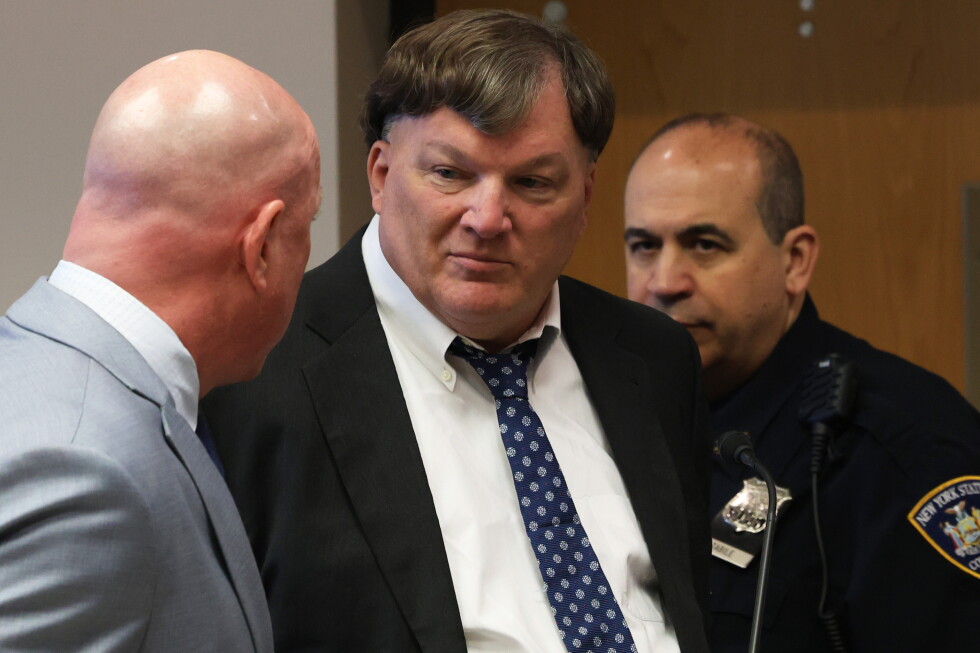
Suffolk County court gives Rex Heuermann life terms for Gilgo Beach murders
Suffolk County Court sentenced Rex Heuermann to life imprisonment without parole after he pleaded guilty to murdering seven women and admitted in court that he killed an eighth in the Gilgo Beach case. The court imposed the punishment on 17 June 2026 in Riverhead, New York, ending the criminal case against a former Long Island architect whose crimes stretched from 1993 to 2010. Suffolk County prosecutors said the renewed investigation connected Heuermann to the killings through mobile-phone records, DNA evidence, a suspect vehicle and material found during searches. The case carries no direct Belgian or EU policy effect, but it is internationally relevant as a long-running cold-case prosecution involving violence against marginalised women, inter-agency policing failures and later forensic breakthroughs. For Belgium Pulse readers, the value is comparative: how justice systems investigate serial violence when victims are initially treated as socially disposable.
This is primarily a US justice story, not a Belgian public-safety development. It matters to Belgian readers who follow criminal justice, policing, forensic science and gender-based violence because the case shows how serial offences can remain hidden when victims are marginalised. Belgian police, prosecutors, victim-support services and policy readers can compare the case with domestic debates over cold-case capacity, DNA evidence, sex-worker safety and coordination between local and federal investigators without implying a direct Belgian threat.
Rex Heuermann (former Manhattan architect from Massapequa Park, New York, born in 1963) is the convicted killer in the Gilgo Beach case. Gilgo Beach (barrier-beach area on Long Island's south shore) became the shorthand for remains found along Ocean Parkway. Suffolk County Court (New York state trial court sitting in Riverhead) handled the sentencing. Timothy Mazzei (New York state judge) imposed the sentence. Suffolk County District Attorney Raymond Tierney (elected prosecutor for the county since 2022) led the revived prosecution. Melissa Barthelemy, Megan Waterman, Amber Lynn Costello, Maureen Brainard-Barnes, Jessica Taylor, Valerie Mack, Sandra Costilla and Karen Vergata were the eight women Heuermann admitted killing. Shannan Gilbert (missing woman whose 2010 disappearance triggered searches) was not among Heuermann's charged victims. The FBI Behavioral Analysis Unit (federal profiling and violent-crime support unit) is expected to study Heuermann under his plea terms.
Background
Investigators began finding bodies near Gilgo Beach in December 2010 while searching for Shannan Gilbert, but AP's case timeline states that related remains had first been discovered in 1993. AP's timeline says Suffolk County prosecutors convened a new task force in January 2022, leading to Heuermann's arrest in July 2023. He pleaded guilty on 8 April 2026 to seven murders and acknowledged killing Karen Vergata, according to the court account reported from Suffolk County. The case echoes earlier serial-murder investigations in which victims involved in sex work were harder to link across jurisdictions and slower to receive sustained investigative attention.
Why now
The story is timely because Suffolk County Court imposed the sentence on 17 June 2026, two months after Heuermann's guilty plea and admission in court that he killed an eighth woman.
What to watch
Watch whether New York authorities release further detail on Heuermann's cooperation with the FBI Behavioral Analysis Unit, whether civil claims linked to the case proceed, and whether investigators announce progress on other remains found during the wider Gilgo Beach inquiry.
Opposing perspectives
- Suffolk County prosecutors and victims' families
Suffolk County prosecutors and victims' families frame the sentence as the only proportionate legal endpoint for a case involving admitted serial murders over many years. Their strongest argument is that life without parole protects the public, recognises the victims as individuals rather than case files, and avoids forcing relatives through a trial after Heuermann's guilty plea.
- Defense counsel Michael Brown
Defense counsel Michael Brown's strongest frame is procedural rather than exculpatory: after Heuermann admitted responsibility, the plea spared victims' relatives and Heuermann's family from a long trial. Brown also suggested Heuermann showed private emotion, but that position did not alter the court's sentence or prosecutors' assessment of his conduct.
- Cold-case and policing analysts
Cold-case and policing analysts would read the case less as a single courtroom ending than as a warning about missed links, weak data-sharing and inconsistent attention to victims involved in sex work. The FBI's serial-murder guidance stresses coordination, information management and cross-jurisdiction communication, all issues visible in the long delay before arrest.
Sources & evidence
- Al Jazeera - Gilgo Beach killer sentenced to life without parole · 2026-06-17
- Associated Press - A timeline of the investigation of the Gilgo Beach killings · 2026-06-17
- Associated Press - Rex Heuermann pleads guilty to murder charges and admits he killed 8 women in the Gilgo Beach case · 2026-04-08
- The Guardian - Families of eight women killed confront the Gilgo Beach serial killer · 2026-06-17
- People - Gilgo Beach Serial Killer Rex Heuermann Sentenced to 3 Life Terms in Prison Without Parole · 2026-06-17
- FBI - Serial Murder: Multi-Disciplinary Perspectives for Investigators · 2008-01-01
- Yaksic, Simkin and Roychowdhury - Statistical study of time intervals between murders for serial killers, arXiv, 2018 · 2018-11-01