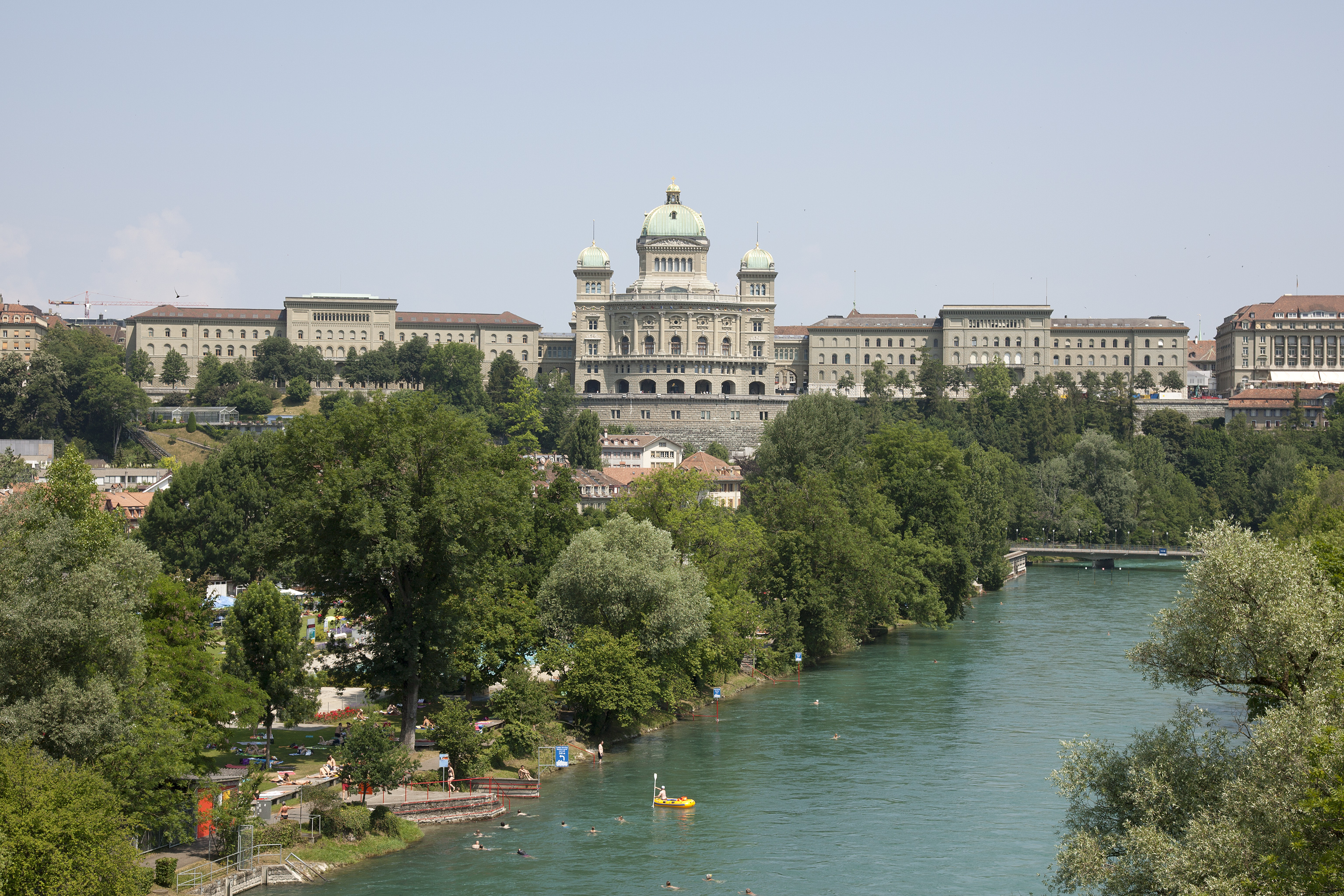
Swiss voters decide population-cap plan that could unsettle EU ties
Swiss voters are casting ballots on the Swiss People's Party's population-cap initiative, a proposal that the Swiss Federal Council's voting information says would require Switzerland's permanent resident population to remain below 10 million before 2050. The same official material says federal authorities would have to act if the population passed 9.5 million, especially on asylum and family reunification, and that a prolonged breach of the 10 million threshold could force Switzerland to terminate the EU free-movement agreement, endangering the wider Bilaterals I package. The Federal Council and Parliament recommend rejection, arguing the plan would harm prosperity, security cooperation and relations with the EU. The initiative committee says immigration has put pressure on housing, transport, schools, healthcare and public services. For Belgium Pulse readers, the vote matters less as a Swiss domestic contest than as a stress test for Europe's compromise between open labour markets and migration politics.
Belgian businesses, workers, voters and federal officials should read the Swiss vote as a European labour-market warning signal. The European Commission says EU-Swiss goods trade exceeded €362 billion in 2025 and that Switzerland is the EU's fourth-biggest trading partner, so a rupture would not stay inside Swiss politics. For EU institution staff and policy-engaged readers in Brussels, the ballot tests how far a non-EU partner can restrict movement while keeping deep single-market access.
The Swiss People's Party (SVP/UDC, Switzerland's largest right-wing party and long-running anti-immigration force) launched the initiative. The "No 10-Million Switzerland" initiative (federal popular initiative submitted in 2024 and voted on June 14, 2026) seeks a constitutional population ceiling. The Swiss Federal Council (Switzerland's seven-member collective federal government) and the Swiss Parliament (the bicameral Federal Assembly in Bern) recommend rejection. The European Union (27-state bloc headquartered institutionally in Brussels) is Switzerland's central external economic partner. The Free Movement of Persons Agreement (EU-Swiss treaty in force since 2002) lets many EU and Swiss citizens live and work across the border. Bilaterals I (seven EU-Swiss sectoral agreements signed in 1999) link market access to free movement. Schengen and Dublin (European border-security and asylum-coordination systems) are also politically exposed. Swissvotes (University of Bern's Année Politique Suisse referendum database) tracks the vote and its political positions.
Background
Swissvotes records that Swiss voters approved the Bilaterals I package on May 21, 2000, after Switzerland rejected European Economic Area membership on December 6, 1992. The European Commission says the Free Movement of Persons Agreement is one of the 1999 sectoral agreements underpinning Swiss access to parts of the single market. Swissvotes also records that the 2014 "against mass immigration" initiative passed narrowly, while a 2020 SVP initiative explicitly aimed at ending free movement was rejected by 61.7% of voters. Today's ballot revives that unresolved tension with a harder demographic trigger.
The wider picture
The referendum fits a wider European pattern in which right-wing parties challenge migration and free-movement regimes while economies age and rely on foreign labour. It is not a great-power security crisis, but it matters geopolitically because the EU's credibility as a rules-based market depends on whether close partners can keep market privileges while narrowing mobility rights.
Why now
The vote is timely because Swiss voters are deciding the initiative on June 14, 2026. Swissvotes says the proposal reached the ballot after the SVP submitted the initiative in 2024 and after the Federal Council and Parliament recommended rejection in the pre-vote process.
What to watch
Watch the official federal result, the canton-by-canton map and turnout. If the Yes side performs strongly even without winning, the next signal will be whether Swiss parties attach tougher migration safeguards to the EU-Swiss package's ratification debate.
Opposing perspectives
- Swiss People's Party and initiative committee
The initiative committee says Switzerland's current immigration level is too high and argues that population growth is straining housing, rents, transport, healthcare, schools, security and landscapes. Its strongest case is that a hard constitutional ceiling would force policymakers to manage growth instead of relying on EU labour mobility as the default answer to labour shortages.
- Swiss Federal Council and Parliament
The Federal Council argues that the initiative would create uncertainty, weaken prosperity and put the EU bilateral path at risk. Its strongest case is that Switzerland can address housing, asylum and labour-market pressures through targeted policies while preserving the free-movement and market-access framework that supports jobs, public services and security cooperation.
- Swiss business, university and health-sector organisations
Swissvotes lists business, university, hospital and care organisations among the No-side recommendations. Their strongest case is that a rigid cap would hit sectors that depend on EU recruitment, including healthcare, research, hospitality, manufacturing and services, while leaving the underlying causes of housing scarcity and infrastructure pressure unresolved.
- EU institutions
The European Commission frames EU-Swiss relations as a package of bilateral agreements giving Switzerland partial single-market access in return for rule alignment and free movement. From that perspective, a unilateral population cap would not be a narrow domestic migration tool but a challenge to the architecture of the EU's relationship with a deeply integrated neighbour.
Sources & evidence
- Al Jazeera - Switzerland votes on right-wing bid to cap country's population · 2026-06-14
- Associated Press - Swiss cast ballots on right-wing's bid to cap country's population at 10 million · 2026-06-14
- The Guardian - Swiss wait to hear result of ballot on capping population at 10 million · 2026-06-13
- Swiss Federal Council - Volksinitiative Keine 10-Millionen-Schweiz! · 2026-05-08
- Swiss Federal Council - Message on the No 10-Million Switzerland initiative, BBl 2025 1262 · 2025-03-21
- European Commission - EU trade relations with Switzerland
- Swissvotes / Année Politique Suisse, University of Bern - Nachhaltigkeitsinitiative dossier