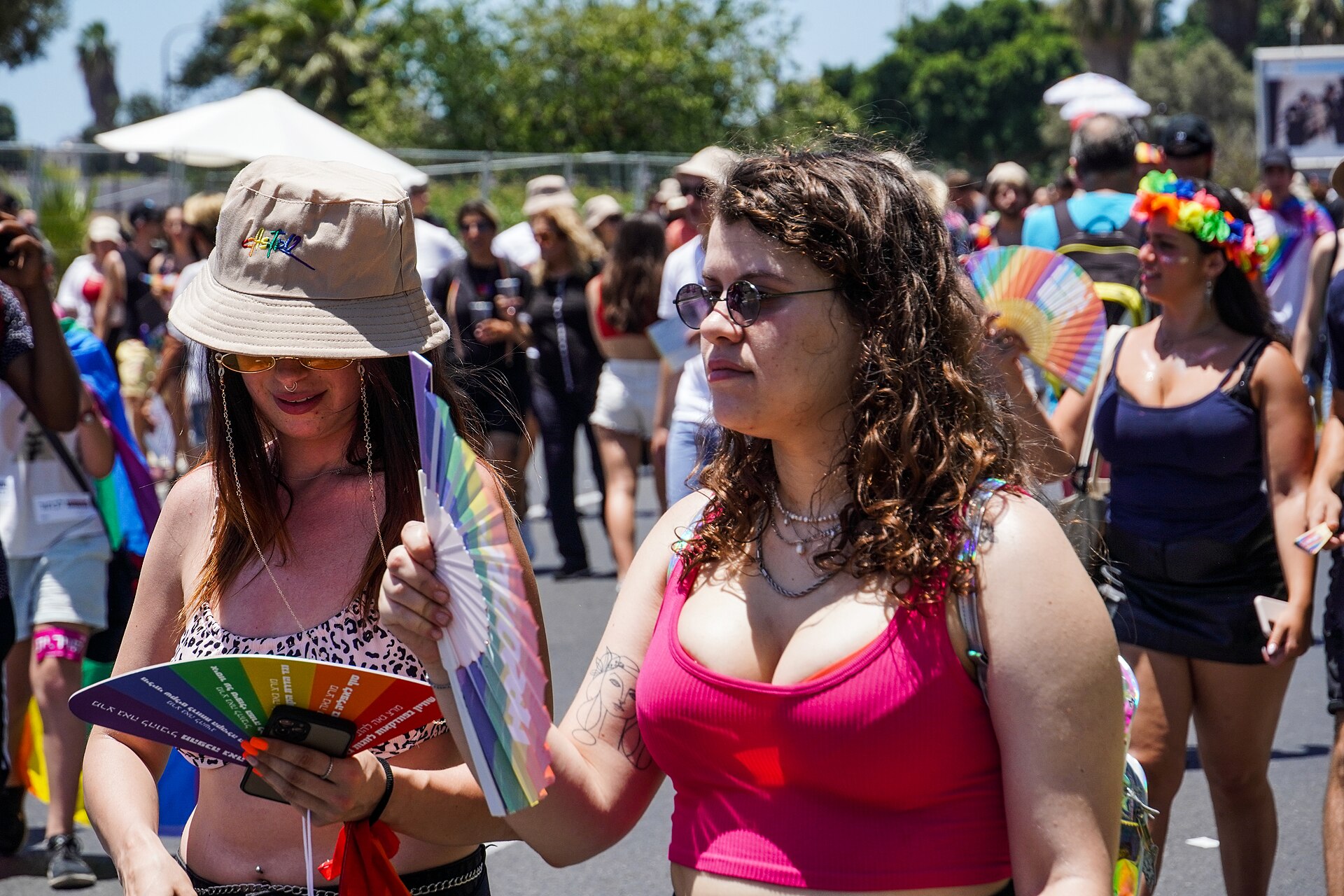
Tel Aviv holds Pride parade after wartime cancellations
Tel Aviv held a Pride parade on 13 June 2026, with the lead video identifying it as the city's first full Pride march since Hamas's 7 October 2023 attack and the war that followed. The event's significance is less about festival logistics than about what public celebration now means in Israel: Pride returned to a city long marketed as a regional LGBTQ hub, but it did so under the shadow of hostage trauma, Gaza, and sharply contested international perceptions of Israeli liberalism. Contemporary accounts of the 2024 season described Tel Aviv's Pride programming as toned down and centred on hostages rather than a normal parade. For Belgian and EU readers, the story sits where civil liberties, public space, Middle East diplomacy and LGBTQ politics meet, while the EU's broader relationship with Israel remains politically strained over Gaza and human-rights obligations.
This is primarily an international civil-society story, but it matters to Belgian readers because Belgium's public debate on Israel, Gaza and LGBTQ rights is active in politics, universities, cultural venues and street demonstrations. Belgian Jewish, Palestinian, Israeli and LGBTQ communities may read the parade through very different lenses. For EU staff and policy-focused readers in Brussels, the event also intersects with a wider EU argument over whether engagement with Israel can be separated from Gaza-war accountability.
Tel Aviv (Israel's coastal commercial centre and the country's main secular metropolis) is the city most associated internationally with Israeli LGBTQ nightlife and Pride tourism. Tel Aviv Pride (the city's annual LGBTQ festival and parade, first staged as a parade in the 1990s) has often been described in event histories as one of Asia's largest Pride gatherings. Hamas (Palestinian Islamist movement controlling Gaza before the 2023 war) led the 7 October 2023 attack on Israel, which Israeli authorities say triggered the current war. Gaza (Palestinian coastal territory under blockade and war conditions) is central to the international criticism surrounding Israeli public diplomacy. The EU-Israel Association Agreement (a 2000 treaty governing trade and political relations between the EU and Israel) matters because EU institutions have debated its human-rights clause during the Gaza war.
Background
Event histories describe Tel Aviv Pride as a major annual parade by the late 2010s, with crowd estimates in 2018 and 2019 reaching about 250,000. The 7 October 2023 attack changed the setting for public celebrations: contemporary accounts of 2024 Pride events described a subdued atmosphere, hostage-focused programming and smaller or more solemn gatherings. Israeli Pride events have also long carried political tension. Jerusalem Pride was attacked in 2005 and 2015, while scholarship on Israeli LGBTQ politics argues that Pride visibility has been both a civil-rights achievement and a contested part of Israel's international image.
The wider picture
The parade took place against a Middle East backdrop in which Israel's war in Gaza has strained relations with many European publics and governments. LGBTQ visibility, normally a soft-power asset for Tel Aviv, now sits inside a harder geopolitical argument over occupation, civilian harm, hostages, democratic identity and the limits of cultural diplomacy during war.
Why now
The immediate trigger is the 13 June 2026 Pride event itself, presented by the lead video as the first Tel Aviv march since the 7 October 2023 attack and subsequent wartime cancellations or subdued alternatives.
What to watch
Watch whether organisers publish attendance and security figures, whether hostage families or anti-war groups respond publicly, and whether international Pride networks treat Tel Aviv's return as normalisation, solidarity, protest terrain or a mix of all three.
Opposing perspectives
- Israeli LGBTQ organisers and municipal supporters
Israeli LGBTQ organisers and municipal supporters frame the parade as a return of civic life after years shaped by war, hostage grief and security restrictions. In that reading, visible Pride in Tel Aviv is not a diversion from crisis but a statement that LGBTQ citizens still belong in public space during national trauma.
- Queer Palestinian and anti-occupation activists
Queer Palestinian and anti-occupation activists quoted in 2024 coverage argue that Israeli Pride symbolism can become pinkwashing when it presents Israel as a liberal haven while Gaza remains devastated and Palestinians lack equal freedom. Their strongest argument is that LGBTQ rights cannot be separated from occupation, war and unequal movement rights.
- EU human-rights focused policymakers
EU human-rights focused policymakers treat the cultural signal cautiously because the Union's formal relationship with Israel is tied to democratic principles and human rights under the EU-Israel Association Agreement. From this view, Pride visibility may be socially meaningful while leaving unresolved the legal and diplomatic questions raised by Gaza.
Sources & evidence
- Euronews video lead: A Tel Aviv, les Israeliens celebrent la premiere Marche des fiertes depuis l'attaque du 7 octobre · 2026-06-13
- Reuters: Thousands march in a subdued Jerusalem gay pride parade · 2024-05-31
- The Times of Israel: Tens of thousands attend toned-down Tel Aviv Pride rally, with spotlight on hostages · 2024-06-06
- The Guardian: No pride in occupation: queer Palestinians on pink-washing in Gaza conflict · 2024-06-16
- EUR-Lex: EU-Israel Association Agreement
- Gilly Hartal, Re-Reading Homonationalism: An Israeli Spatial Perspective, Journal of Homosexuality, 2018 · 2018-09-17