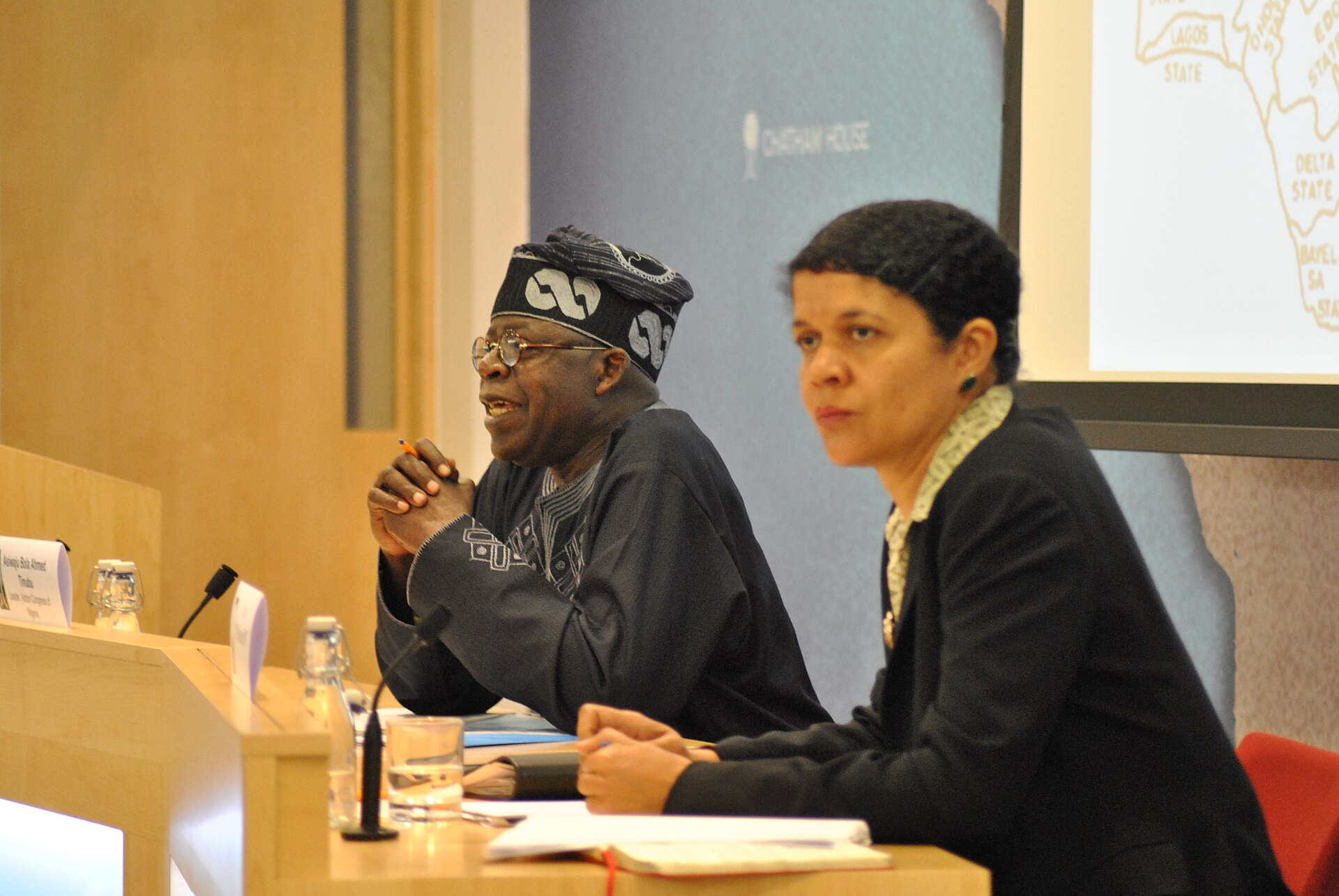
Tinubu claims Nigerian forces killed 13,000 militants in a year
President Bola Ahmed Tinubu used Nigeria's Democracy Day address to present a hard-security scorecard: the State House transcript says more than 13,000 militants were neutralised in the past year, more than 124,000 fighters and dependants have passed through Operation Safe Corridor since 2023, and terror-related deaths have fallen by 81% since 2015. Belgium Pulse has not independently verified the casualty totals, and the claim lands against a more mixed security picture. The Nigerian army said it freed 360 abducted people in Borno State this week, while police spokesperson Yazid Abubakar said 39 people were kidnapped in Zamfara during a local peace meeting. The Institute for Economics & Peace's Global Terrorism Index 2026 says sub-Saharan Africa remains central to global terrorism trends. For EU readers, the story is mainly about West African stability, counterterrorism partnerships, migration pressures and the limits of military metrics.
For Belgium Pulse readers, this is not a direct domestic-security story; it matters through Europe's external security, humanitarian and migration agenda. Belgian diplomats, EU institution staff in Brussels, NGOs, development contractors, energy and shipping businesses, Nigerian-Belgian families and West Africa-focused researchers all follow Nigeria's stability. The EEAS says EU security partnerships cover areas including crisis management, maritime security and counterterrorism, so Nigeria's trajectory shapes the wider policy environment in which Belgium and EU institutions engage West Africa.
Bola Ahmed Tinubu (Nigeria's president since 2023 and former governor of Lagos) is defending his security record. Nigeria (Africa's most populous country and a major West African economic and diplomatic actor) faces overlapping jihadist, criminal and communal violence. Democracy Day (12 June commemoration of Nigeria's return to civilian rule and the annulled 1993 election) is a major presidential messaging moment. Boko Haram (jihadist movement that launched an insurgency in northeastern Nigeria in 2009) and Islamic State West Africa Province, or ISWAP (Islamic State-aligned Boko Haram splinter group active around Lake Chad) remain core threats. Operation Safe Corridor (Nigerian deradicalisation and reintegration programme for surrendered fighters and dependants) is central to Tinubu's figures. Borno State (northeastern state at the heart of the insurgency), Oyo State (southwestern state where school kidnappings have recently alarmed officials), Zamfara (northwestern state affected by banditry) and the Mandara Mountains (Nigeria-Cameroon border highlands used by armed groups) frame the geography. The European External Action Service (EU diplomatic service based in Brussels) handles EU external security policy.
Background
Nigeria's current security crisis grew from several tracks rather than one war. Boko Haram's insurgency began in northeastern Nigeria in 2009 and later fractured, with ISWAP becoming a major Islamic State affiliate around Lake Chad. Northwest banditry expanded after 2011 as armed gangs, vigilantes and herder-farmer disputes fed kidnapping and extortion economies. Nigeria restored civilian rule in 1999, but Democracy Day itself marks the 12 June 1993 election, whose annulment became a symbol of military-era repression. Tinubu's 2026 address therefore links democratic legitimacy with the state's claim that it can protect citizens.
The wider picture
Tinubu's remarks fit a wider contest over security influence in West Africa. Western governments have lost access or leverage in parts of the Sahel after coups and geopolitical realignment, while jihadist networks exploit borderlands and weak state control. Nigeria's ability to contain Boko Haram, ISWAP and bandit networks therefore affects regional balance, ECOWAS credibility and Europe's security posture south of the Mediterranean.
Why now
The trigger is Tinubu's 12 June 2026 Democracy Day address, where the State House transcript records new security claims. The timing also follows recent kidnappings and the Nigerian army's announcement that it had freed 360 abducted people in Borno State.
What to watch
Watch whether Nigeria publishes independently checkable security data, whether abductions decline in Borno, Zamfara and school-targeted areas, and whether the promised recruitment of police and military personnel reaches vulnerable rural communities. EU signals on West Africa security partnerships will also matter.
Opposing perspectives
- Nigerian presidency / Tinubu administration
President Bola Ahmed Tinubu's Democracy Day address presents the campaign as measurable progress: large militant losses, expanded recruitment for police and military forces, and a continuing surrender channel through Operation Safe Corridor. In this frame, Nigeria is applying pressure while preserving an off-ramp for fighters and dependants who leave armed groups.
- Civilian-protection analysts and rights-focused observers
Analysts cited in current reporting argue that battlefield numbers do not prove civilian security is improving. Their strongest concern is that school kidnappings, rural abductions and community negotiations with armed groups show that many Nigerians still experience a weak state presence despite official claims of successful operations.
- EU external-security institutions
The EEAS frames counterterrorism as part of broader crisis-management, maritime-security and resilience partnerships rather than a purely military count. From this perspective, Nigeria's figures matter less as a scoreboard than as evidence for whether European engagement in West Africa should prioritise security cooperation, governance, humanitarian support or all three.
Sources & evidence
- Al Jazeera - Nigeria killed more than 13,000 'terrorists' in past year, president says · 2026-06-12
- The State House, Abuja - Text of President Bola Ahmed Tinubu's Democracy Day Address on Friday, June 12, 2026 · 2026-06-12
- Associated Press - The Nigerian army frees 360 abducted people in northeastern Borno state · 2026-06-07
- Associated Press - Armed group kidnaps 39 people during negotiations in northwestern Nigeria · 2026-06-09
- The Guardian - Brutal and emboldened: how Nigeria's bandit crisis spun out of control · 2026-06-01
- Institute for Economics & Peace - Global Terrorism Index 2026 · 2026-03-19
- European External Action Service - EU Security and Defence Partnerships · 2026-03-24