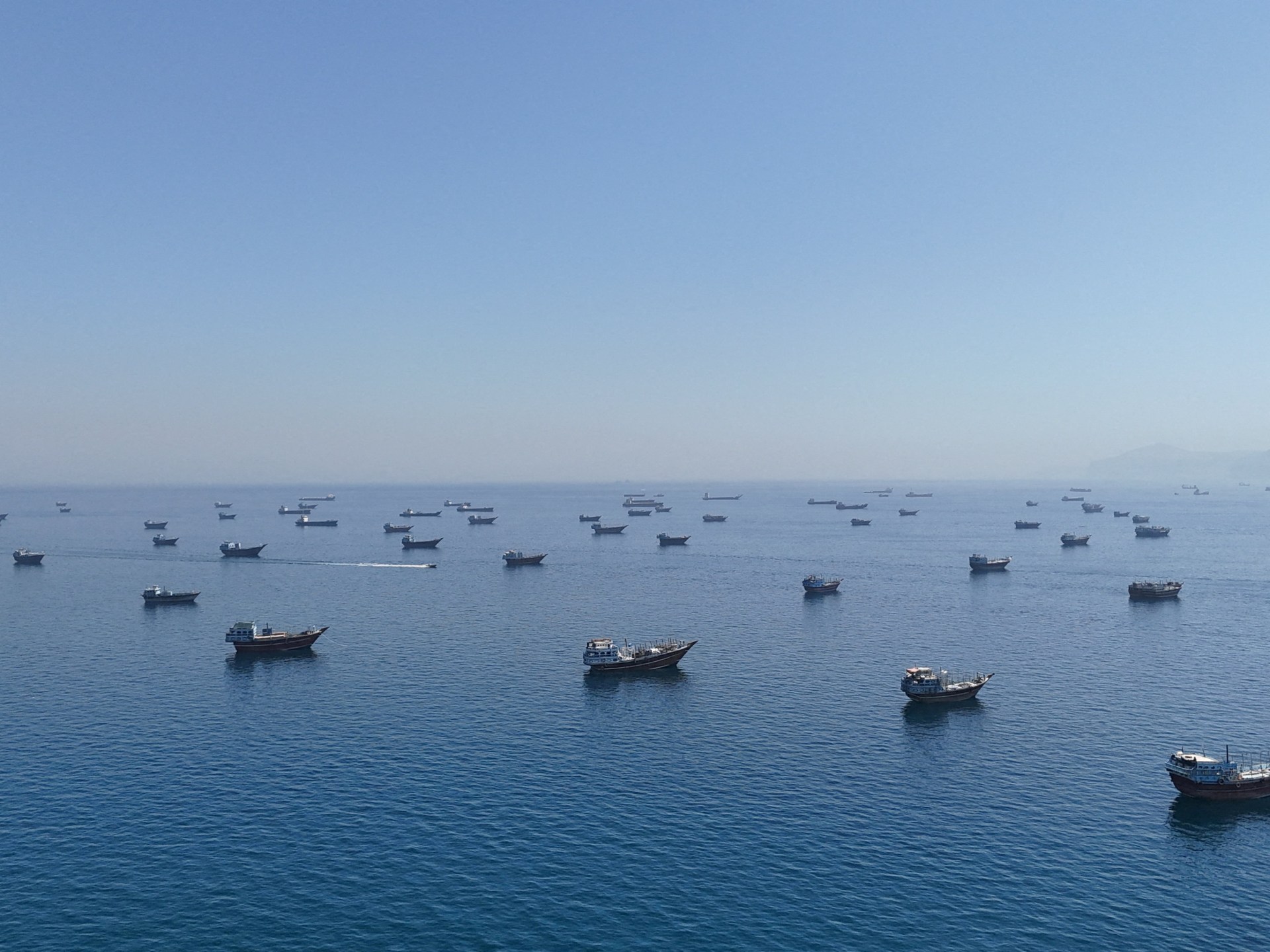
Trump claims US guided 100 million barrels through Hormuz
US President Donald Trump says he ordered a secret military effort that helped more than 200 commercial ships and 100 million barrels of oil pass through the Strait of Hormuz despite Iranian restrictions. The claim matters because it is being used to explain why crude prices have not returned to the peaks seen earlier in the Iran war. But the available evidence is uneven. Shipping-data estimates cited by analysts range from dozens to a few hundred outbound commercial transits over recent weeks, and even the highest public estimate does not clearly prove the oil volume Trump described. US Energy Secretary Chris Wright told lawmakers he was not aware of millions of barrels being taken out in the way Trump described, while acknowledging some military support for non-Iranian vessels. For Europe and Belgium, the core issue is less the boast than whether Hormuz flows are genuinely stabilising or merely being rerouted through risky, opaque shipping practices.
Belgian drivers, hauliers, airlines, farmers and petrochemical firms feel Hormuz through fuel, freight, fertiliser and inflation rather than through direct Gulf imports alone. The International Energy Agency says Belgium's oil security system relies on APETRA stocks and federal crisis procedures, while Antwerp's refining and chemicals cluster depends on crude and product flows priced in global markets. If Trump's claim overstates real supply, Belgian consumers and businesses should expect renewed price volatility rather than assume the chokepoint has been solved.
Donald Trump (US president, serving a second term in 2026) is presenting the Hormuz operation as proof of US control over the waterway. The Strait of Hormuz (narrow passage between Iran and Oman linking the Persian Gulf to the Gulf of Oman) is a major oil and LNG chokepoint. Iran (Islamic Republic on the strait's northern shore) has used the waterway as leverage during the 2026 war. Chris Wright (US energy secretary) is the cabinet official whose congressional answer undercut certainty about Trump's figures. United States Central Command, or CENTCOM (US military command for the Middle East), has described coordination with commercial shipping but has not publicly detailed the claimed volume. The Islamic Revolutionary Guard Corps, or IRGC (Iran's elite military force), controls much of Iran's Gulf security apparatus. Windward, Lloyd's List and Kpler (maritime data and shipping-intelligence providers) track ship movements. APETRA (Belgium's public oil stockholding agency) manages Belgium's emergency oil reserves.
Background
The Strait of Hormuz has repeatedly been a coercive pressure point, but long closures remain rare. The Congressional Research Service's 2012 report on Iran's threat to the strait described Iranian mining, missile and small-boat capabilities as tools designed to raise the cost of passage. During the 1980s Tanker War, attacks on Gulf shipping pushed the United States into escort operations under Operation Earnest Will, including the 1987 Bridgeton mine incident. The IEA says its collective oil-stock actions have been used only five times since 1974, including the 1991 Gulf War and two Ukraine-crisis releases in 2022.
The wider picture
Hormuz is a classic great-power and regional-pressure point: Iran can threaten a route used by Gulf exporters, while the United States can project naval power but cannot easily eliminate insurance, mine, drone and escalation risks. China's and India's energy exposure, Europe's inflation sensitivity and Gulf states' export dependence all make the waterway a global bargaining arena.
Why now
Trump made the claim on June 10 as oil prices, ceasefire diplomacy and renewed US-Iran exchanges were all under scrutiny. The timing matters because the administration is using the alleged operation to argue that it can contain the economic shock from the Hormuz disruption.
What to watch
Watch for CENTCOM detail on escort rules, new shipping-data estimates from Kpler, Lloyd's List or Windward, insurance-rate changes, and the next IEA or EIA market updates. A sudden rise in confirmed attacks, detentions or dark transits would matter more than political claims.
Impact
Regional — The federal level would carry any Belgian emergency-oil decision because the International Energy Agency says the federal energy minister, APETRA and the National Oil Board manage stock releases and demand-restraint options. Flanders has the sharper industrial exposure because the same IEA country note identifies the Port of Antwerp as Belgium's main oil-trade terminal and home to most refining and chemical capacity. The EU angle is collective: IEA and EU energy-security coordination shape stockholding, market monitoring and any wider response to a Gulf supply shock.
Opposing perspectives
- Trump administration
Trump's public position is that the US military has demonstrated practical control of the Strait of Hormuz by helping more than 200 commercial ships move through it. The strongest version of this argument is that even partial, covert support can reassure markets if it keeps non-Iranian oil moving and denies Tehran a monopoly over access.
- Shipping-data analysts
Shipping-data analysts would frame the claim as numerically unproven. Their strongest argument is that vessel counts, tanker capacity and normal pre-war traffic levels must be reconciled before accepting a 100-million-barrel figure, especially when some vessels may have travelled with Iranian authorisation or with transponders switched off.
- Iranian security establishment
Iran's likely frame is that geography, coastal defences and authorisation systems still give Tehran leverage over the strait. The strongest version is that a limited number of US-supported passages does not equal control, especially if many shipowners still require Iranian approval, pay charges or avoid the route altogether.
Sources & evidence
- Al Jazeera - Did US sneak 100 million barrels of oil out of Hormuz, as Trump claims? · 2026-06-11
- Financial Times - Oil tankers increase 'dark' transits through Strait of Hormuz · 2026-06-11
- Barron's - Trump Credits Stealth Operations for Holding Oil Prices Down · 2026-06-11
- MarketWatch - Trump elaborates on how oil is flowing out of the Mideast · 2026-06-11
- U.S. Energy Information Administration - World Oil Transit Chokepoints
- International Energy Agency - Belgium Oil Security Policy · 2022-08-10
- International Energy Agency - Oil Security Policy · 2022-06-30
- Congressional Research Service - Iran's Threat to the Strait of Hormuz, Katzman, Nerurkar, O'Rourke, Mason and Ratner, 2 · 2012-01-23