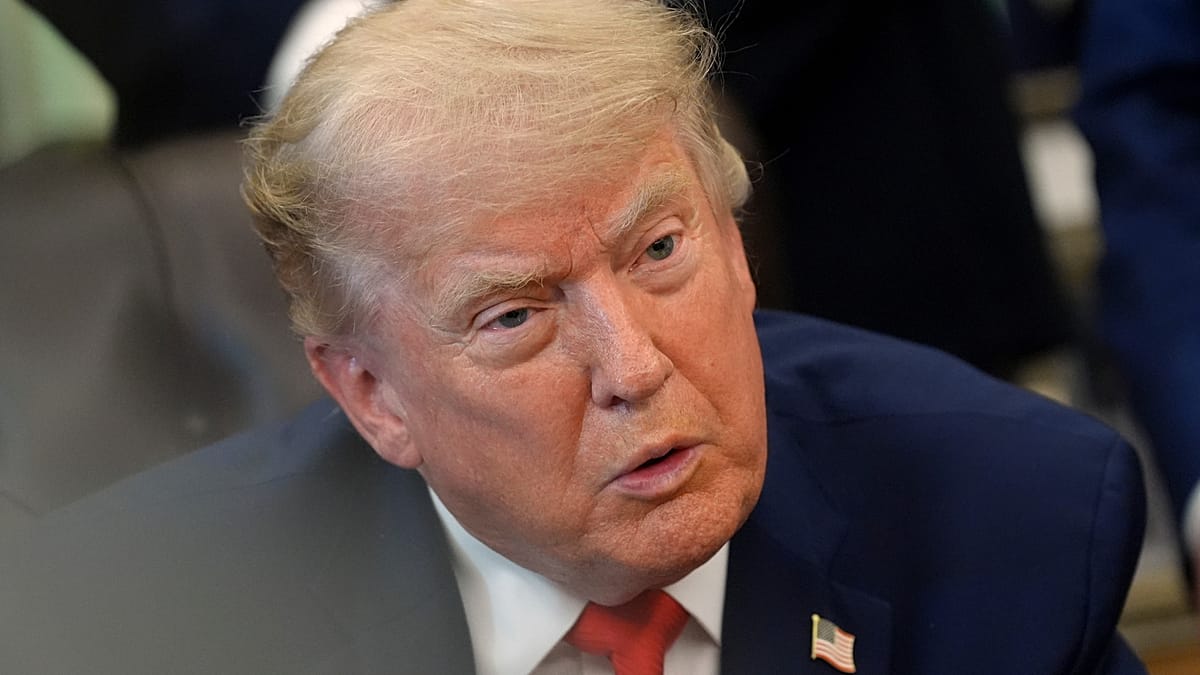
Trump says Iran deal will reopen Strait of Hormuz
Donald Trump said the United States and Iran could sign a peace agreement on Sunday that would reopen the Strait of Hormuz, but Iran's foreign ministry said no fixed signing date had been agreed and that a deal may only be finalised in the coming days. Pakistan's prime minister, Shehbaz Sharif, said mediators were closer than before to a settlement. The gap between those public positions matters: the proposed memorandum is being presented by Washington as a path to end the Iran war, restore shipping through the Gulf chokepoint and start a new phase of nuclear negotiations, while Tehran is still stressing sequencing and guarantees. The EIA's June forecast assumes Hormuz remains effectively closed in the near term, with normal traffic only returning in early 2027. For Europe, the immediate test is whether diplomacy can lower energy, shipping and inflation pressure before the G7 summit in Évian.
For Belgian households, drivers, farmers, airlines, hauliers and SMEs, the practical issue is energy and input prices, not distant summit choreography. The EIA forecast says disrupted Hormuz traffic has cut Middle East oil production by more than 11 million barrels per day from pre-conflict levels and kept Brent prices elevated. That can feed Belgian pump prices, freight costs, fertiliser bills and inflation. EU officials also have a direct stake because the Union sits at the G7 table and must balance de-escalation, sanctions policy and maritime security.
Donald Trump (US president, serving a second term from 2025) is pushing the proposed agreement before the G7 summit. Iran (Islamic Republic in West Asia, under a post-Khamenei leadership transition after the 2026 war) is the counterpart in the talks. The Strait of Hormuz (narrow waterway between Iran, Oman and the UAE) is a key oil, LNG and fertiliser route. Shehbaz Sharif (Pakistan's prime minister, in office again since 2024) has acted as a mediator. Abbas Araghchi (Iranian foreign minister) and Esmaeil Baghaei (Iranian foreign ministry spokesperson) are central Iranian diplomatic voices. Évian-les-Bains (French Alpine spa town on Lake Geneva) hosts the 15-17 June 2026 G7 summit. The G7 (Canada, France, Germany, Italy, Japan, the UK, the US and the EU) is the forum where enforcement and economic spillovers are expected to be discussed.
Background
The current diplomacy follows repeated failed attempts to manage Iran's nuclear programme and regional posture. The 2015 Joint Comprehensive Plan of Action limited Iranian enrichment, but Trump withdrew the United States from it in 2018. A short Iran-Israel ceasefire took effect on 24 June 2025 after the Twelve-Day War. In 2026, the conflict widened after US-Israeli strikes on Iran on 28 February, Iran's restrictions around Hormuz and a temporary US-Iran ceasefire announced on 8 April. Islamabad talks on 11-12 April failed, after which the United States imposed a naval blockade on Iranian ports.
The wider picture
The deal would test whether coercive US pressure can be converted into a durable settlement without a full regional bargain. Iran wants guarantees against future US-Israeli attacks; Washington wants nuclear limits and restored shipping; Israel and Lebanon-related fronts remain sensitive. China, India and other Asian buyers also have a major stake because Gulf energy flows are central to their supply security.
Why now
The trigger is Trump's 13 June announcement that an agreement could be signed on Sunday, just before the 15-17 June G7 summit in Évian-les-Bains. Iran's refusal to confirm that timing makes the next hours diplomatically and economically sensitive.
What to watch
Watch whether a text is signed on Sunday, whether Tehran and Washington publish matching descriptions of the nuclear and sanctions terms, and whether Hormuz traffic data begins to show a sustained reopening. The G7 summit from 15 to 17 June is the next political checkpoint.
Opposing perspectives
- Trump administration
The Trump administration frames the memorandum as proof that military pressure and sanctions can force a settlement: Trump said Iran would no longer seek nuclear weapons and that Hormuz would reopen immediately after signature, while US officials present follow-up technical talks as the route to verification.
- Iranian government
The Iranian government is stressing sequencing and sovereignty: Iran's foreign ministry said no fixed Sunday signing had been agreed, and Iranian officials have insisted that any settlement must address sanctions relief, security guarantees and the status of US and Israeli operations, not only nuclear limits.
- Energy-market analysts and trade institutions
Energy-market analysts and trade institutions treat the political announcement as only the first step. The EIA forecast assumes Hormuz traffic remains constrained in the near term, while UN Trade and Development's assessment says maritime chokepoint disruption can transmit energy, transport and food-cost shocks across supply chains.
Sources & evidence
- Euronews, Trump annonce qu'un accord de paix avec l'Iran pourrait être signé dimanche · 2026-06-13
- The Guardian, Trump says Iran peace deal could be signed by Sunday · 2026-06-14
- Axios, U.S., Iran expected to electronically sign agreement to end war Sunday · 2026-06-13
- The Times, Peace deal with Iran will be finalised on Sunday, declares Trump · 2026-06-14
- U.S. Energy Information Administration, Short-Term Energy Outlook, June 2026 · 2026-06-09
- UN Trade and Development, Strait of Hormuz disruptions: Implications for global trade and development · 2026-03-10