UK Court of Appeal weighs Palestine Action terrorism ban
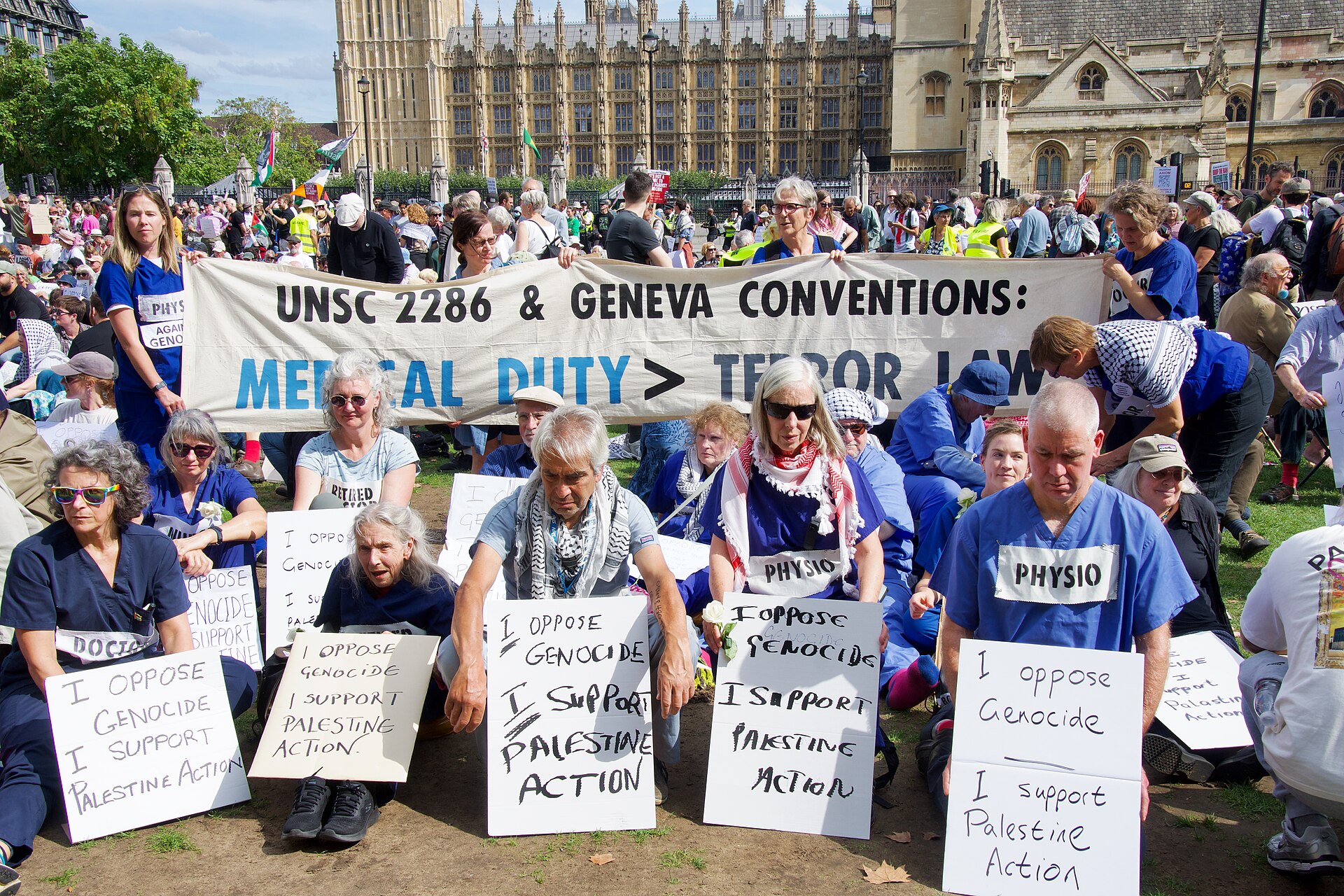
The UK Court of Appeal is expected to decide on 15 June whether the Home Office lawfully kept Palestine Action on Britain’s list of proscribed terrorist organisations after the High Court found the ban unlawful in February. The High Court found that the July 2025 proscription was disproportionate and that the Home Secretary had not properly applied policy tests under the Terrorism Act 2000, while the ban remains in force during the appeal. The case now sits at the edge of counter-terrorism law, protest rights and the political fallout from the Gaza war. The timing is sharper because Woolwich Crown Court on 12 June sentenced four Palestine Action activists for a 2024 raid on an Elbit Systems UK site after finding a terrorist connection to their criminal-damage convictions. For Belgium and the EU, the case is a benchmark in how democratic states separate sabotage, civil disobedience and terrorism.
This matters for Belgian residents, civil-liberties lawyers, protest organisers, police authorities and EU policy readers because the UK case tests a line that Belgium and other European democracies also face: when direct action against arms firms becomes ordinary crime, aggravated public-order offending or terrorism. Brussels hosts frequent demonstrations linked to Gaza, NATO and EU foreign policy. The immediate legal effects are British, but the precedent will be watched by EU institutions, Belgian federal justice officials and campaign groups concerned with protest policing and counter-terrorism thresholds.
Palestine Action (British direct-action network founded in 2020 against companies it links to Israel’s military supply chain) is the organisation at the centre of the case. The UK Court of Appeal (senior appellate court for England and Wales) is reviewing the government’s challenge to the High Court ruling. The Home Office (UK interior ministry responsible for security and policing policy) imposed the proscription under the Terrorism Act 2000 (British counter-terrorism statute allowing groups to be banned). Huda Ammori (Palestine Action co-founder) brought the legal challenge. Elbit Systems UK (British arm of the Israeli defence company Elbit Systems) was the target of the 2024 Filton raid. RAF Brize Norton (Royal Air Force base in Oxfordshire) was damaged in a separate 2025 action cited in the political case for proscription. Woolwich Crown Court (London criminal court often used for serious security cases) handled the 12 June sentencing. Amnesty International (global human-rights NGO) and the Bingham Centre for the Rule of Law (London legal research institute) have criticised broad terrorism powers in protest contexts.
Background
The UK has used proscription powers under the Terrorism Act 2000 mainly against armed jihadist, far-right and separatist organisations. The 2025 Palestine Action order was unusual because it applied terrorism law to a direct-action protest group whose activities centred heavily on property damage. The High Court found on 13 February 2026 that the ban was unlawful but left it in place pending appeal. The 12 June Woolwich Crown Court sentencing then added a separate but related precedent: a judge found a terrorist connection in criminal-damage offences arising from the August 2024 Filton raid on Elbit Systems UK.
The wider picture
The legal fight reflects how the Gaza war has widened into domestic-security debates across Western democracies. Palestine Action frames its activities around opposition to arms supply chains linked to Israel; the UK government frames the most serious actions as coercive, politically motivated damage. The geopolitical issue is not only Israel-Palestine policy, but whether allied states can protect defence infrastructure without recasting broad protest ecosystems as terrorism risks.
Why now
The immediate trigger is the Court of Appeal ruling expected on 15 June, following the Home Office appeal against the High Court’s February decision. The issue intensified after the 12 June sentencing of four activists in a related criminal case.
What to watch
Watch whether the Court of Appeal restores the Home Office’s full discretion, confirms the High Court’s proportionality limits, or narrows the reasoning. The next signals will be any Home Office statement, police guidance on support-related protests and decisions on pending prosecutions.
Opposing perspectives
- UK Home Office
The Home Office position is that proscription is a public-safety tool, not a protest ban. Its appeal asks the court to accept that repeated serious property damage, attempts to disrupt defence production and actions at RAF Brize Norton can fall within terrorism legislation when they are intended to influence government policy.
- Palestine Action and Huda Ammori
Palestine Action’s side argues that the ban criminalises a political movement and its supporters rather than dealing with individual offences through ordinary criminal law. Huda Ammori’s challenge rests on proportionality: even where activists commit crimes, the state should not attach terrorism consequences to broad political support.
- Civil-liberties and legal researchers
Amnesty International and the Bingham Centre frame the case as a warning about overbroad terrorism law. Their strongest argument is that democratic systems need clear thresholds separating disruptive protest and criminal damage from terrorism, especially when proscription also chills speech, association and peaceful protest.
- Woolwich Crown Court sentencing view
The sentencing court’s finding points the other way: Judge Jeremy Johnson treated the Filton raid as more than ordinary criminal damage because it aimed to shut down Elbit Systems UK and influence government policy. That view strengthens the argument that some direct-action campaigns can cross into terrorism-connected offending.
Sources & evidence
- Al Jazeera: UK court to rule on Palestine Action 'terrorist' label: What we know · 2026-06-14
- Associated Press: London judge sentences Palestine Action activists for raid at Israeli defense factory · 2026-06-12
- The Guardian: Pro-Palestine activists sentenced as terrorists over damage at Israeli arms factory in UK · 2026-06-12
- The Times Law Report: Rex (Ammori) v Secretary of State for the Home Department [2026] EWHC 292 (Admin) · 2026-03-17
- UK National Archives: Terrorism Act 2000, section 3
- UK National Archives: Terrorism Act 2000 (Proscribed Organisations) (Amendment) Order 2025 · 2025-07-04
- Bingham Centre for the Rule of Law commission, reported summary on counter-terrorism law and political violence, 2025 · 2025-11-10
- Amnesty International UK statement on Palestine Action sentencing · 2026-06-12