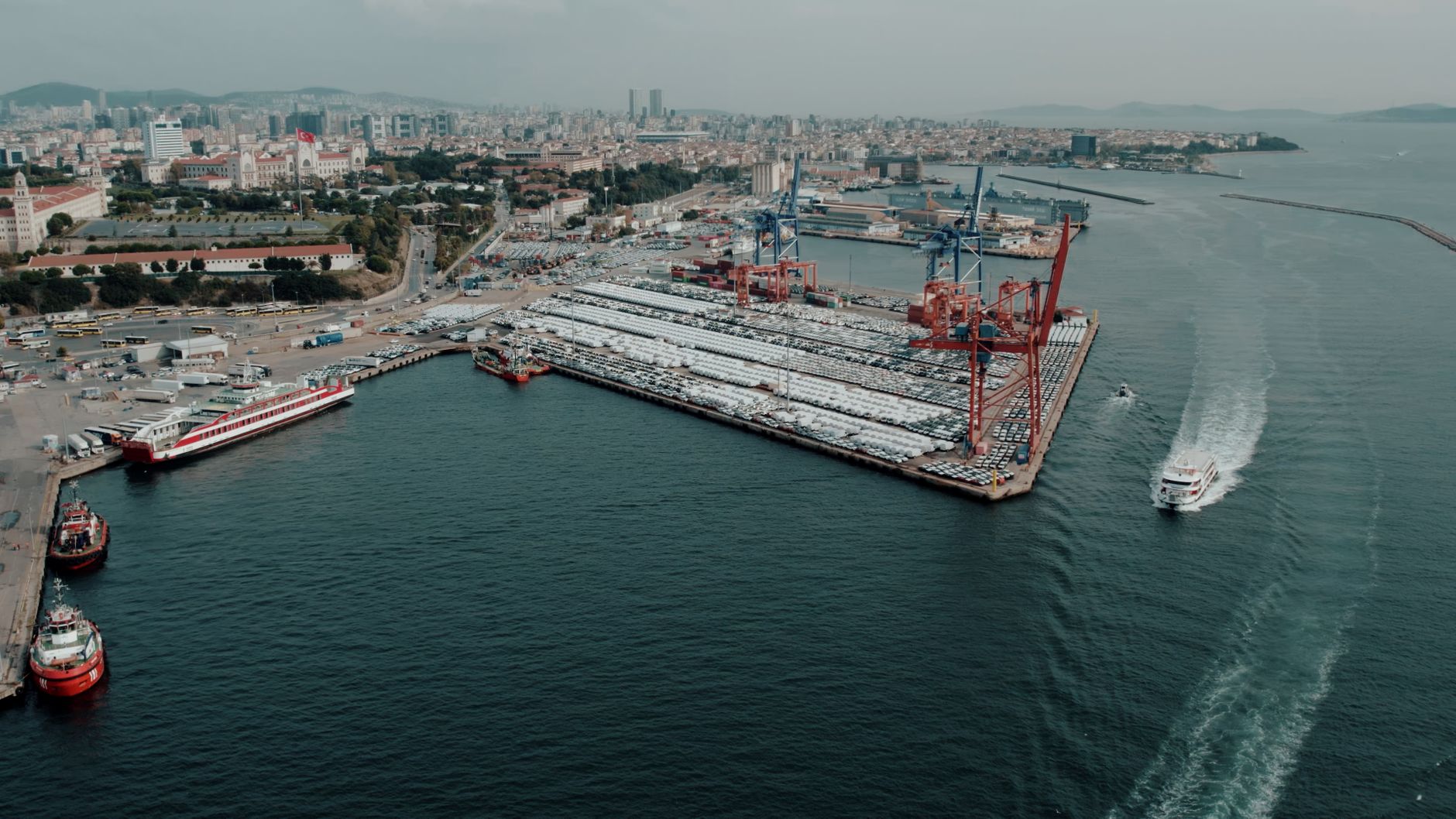
Ukraine strikes Russian Black Sea energy terminal in drone campaign
Ukraine’s Security Service said its latest long-range operation targeted the Tamanneftegaz terminal in Russia’s Krasnodar region, while Russian authorities said a drone strike in the Temryuk district killed one person, injured three and started a fire at a Black Sea export facility near Volna. The SBU said the site forms part of Russia’s oil and gas revenue base and pledged to keep attacking the sector. The strike fits a wider Ukrainian effort to make Russian energy exports costlier and less reliable as front lines remain largely static. For Europe, the event matters less as a direct supply shock than as another sign that energy infrastructure is now a central battlefield: the Council of the EU says sanctions already target Russian oil, petroleum products, LNG, ports and the shadow fleet, while the Commission’s REPowerEU plan aims to end Russian oil and gas dependency by 2027.
For Belgian households and businesses, the immediate issue is not a lost cargo but the war’s pressure on energy prices, sanctions enforcement and EU security policy. Belgium’s federal government, Fluxys-linked gas infrastructure, Antwerp-Bruges port actors, energy-intensive industry and consumers all operate inside the EU framework that is trying to cut Russian fossil fuel dependence. EU institution staff and policy-focused readers in Brussels should read the strike as part of the same pressure system as EU oil caps, shadow-fleet sanctions and REPowerEU diversification.
Tamanneftegaz (Russian transshipment terminal on the Taman peninsula in Krasnodar region) handles crude oil, petroleum products and liquefied gases. Krasnodar region (southern Russian region on the Black Sea and Sea of Azov) contains several export and refinery nodes exposed to Ukrainian long-range strikes. Temryuk district (municipal district in Krasnodar region) includes the village of Volna, near the reported damaged export terminal. Volna (settlement on the Taman peninsula) sits close to Black Sea and Azov logistics routes. Ukraine’s Security Service, or SBU (Ukraine’s domestic security and intelligence agency), has increasingly claimed long-range strikes on Russian military and energy infrastructure. Veniamin Kondratyev (governor of Krasnodar region since 2015) is the regional Russian official cited for casualty and fire information. REPowerEU (European Commission plan launched in May 2022) is the EU programme to reduce dependence on Russian fossil fuels.
Background
Russia’s full-scale invasion began on 24 February 2022, after which the EU and G7 built a sanctions regime around oil import bans, price caps and maritime services. The Council of the EU says the crude oil price cap was set on 3 December 2022 and applied from 5 December 2022, while petroleum-product caps applied from 5 February 2023. Ukraine’s campaign against Russian refineries and export infrastructure expanded through 2024 and 2025 as drones gained range. The European Commission says REPowerEU, launched in May 2022, was designed to weaken Russia’s war financing and protect EU consumers from shortages.
The wider picture
Energy infrastructure is now a strategic theatre in the Russia-Ukraine war. Ukraine is trying to reduce Russia’s capacity to finance and supply the war; Russia has repeatedly targeted Ukrainian infrastructure; and the EU is trying to weaken Moscow through sanctions without triggering an uncontrolled energy-price spiral. That makes ports, tankers, refineries and insurance rules part of the broader security contest.
Why now
The story is timely because Ukrainian and Russian authorities reported the Krasnodar strike on 13 June 2026, after a series of long-range Ukrainian attacks on Russian oil, refinery and military-industrial targets. It also comes as the EU continues to tighten energy and shadow-fleet measures against Moscow.
What to watch
Watch for confirmed satellite imagery or company statements on the extent of damage at Tamanneftegaz, Russian retaliation against Ukrainian infrastructure, insurance or shipping disruptions around Black Sea energy routes, and further EU sanctions decisions affecting oil traders, ports, LNG services or shadow-fleet vessels.
Opposing perspectives
- Ukraine’s Security Service (SBU)
The SBU frames energy infrastructure as part of Russia’s war-financing system. Its strongest argument is that attacking oil and gas logistics imposes costs directly on the revenue base used to buy missiles, drones and ammunition, while giving Ukraine a way to compensate for battlefield stalemate with pressure deep inside Russia.
- Russian regional authorities in Krasnodar
Krasnodar authorities frame the incident as a dangerous cross-border drone strike on regional infrastructure that killed and injured people. Their strongest case is civilian-safety centred: even when the target is energy-related, fires, debris and blast effects expose workers and nearby communities to lethal risks.
- EU sanctions policymakers
The Council of the EU and the European Commission frame Russian energy revenues as a strategic vulnerability to be constrained through legal, financial and market tools. Their strongest argument is that sanctions, oil caps, shadow-fleet measures and REPowerEU diversification reduce Moscow’s leverage without requiring EU states to enter the war directly.
- Energy-market analysts
The Wachtmeister, Gars and Spiro model finds that price discounts can hit Russian oil profits hard while limiting the burden on importers. The strongest caution is that physical disruption, unlike price policy, can feed uncertainty in global energy markets if attacks escalate or affect wider Black Sea shipping confidence.
Sources & evidence
- Al Jazeera, Ukraine to keep targeting Russian energy after hitting sea terminal · 2026-06-13
- Associated Press, Ukrainian drone strike kills 1 in southern Russia and triggers fire at sea terminal · 2026-06-13
- Council of the European Union, Russia's war against Ukraine: EU sanctions
- Council of the European Union, Timeline - EU sanctions against Russia
- European Commission, REPowerEU
- The Guardian, Ukraine war briefing: Russia exporting more oil now than before war despite sanctions - report · 2026-02-24
- Henrik Wachtmeister, Johan Gars and Daniel Spiro, Quantity restrictions and price discounts on Russian oil, 2022, arXiv · 2022-12-01
- The Guardian, Russia earned €6bn from fossil fuel exports since start of Iran war, data suggests · 2026-03-12